What Are Motorised Doors?

Motorised doors use an electric motor and control system to open, close, or assist a door’s movement. Some respond to motion sensors; others operate through push buttons, access controls, or remote commands. The distinction matters: powered does not always mean fully automatic. A sliding glass entrance may open as someone approaches, while a warehouse door may need a deliberate button press. Both rely on coordinated components, including the motor, sensors or switches, safety devices, and the door itself.

Their value is practical and visible. At a busy entrance, a door that opens smoothly can ease movement for people carrying bags, using mobility aids, or pushing carts. In service areas, controlled operation can help manage access and limit the time an opening stays exposed. Building-science engineer Dr. Joseph Lstiburek captures a relevant principle: “Air flows from high pressure to low pressure.” A moving door does not, by itself, solve drafts or energy loss; seals, pressure differences, installation, and maintenance matter too. The details are less tidy than many product descriptions suggest.

The 2023 Global Status Report for Buildings and Construction, published by UNEP and the Global Alliance for Buildings and Construction, estimated that buildings accounted for 34% of global energy demand and 37% of energy- and process-related carbon dioxide emissions in 2022. Those figures describe the wider building sector, not the impact of motorised doors alone. They do, however, underline why entrance design deserves careful attention. This guide explains how motorised doors work, where they are used, and what to consider when choosing one. A good system should fit the opening, traffic, users, and maintenance plan—not just look impressive on day one.
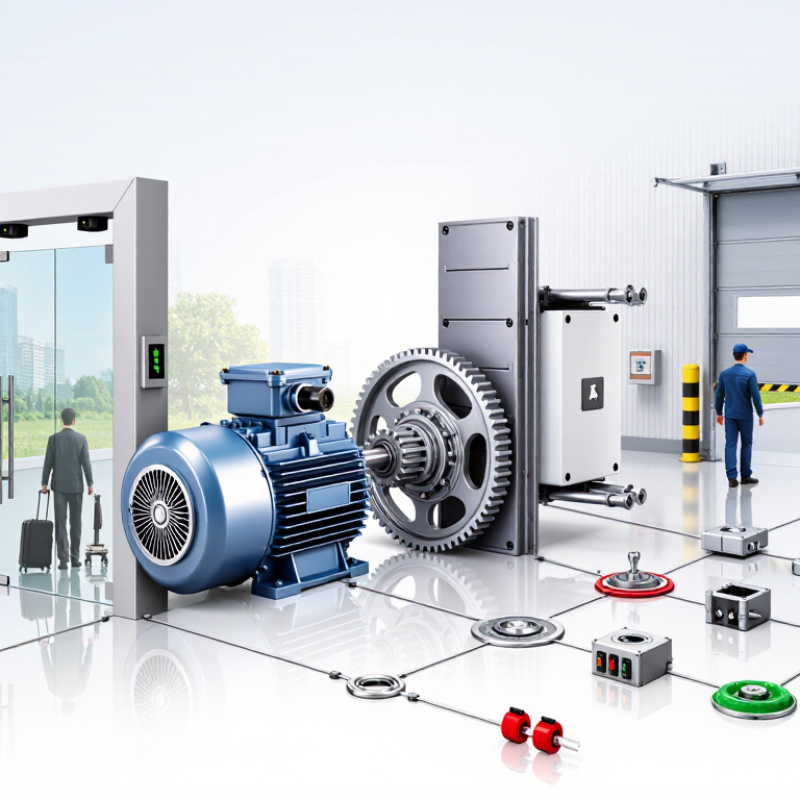
What Are Motorised Doors?

What Defines a Motorised Door? Power-Operated Systems Under EN 16005

What Are Motorised Doors?
What Defines a Motorised Door? Power-Operated Systems Under EN 16005

A motorised door is more than a door leaf with a motor attached. It is a coordinated system: the door, operator, controls, sensors, safety devices, and installation all affect how it moves. EN 16005:2012+A1:2015 sets safety requirements for power-operated pedestrian doorsets during use. It addresses hazards such as impact, crushing, and trapping. The practical question is whether people can pass safely, not simply whether the door opens.

That distinction matters. A sensor may respond differently to a walking frame, a child, or a person moving slowly. Site testing helps reveal details that drawings may miss. HSE’s workplace statistics recorded 138 worker deaths in 2023/24 and estimated 604,000 non-fatal workplace injuries in 2022/23. These figures are not specific to automatic doors, but they show why risk controls deserve attention. Some details are easy to overlook. For example, a poorly adjusted closing speed can make an otherwise compliant installation uncomfortable or unsafe. Regular inspection should check sensor coverage, opening and closing behaviour, and the condition of safety devices. A motor is only one part of the system.
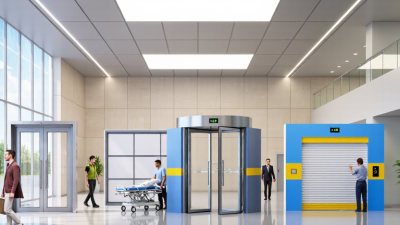

A motorised door uses powered equipment and a control system to open and close. EN 16005 addresses safety in use for power-operated pedestrian doors. The chart shows door types within its scope; it does not compare their safety performance.

How Motors, Controllers, and Sensors Coordinate Door Movement

A motorised door moves through a coordinated chain: the motor supplies force, the controller manages timing, and sensors signal when movement is needed. An infrared sensor may detect someone approaching, while a safety beam checks the doorway as the panels close. The controller interprets these signals and adjusts the motor’s direction or speed. If the beam is interrupted, it can stop or reverse the door. Small timing choices matter. A slow response can frustrate users; an overly sensitive sensor can trigger needless openings.

The International Energy Agency’s 2011 report, Energy-Efficiency Policy Opportunities for Electric Motor-Driven Systems, estimates that these systems use about 46% of global electricity. The U.S. Department of Energy’s 2014 Improving Motor and Drive System Performance sourcebook says motor systems account for about 68% of U.S. manufacturing electricity use. These figures are not specific to doors, but they underline why efficient control matters. In practice, installers need to match motor capacity and controller settings to door weight, traffic, and travel distance. Sensors also need careful positioning: sunlight, reflections, or a cluttered approach can affect detection. A detail can be missed. Regular checks help reveal worn rollers, drifting sensors, or doors that no longer close smoothly.

Which Door Types Serve Pedestrian, Garage, and Industrial Openings?

Motorised doors use an electric operator to open and close a door with less manual effort. The right type depends on the opening, traffic, available clearance, and required security. Small details matter.

For pedestrian entrances, automatic sliding doors work well where people pass frequently or need hands-free access. Swing doors can suit narrower or less crowded entrances, but they need clear space to move. Motion sensors, safety edges, and emergency release features should be selected for the site and maintained regularly. Convenience is not enough. A sensor that is poorly positioned can cause delays or unsafe movement.

Garage openings commonly use sectional or roller doors. Sectional doors travel along ceiling tracks, so check that the garage has enough overhead room. Roller doors coil above the opening and can preserve ceiling space. Insulation, weather seals, and the door’s weight also affect comfort and operator choice.

Industrial openings may use rapid-roll fabric doors to separate busy work areas, or heavier steel doors where durability and security matter more. Forklift routes, wind exposure, cleaning needs, and opening cycles all influence the choice. There is no perfect option; a faster door may need more frequent servicing, and that trade-off is easy to underestimate. A qualified installer can assess clearances, controls, and safety devices before specifying the system.

Safety Standards Compared: EN 16005, ANSI/BHMA A156.10, and UL 325

What Are Motorised Doors?
Safety Standards Compared: EN 16005, ANSI/BHMA A156.10, and UL 325

Motorised doors open and close using powered operators, sensors, or push controls. Their safety depends on more than the motor. A sliding entrance, for example, needs sensors that detect a person near the moving panel and prevent contact or trapping. EN 16005 addresses the safe use of powered pedestrian doors, including risk assessment and protective measures. It is commonly relevant to pedestrian entrances in Europe.

ANSI/BHMA A156.10 covers power-operated pedestrian doors in the United States. It sets expectations for door operation and safety, with requirements that can affect installation and testing. UL 325, by contrast, focuses on door and gate operators and entrapment protection. It is often relevant to powered vehicle doors and gates, so it should not be treated as a direct substitute for a pedestrian-door standard. Applicable editions and local requirements matter. The overlap can be confusing, and a site-specific review is worthwhile.

Tips: Check the door’s use, traffic flow, and nearby hazards before choosing safeguards. Test sensors with a person approaching from different angles, not just straight ahead. Keep maintenance records. A sensor can look fine and still miss someone at the edge of its detection zone.

What Are Motorised Doors? - Safety Standards Compared: EN 16005, ANSI/BHMA A156.10, and UL 325

Comparison dimension EN 16005 ANSI/BHMA A156.10 UL 325
What it covers Safety in use of power-operated pedestrian doorsets, including requirements and test methods. Safety requirements for power-operated pedestrian doors. Safety requirements for door, gate, louvre, window, and other covered operator systems.
Typical door types Power-operated pedestrian sliding, swing, revolving, and folding doorsets within its scope. Power-operated pedestrian doors, including commonly used automatic sliding, swinging, and revolving door systems within its scope. Operator systems such as vehicular or pedestrian gates and doors, depending on the product type and configuration covered by the standard.
Main safety focus Reducing risks to people using or passing near powered pedestrian doors during normal use and foreseeable situations. Safe operation of powered pedestrian doors, including hazards associated with door movement and access. Reducing hazards from operator-driven movement, including entrapment, impact, and other risks addressed by the applicable product requirements.
Typical safeguards addressed Risk assessment and appropriate protective measures, such as presence detection, safety distances, and force limitation where applicable. Door activation and protective measures intended to help detect or protect people in hazardous areas, as applicable to the door design. Protective devices and operator-system safeguards intended to address hazards such as entrapment; requirements depend on the operator and installation type.
Primary application context Pedestrian doorsets in buildings, such as entrances to commercial, public, and other occupied spaces. Pedestrian entrances in commercial, public, and similar buildings. Operator products and systems, including many powered gates and doors; it is not a direct substitute for a pedestrian-door design standard.
Geographic context European standard used within the applicable European regulatory and national adoption framework. North American consensus standard used with applicable local codes and project requirements. North American product safety standard commonly used for certification and evaluation of covered operator products and systems.
What it does not mean Conformance alone does not replace applicable building, accessibility, or installation requirements. It does not cover every powered door or gate operator category; other standards may apply, including standards for low-energy or power-assist pedestrian doors. A UL 325 evaluation or listing relates to the covered product and its stated conditions; it does not by itself establish that every installation meets local code or site-specific requirements.
How to compare it Compare it with standards that address powered pedestrian doorsets and their safe use. Compare it with standards addressing powered pedestrian doors; check the door type and operating mode before selecting a standard. Compare it primarily with standards for operator products and systems. Its scope differs from pedestrian-door standards such as EN 16005 and A156.10.

Note: These standards have different scopes and are not interchangeable. Applicable editions, national adoptions, building codes, and project requirements should be checked for each installation.

How Industry Measures Performance: Opening Speed, Force, and Cycle Life

What Are Motorised Doors? How Industry Measures Performance: Opening Speed, Force, and Cycle Life

A motorised door uses an electric drive to open and close a moving panel. In industrial settings, performance is judged by more than how quickly it moves. Opening speed is usually recorded over a defined travel distance, often in metres per second. A fast door can reduce waiting at a busy loading bay, but speed alone says little about safe, steady operation. Door size, wind pressure, and control settings all affect the result. Small differences matter.

Force describes the effort needed to move or stop the door. Technicians can measure it with calibrated equipment during installation and servicing. Unexpected changes may point to friction, worn components, or poor alignment. Cycle life refers to the number of complete opening-and-closing cycles a door is designed or tested to handle. A high cycle rating is useful, but real service life also depends on maintenance, temperature, dust, and daily use. That distinction is easy to miss. A test result is not a promise.

Tips: Compare speed measurements taken under similar conditions. Ask how cycle life was tested, and whether the figure includes routine maintenance. Watch one full cycle: listen for scraping, hesitation, or a sudden change in speed. Record irregularities, even if the door still works. Small faults can grow.