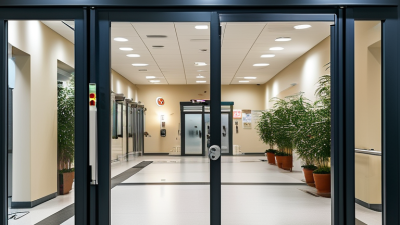
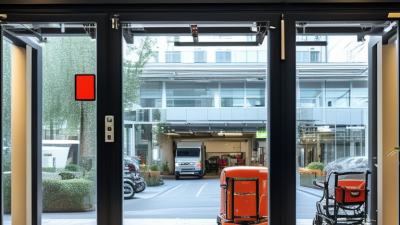
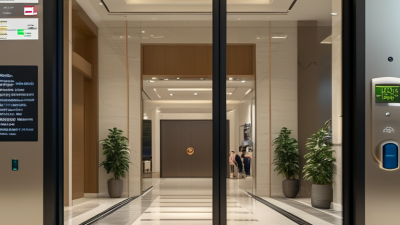
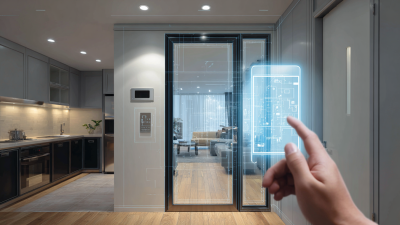
Power doors are becoming practical infrastructure, not merely a premium building feature. They support smoother traffic, touchless access, energy control, and safer movement in airports, hospitals, hotels, factories, and retail spaces. China is now a major supply base, offering sliding, swing, revolving, telescopic, hermetic, rapid-roll, sectional, overhead, automatic sensor, and access-controlled door systems.
Market estimates show strong but varied growth. Grand View Research reported that the global automatic doors market was valued at approximately USD 2.67 billion in 2023, with continued expansion expected through 2030. MarketsandMarkets has also forecast sustained growth, driven by smart buildings, warehouse automation, and stricter accessibility expectations. These figures are not identical. Definitions and product categories differ, so buyers should compare methodology before trusting any forecast.
This guide examines China’s top 10 types of power doors for global buyers. It considers opening speed, traffic frequency, weather exposure, safety sensors, noise, maintenance, customization, and total ownership cost. For example, a hospital may need a sealed hermetic door, while a logistics site may require a rapid industrial door with reinforced curtains. Standards matter too. EN 16005 addresses power-operated pedestrian door safety, while ISO 21542 supports accessibility planning.
Product brochures can look impressive. Real performance is harder to judge. A door that opens quickly may consume more energy or need frequent service. Buyers should request test records, installation references, spare-parts plans, and clear warranty terms. This article offers a practical comparison, while recognizing one uncomfortable truth: the cheapest quotation is rarely the cheapest operating solution.
China’s power-door market serves homes, offices, hospitals, factories, and transport facilities. Selecting by appearance alone often creates costly problems. Operation, drive, and application must be assessed together.
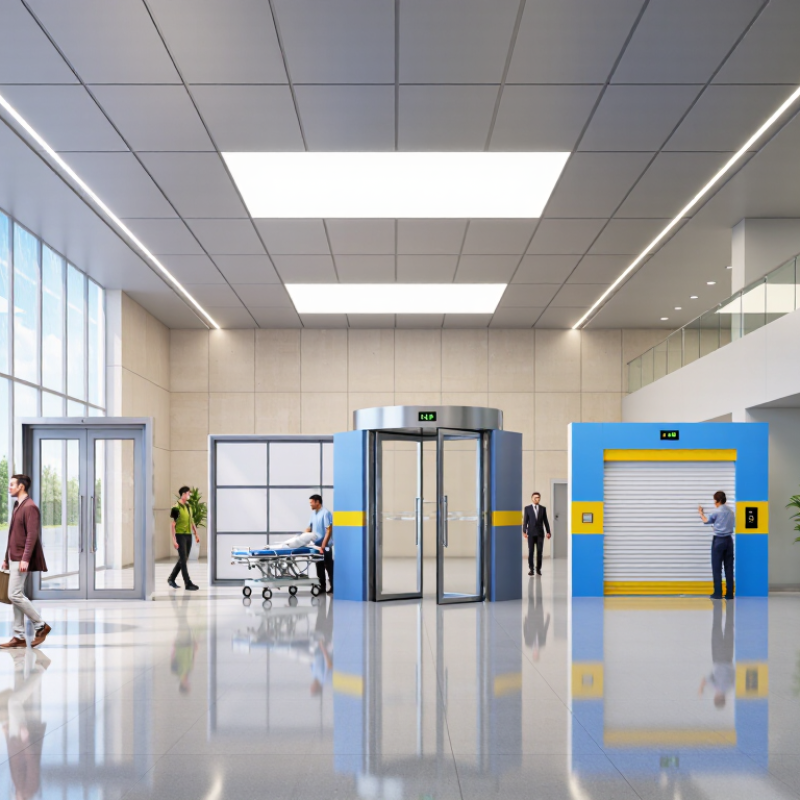
The ten main types are sliding doors, using linear motors for entrances and shops; telescopic sliding doors, using compact drives for narrow openings; curved sliding doors, using guided motors for premium lobbies; swing doors, using electromechanical arms for offices; revolving doors, using central drives for energy-conscious entrances; folding doors, using linked motors for limited side space; hermetic sliding doors, using sealed drives for medical rooms; high-speed roll-up doors, using tubular motors for warehouses; sectional overhead doors, using ceiling-mounted drives for loading areas; and powered gates, using chain or hydraulic drives for controlled vehicle access. Each type has different cycle ratings, sensor needs, noise levels, and maintenance demands. A quiet motor may still fail under heavy traffic.
Tips: Check daily cycles, opening width, backup release, sensor coverage, weather exposure, and local installation skills. Ask for test records, wiring diagrams, spare-part plans, and realistic lead times. Verify that the door responds safely when an obstacle appears. Never judge reliability from a short showroom demonstration. In my experience, specifications can look complete while installation details remain vague. That deserves a second review. Door selection is not perfectly predictable, especially in humid sites or dusty factories. A small site survey can prevent a large replacement bill.
China’s Top 10 Power Door Types for Global Buyers
For global buyers reviewing China’s top ten power-door configurations, five systems deserve close comparison. Sliding doors suit supermarkets, offices, and airport entrances with steady pedestrian flow. They provide wide openings and clean traffic separation. Swing doors need less wall space and work well in clinics or hotel corridors. They remain practical, but hinges and sensors need regular adjustment.
Revolving doors reduce drafts and preserve indoor climate control. They suit towers, hotels, and shopping centers with heavy traffic. However, luggage, wheelchairs, and emergency movement require careful layout planning. Folding doors open quickly in narrow entrances, although their moving panels may create more maintenance points. Telescopic doors overlap several panels, producing a wider clear opening from limited wall space. They are useful for hospitals and high-end commercial buildings.
Fortune Business Insights valued the global automatic door market at about 7.59 billion dollars in 2023 and projected continued growth through 2032. That forecast supports demand, not every installation decision. Buyers should verify cycle testing, noise levels, wind resistance, sensor coverage, and spare-parts availability. EN 16005 remains a useful reference for pedestrian automatic-door safety in many markets. Local requirements still control final compliance. A common mistake is choosing the fastest system rather than the most suitable one. A slow, stable door can perform better at a windy entrance. Temperature, floor levelness, and daily traffic often matter more than catalog specifications.
| Door System | Basic Operating Principle | Typical Configuration | Space Requirement | Main Advantages | Typical Limitations | Common Applications | Traffic Suitability | Indicative Clear Opening |
|---|---|---|---|---|---|---|---|---|
| 1. Automatic Sliding Door High-volume standard | One or more door leaves move horizontally along a track using an electric operator, sensors, and safety controls. | Single-slide, bi-parting, or telescopic-style sliding leaves; commonly glazed or framed. | Requires wall or sidelight space beside the opening for the sliding leaves; little swing clearance is needed. | Smooth access, efficient use of floor space, good accessibility, and strong suitability for continuous pedestrian flow. | Needs a clear side pocket or overhead track zone; tracks and sensors require regular inspection and cleaning. | Retail entrances, office buildings, airports, hotels, hospitals, and public facilities. | High | Approximately 0.8–3.0 m, depending on configuration and project design. |
| 2. Automatic Swing Door Retrofit-friendly | An operator rotates one or two door leaves around vertical hinges to open and close the passage. | Single swing, double swing, push-side or pull-side operation; can be supplied with low-energy settings. | Needs a clear arc on the opening side or both sides, depending on the selected operating mode. | Suitable for many existing hinged doors, relatively simple to retrofit, and available for low-energy accessible operation. | Consumes circulation space and may be affected by wind pressure, door weight, or improper approach clearance. | Offices, schools, clinics, apartment buildings, internal corridors, and accessible entrances. | Low to medium | Approximately 0.8–1.8 m per opening, subject to leaf weight and hardware. |
| 3. Automatic Revolving Door Energy-efficient entrance | Powered door wings rotate around a central axis within a circular enclosure, maintaining a controlled entrance zone. | Usually three- or four-wing layouts; may include safety sensors, emergency breakout, and manual override. | Requires a relatively large circular footprint and sufficient ceiling height at the entrance. | Helps reduce air infiltration, supports continuous two-way movement, and separates indoor and outdoor conditions. | Higher installation cost, more complex safety management, limited suitability for large carts, and less convenient for some users. | Hotels, office towers, shopping centers, airports, and high-end commercial entrances. | High, controlled flow | Commonly about 1.8–3.6 m overall diameter; exact dimensions vary widely. |
| 4. Automatic Folding Door Compact footprint | Multiple narrow leaves fold at hinged joints and move to one or both sides under an automated drive system. | Bi-fold or multi-leaf folding arrangements; available with framed glazing or solid panels. | Needs less side pocket depth than a conventional sliding door but requires folding clearance near the opening. | Opens quickly, works where a full sliding pocket is unavailable, and can provide a relatively wide opening in a limited space. | More moving joints and hardware can increase maintenance needs; leaf stacking may reduce usable side space. | Retail stores, transport terminals, narrow entrances, emergency egress routes, and renovation projects. | Medium to high | Approximately 1.2–3.0 m, depending on the number and width of leaves. |
| 5. Automatic Telescopic Sliding Door Wide opening, shallow pocket | Two or more sliding leaves telescope behind one another, extending the opening while reducing the required side pocket length. | Two-leaf, four-leaf, or multi-leaf bi-parting systems; often used with glazed panels. | Requires less wall length than standard sliding doors for a comparable clear opening, but needs a properly engineered track and pocket. | Provides a wide clear passage in a restricted side-wall area and supports accessible, hands-free movement. | More complex synchronization, rollers, and control components can increase service requirements and cost. | Hospitals, airports, hotels, commercial buildings, and entrances with limited side-wall space. | High | Approximately 1.2–3.6 m, depending on the number of panels and stacking arrangement. |
| 6. Automatic Curved Sliding Door Architectural entrance | Sliding door leaves travel along a curved guide track to follow a circular or arched entrance geometry. | Concave, convex, or circular sliding layouts; commonly supplied with curved glass or framed panels. | Requires a curved entrance zone and adequate radius for the selected track and door leaves. | Creates a distinctive entrance, can improve air-flow control, and supports smooth hands-free pedestrian movement. | More difficult to design, fabricate, transport, and service than straight sliding systems; replacement components may be specialized. | Hotels, shopping centers, office complexes, cultural buildings, and landmark commercial projects. | Medium to high | Project-specific; commonly designed around a curved radius of approximately 1.0–3.0 m or more. |
| 7. Hermetic Sliding Door Controlled-environment use | A powered sliding door closes against a frame with compression seals to support pressure, hygiene, and environmental control. | Single-slide or bi-parting; flush surfaces, sealed frames, and optional vision panels are common. | Needs a side pocket or wall space; the wall and surrounding construction must support the required sealing performance. | Supports cleanability, reduced air leakage, pressure control, and separation between controlled rooms. | Higher specification and installation requirements; not normally necessary for ordinary commercial entrances. | Operating rooms, cleanrooms, laboratories, isolation rooms, pharmaceutical facilities, and food-processing areas. | Low to medium | Approximately 0.9–2.4 m, based on room function and equipment requirements. |
| 8. Automatic Balanced Door Large or heavy leaf option | The door leaf pivots around an offset or balanced vertical axis so operating forces are distributed more evenly. | Single or double balanced leaves; often used where a large leaf or higher wind exposure must be managed. | Requires swing clearance, although the pivot geometry can reduce the effective operating force compared with some conventional layouts. | Can handle relatively large or heavy leaves, offers smooth movement, and may perform well in demanding entrance conditions. | Needs careful structural coordination and accurate adjustment; the opening arc still occupies circulation space. | Hotels, public buildings, institutional entrances, large lobby doors, and high-use commercial facilities. | Medium | Approximately 1.0–2.4 m, depending on leaf size, weight, and structural design. |
| 9. Automatic Security Sliding Door Access-controlled | Motorized sliding leaves operate together with access-control devices such as card readers, intercoms, or biometric systems. | Single or bi-parting sliding door with credential readers, monitoring contacts, emergency release, and safety sensors. | Needs a side pocket or stacking area and sufficient space for access-control equipment and service access. | Supports controlled entry, audit trails, integration with building security systems, and hands-free operation. | Requires coordinated electrical, security, fire-safety, and emergency-egress design; loss of power must be addressed. | Data centers, laboratories, government facilities, warehouses, offices, and restricted industrial areas. | Medium, controlled flow | Approximately 0.8–2.4 m, depending on security level and user requirements. |
| 10. Automatic Industrial High-Speed Door Vehicle and logistics flow | A motor-driven flexible or rigid door opens rapidly to control movement between industrial, storage, or loading areas. | Roll-up fabric, folding fabric, rigid-panel, or sectional high-speed configurations; safety edges and photoelectric sensors are typical. | Requires overhead headroom or side guides, depending on the door design; the surrounding structure must withstand industrial use. | Reduces transfer time, supports temperature and dust control, and improves workflow between operational zones. | Not generally intended for ordinary pedestrian entrances; impact, wind, traffic frequency, and maintenance conditions affect service life. | Factories, warehouses, cold-storage facilities, logistics centers, clean production areas, and loading zones. | Very high industrial traffic | Approximately 2.0–6.0 m wide or higher for specialized vehicle openings. |
Note: Clear-opening ranges are indicative planning values rather than universal product limits. Final dimensions, operating speed, safety features, wind resistance, fire strategy, accessibility provisions, and local code compliance must be confirmed through project-specific engineering.
Global buyers compare ten power-door types: high-speed roll-up, fabric roll-up, sectional overhead, insulated sliding, telescopic sliding, folding, swing, revolving, hermetic, and traffic doors. Each design serves a different operating environment. Door speed matters most where vehicles, workers, or conditioned air move frequently. A fast opening time can reduce drafts, waiting time, and heat loss.
Cycle life reveals more than headline speed. Buyers should request tested cycles, motor duty ratings, and maintenance intervals. A door rated for 500,000 cycles may perform differently under dust, salt air, or uneven floors. Load capacity also needs careful reading. It can refer to curtain weight, wind resistance, panel weight, or impact recovery. Those values are not interchangeable. Short opening times help, but poor alignment can quickly increase wear.
U-value deserves equal attention in cold storage, clean areas, and climate-controlled buildings. Lower U-values generally indicate better insulation, but seals, vision panels, and repeated openings affect real performance. Ask for test conditions and the complete door assembly, not only the panel value. In field evaluations, I would measure opening speed with a loaded door, record cycle counts, and inspect seals after repeated use. The process is not perfect. Site traffic rarely matches laboratory testing. A practical comparison should include energy demand, repair access, safety controls, and local service capability.
China’s power-door suppliers serve ten common formats: sliding, telescopic, swing, revolving, folding, balanced, low-energy, hermetic, fire-rated, and automatic pedestrian doors.
Grand View Research estimated the global automatic doors market at about USD 2.3 billion in 2023, with continued growth through 2030. That expansion makes safety testing more important than door appearance.
EN 16005 focuses on safe use, impact protection, presence detection, emergency operation, and installation risks in European markets.
ANSI/BHMA A156.10 addresses power-operated pedestrian doors, including activation, opening force, travel speed, and safety zones.
These standards overlap, but they are not identical. A sliding door may pass a factory test yet fail after poor sensor positioning or excessive closing speed.
Field commissioning matters. I have seen drawings look compliant while floor reflections confused presence sensors. That detail is easy to miss.
Tips:
Create a compliance matrix for each door type. Record sensor coverage, opening speed, closing force, emergency release, and maintenance intervals. Use independent testing where possible.
The American Association of Automatic Door Manufacturers reports that regular inspection and maintenance reduce operational risks, but real sites remain imperfect. Weather, traffic flow, and user behavior can change performance. Buyers should request test records, installation evidence, and corrective-action logs, not only certificates.
China’s power-door market covers sliding, swing, revolving, telescopic, folding, hermetic, high-speed, sectional, overhead, and pedestrian doors. The right choice depends less on appearance than on operating conditions. A coastal warehouse needs corrosion-resistant hardware and sealed control boxes. A cold-region entrance may require heated sensors, flexible seals, and stronger motors. Dusty sites need protected tracks and simple cleaning access.
Traffic volume should be measured in daily cycles, not only door width. A hotel lobby may need quiet sliding doors with reliable presence detection. A logistics hub may require high-speed doors, reinforced panels, and short reopening times. For hospitals or clean areas, hermetic doors can limit air leakage. These details affect safety, comfort, and maintenance. Small doors still fail when their duty rating is underestimated.
Certification requires careful checking. Ask for reports matching the destination market, not generic certificates copied into a sales file. Depending on the project, buyers may review electrical safety, impact resistance, fire performance, accessibility, and sensor protection under applicable regional standards. Factory quality records, sample testing, and installation instructions matter too. Total cost of ownership includes energy use, spare sensors, technician access, shipping, and downtime. A cheaper motor can become expensive after two winters. This is where many purchasing plans remain too optimistic. Compare service life, warranty limits, replacement lead times, and local installer skills before approving the final specification.