Selecting motorised doors for global projects is not simply a matter of choosing a faster opening system. It involves climate, traffic patterns, building use, maintenance capacity, and local safety expectations. A sliding door at a Dubai airport faces heat, dust, and intense ultraviolet exposure. A hospital entrance in Stockholm faces cold air, condensation, and strict hygiene routines. The same specification cannot serve both locations well.
Market evidence shows why this decision deserves careful attention. Fortune Business Insights estimates that the global automatic door market was valued at approximately USD 7.11 billion in 2023 and could reach USD 12.07 billion by 2032. Definitions vary between reports, so these figures should guide planning rather than replace project-specific research. The International Energy Agency reports that buildings consume around 30% of global final energy and produce approximately 26% of energy-related emissions. A poorly adjusted door can increase air leakage, heating demand, and operating costs. Small gaps matter.
A reliable selection process should connect door type, opening frequency, wind pressure, sensor performance, emergency operation, and service access. It should also consider recognised requirements, such as EN 16005 in applicable European projects, while confirming local codes and authority approvals. Manufacturers’ test data, maintenance records, and warranty conditions deserve close review. Claims about energy savings need independent verification. That assumption can fail. A technically impressive door may still become a weak investment if replacement parts are unavailable locally or technicians lack training. This guide examines practical choices for international projects, including what to specify, what to question, and where initial cost can hide long-term risk.
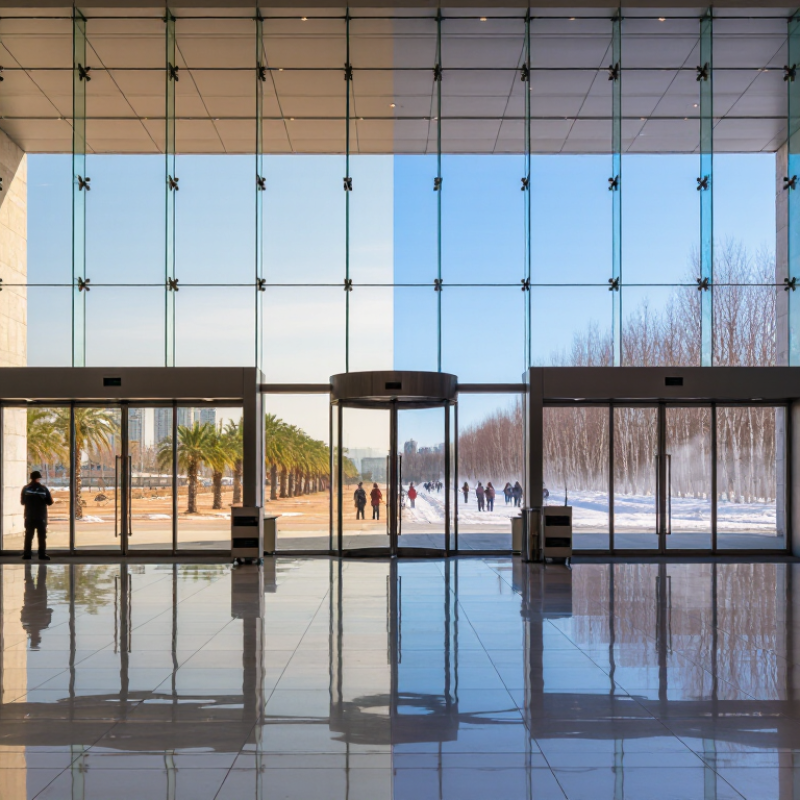
A reliable motorised door starts with measurable project requirements, not a catalogue image. Record opening width, door weight, daily cycles, peak traffic, wind exposure, and available power. A hospital entrance may face thousands of cycles daily, while a warehouse door may experience fewer but heavier movements. Measure real traffic for several days when possible. Guesswork creates expensive revisions.
Energy and access requirements also deserve attention. The 2024 Global Status Report for Buildings and Construction states that buildings consumed about 34% of global energy in 2022. Door controls should therefore limit unnecessary opening time, especially in conditioned spaces. Specify presence sensors, closing delays, insulation targets, and standby consumption.
Accessibility must be practical, including clear passage, safe detection zones, manual release, and suitable opening force. EN 16005 can guide powered pedestrian-door safety, but local regulations still control the final design.
Climate changes the specification. Coastal sites need corrosion-resistant finishes, while dusty facilities may require higher enclosure protection and easier cleaning. Define emergency operation, fire-interface requirements, testing responsibilities, and spare-part availability before procurement.
The International Energy Agency repeatedly identifies operational performance as a major buildings challenge; a door that works only during commissioning is not a successful system. We sometimes over-specify speed and under-specify maintenance. That mistake deserves review. A clear schedule should include acceptance tests, service intervals, sensor calibration, and training for local technicians.
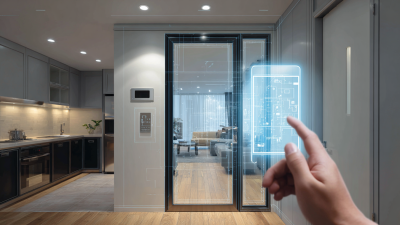
Selecting motorised doors for global projects starts with the opening itself.
Sectional doors suit warehouses with clear ceiling space and strong thermal separation. Rolling doors need less overhead room and tolerate busy loading areas.
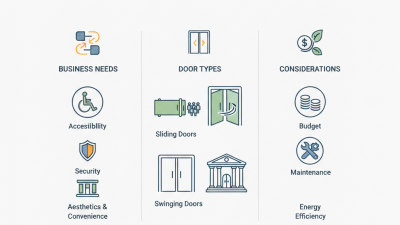
Sliding doors work well across wide openings, while swing doors need generous clearance. Every choice affects traffic flow, maintenance access, and emergency operation.
Materials change performance.
Galvanised steel offers impact resistance and practical security. Aluminium reduces weight and corrosion risk in humid coastal locations. Insulated panels help control indoor temperatures.
Glass creates visibility, but it demands careful safety assessment and regular cleaning. In dusty regions, exposed tracks can collect grit quickly.
Small details matter.
Operating mechanisms deserve equal attention.
Chain drives handle frequent cycles, but they can become noisy without adjustment. Tubular motors fit compact rolling systems, although access for repairs may be limited.
Electromechanical actuators usually provide precise movement and useful diagnostic data.
Hydraulic systems deliver force for heavy doors, yet they require disciplined leak inspections.
Choose controls that support manual release, obstruction detection, and backup power.
Confirm voltage, duty cycle, wind resistance, and enclosure protection with qualified local engineers. Regional weather and building requirements vary.
A specification copied from another project may fail here.
I once underestimated service access on a tight installation; the door worked, but maintenance became unnecessarily difficult. Real project reviews should challenge the first design, not merely approve it.
For global projects, motorised doors should be judged beyond appearance and opening speed. Safety begins with presence sensors, pressure-sensitive edges, emergency stops, and reliable manual release systems. Ask for documented testing, maintenance procedures, and failure responses. A door facing a busy hospital corridor needs different protection from one serving a warehouse.
Security also requires careful site assessment. Consider forced-entry resistance, access control integration, visibility, and resistance to wind or impact. Accessibility matters equally. Clear opening width, low operating force, adjustable closing speed, and audible or visual signals can support users with different needs. Local building requirements vary, so a specification copied from another country may fail. That assumption can be expensive.
Tips: Measure real traffic patterns before selecting the motor. Check voltage, climate exposure, drainage, and available service skills. For energy performance, examine insulation, air leakage, opening frequency, and closing time. Fast operation may reduce conditioned-air loss, but excessive speed can increase safety risks. Use commissioning records and repeat testing after installation. Small details matter. I would also leave room for review, because the first design is rarely perfect. A dusty coastal site, cold loading bay, or uneven floor can change performance quickly. Choose components that technicians can inspect, adjust, and replace without unusual tools.
Climate compatibility should be checked before selecting the motor and door curtain. The World Meteorological Organization reported that 2023 was about 1.45°C above the pre-industrial average. Higher temperatures can affect motor duty cycles, control cabinets, seals, and battery performance. In humid coastal areas, salt-laden air accelerates corrosion. In cold regions, ice can increase opening resistance and damage safety edges.
Climate is not the only variable.
Local standards must be matched with the project’s risk profile. EN 16005 addresses power-operated pedestrian doors, while ISO 13849 supports safety-related control system design. IEC 60335-2-103 covers safety requirements for drives used with gates, doors, and windows. These references do not replace local approval requirements. They provide a technical baseline. A door tested in a dry factory may behave differently after months of rain, dust, or freezing temperatures.
Installation conditions also deserve practical attention. The IEA’s The Future of Cooling report projects that cooling energy demand could more than triple by 2050 without stronger efficiency measures. This may increase pressure on entrances in warehouses and commercial buildings. Check available power, backup supply, drainage, wind exposure, mounting strength, and maintenance access. A poor installation can defeat a well-designed motor. Honestly, specifications are sometimes too optimistic. Trial operation under realistic temperature, humidity, and traffic conditions remains necessary.
For global projects, motorised doors should be judged beyond the purchase price. The International Energy Agency reports that building operations consume about 30% of global final energy. Door opening speed, insulation, standby power, and traffic control can therefore affect operating costs. Request verified cycle-life data, safety-test records, spare-parts availability, and local technician coverage. A supplier’s polished presentation is not evidence.
Maintenance planning often decides lifecycle value. The U.S. Department of Energy states that effective operations and maintenance can reduce energy use by 5–20% in suitable facilities. For a warehouse door opening hundreds of times daily, quarterly inspections may be more realistic than annual servicing. Check sensors, hinges, seals, control panels, and emergency release systems. Record failure times and repair costs. ISO 15686-5 supports whole-life cost evaluation, including acquisition, operation, maintenance, and replacement. Still, forecasts are imperfect. Dust, humidity, voltage variation, and rushed installation can defeat a strong specification.
Tips: Compare five-year and fifteen-year costs. Ask for the assumed cycle frequency. Price critical spare parts before approval. Confirm technician response times in writing. Prefer open documentation and replaceable components. A cheaper door can become expensive after one unavailable controller. Conversely, an over-engineered system may waste capital in a low-traffic building. Use actual site traffic, climate, and maintenance skills—not optimistic assumptions.