China Top 10 Swing Automatic Door Suppliers?
Choosing among China’s top swing automatic door suppliers takes more than comparing prices. A dependable system should open smoothly, detect approaching users, and close without jolting. Look closely at the operator, sensors, hinges, controls, and backup arrangements. Ask how the supplier handles installation, commissioning, maintenance, and replacement parts. Small details matter. A quiet motor and a well-adjusted closing speed can change the daily experience of an entrance.
Accessibility researcher Edward Steinfeld’s work offers a useful principle, paraphrased here: “Good access should feel ordinary, dependable, and easy to use.” That idea helps frame this guide to swing automatic doors. It also reminds buyers to consider different users, including people carrying bags, using mobility aids, or moving slowly. A product sheet cannot show how a door behaves in a busy lobby at 8 a.m. Site conditions matter.
This overview compares ten Chinese suppliers through practical questions: product range, customization, manufacturing capability, support, and evidence of quality control. Buyers should verify specifications, test samples where possible, and request clear service terms. A polished website is not proof of consistent performance. Nor is a low quote automatically a warning sign. The comparison has limits; supplier capabilities and project needs change. Use the list as a starting point, then confirm details directly before making a decision.
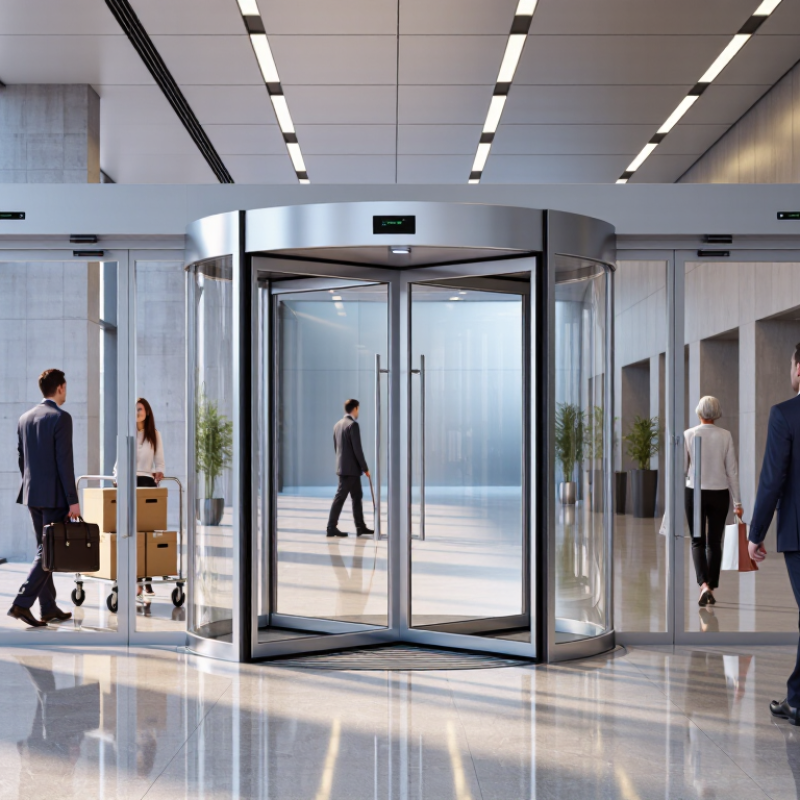
What Are Swing Automatic Doors and How Do They Work?
A swing automatic door opens on a hinged side rather than sliding along a track. It is common at entrances where a clear walking route matters, such as clinics, offices, and accessible washrooms. The door may look simple, but its movement depends on several parts working together. Quietly, most of the time.
A motion sensor or push plate sends a signal to a control unit. The unit activates an operator, which turns the door through a controlled arc. Sensors near the opening can detect people or obstacles and help prevent the door from closing too soon. The operator also regulates speed and force, so the panel does not swing like an ordinary heavy door. Exact settings depend on the door’s size, weight, traffic, and installation.
There are limits. A sensor may not detect every situation, and a poorly adjusted door can feel slow or awkward. I have seen people pause at a doorway because they were unsure whether it would open. That small hesitation matters. Regular checks should cover sensor response, hinges, closing speed, and safety features. During a power interruption, some systems allow manual operation, but this depends on their design. A careful site assessment helps match the door to real users, not just the floor plan.
How Are China’s Top Swing Automatic Door Suppliers Selected?
China Top 10 Swing Automatic Door Suppliers?
How Are China’s Top Swing Automatic Door Suppliers Selected?
A useful supplier comparison starts with the door’s intended setting. A clinic entrance, hotel lobby, and narrow office corridor place different demands on a swing automatic door. Assess opening width, traffic levels, accessibility needs, and available installation space before comparing quotations. Then review operator performance, safety sensors, backup operation, and compatibility with the existing door. Ask for test records and clear technical specifications, not just a polished product sheet. Small details matter.
Strong suppliers also explain installation, maintenance, and spare-part availability in practical terms. Ask how the system responds to an obstruction and how quickly service support can be arranged. Compare warranty coverage and delivery estimates, but check what each offer excludes. A low price may omit site assessment or commissioning. A neat brochure can still hide weak after-sales support. Supplier rankings are useful starting points, not proof that a product suits every building. Test it yourself.
Tips: Request a site-specific proposal and itemized quote. Confirm who handles installation and commissioning. If possible, watch a sample door operate through repeated opening and closing cycles; note noise, smoothness, and sensor response.
Who Are the Top 10 Swing Automatic Door Suppliers in China?
Who are the top 10 swing automatic door suppliers in China? A reliable answer needs more than a sales ranking. Public, independently audited comparisons are scarce, so naming ten “leaders” without comparable evidence would be misleading. Buyers can instead shortlist manufacturers that demonstrate strong engineering, stable production, and verifiable after-sales support.
China’s construction market provides useful context. The National Bureau of Statistics of China reported construction-industry output of about 31.6 trillion yuan in 2023, up 5.8% year on year. This figure covers construction broadly, not automatic doors specifically. It signals a large project market, but it cannot prove which suppliers perform best. That distinction matters.
A practical top-ten shortlist should compare suppliers on measurable points: opening cycles, door-leaf weight limits, sensor detection zones, emergency operation, noise, and spare-part availability. Ask for test records and references from hospitals, offices, and transport facilities. Check whether the quoted configuration matches the installed system; a quiet showroom door may behave differently in a busy corridor. Also review warranty terms and response times in writing. Small details count. A supplier with a nearby service team may be more useful than one with a polished catalogue. This ranking method is imperfect, and project-specific testing is still necessary.
China Swing Automatic Door Suppliers: 10 Evaluation Criteria
A brand-neutral framework for comparing suppliers. The percentages are suggested buyer-priority weights, not measured market data or a ranking of companies.
Use these criteria to assess product safety and compliance, reliability, customization, service, and total cost. Verify specifications and certifications directly with each supplier.
How Do Their Products, Services, and Certifications Compare?
Comparing ten swing automatic door suppliers means looking beyond opening speed and price. Check whether each supplier offers single- and double-leaf systems, adjustable closing force, obstacle detection, and documented performance under repeated use. At a clinic entrance, for example, a door must open smoothly for a wheelchair user without closing on someone behind them. Small details matter. Ask for test results on the exact model, not just a general product brochure. The International Energy Agency’s 2024 Global Status Report for Buildings and Construction estimates that buildings account for 32% of global energy use and 34% of energy-related CO₂ emissions. These figures describe the building sector, not automatic doors alone, but they make standby power and air leakage worth checking.
Services can separate otherwise similar suppliers. Compare site measurement, installation, commissioning, operator training, spare-parts availability, and stated repair response times. Request a sample maintenance schedule; vague promises are hard to evaluate. For compliance, ask which standards apply to the destination market and whether evidence covers the specific operator and door configuration. EN 16005 and ANSI/BHMA A156.10 address safety requirements in different markets. ISO 9001 concerns a company’s quality-management system, not product safety certification. That distinction is easy to miss. I would also compare warranty exclusions and sensor test records, though these details rarely fit neatly into a supplier’s headline claims.
What Factors Should Buyers Consider When Choosing a Supplier?
Choosing a swing automatic door supplier in China starts with the doorway, not the catalogue. Measure the clear opening, door weight, peak traffic, and available power. A glass entrance at a clinic faces different demands from a quiet office corridor. Ask how the operator handles repeated cycles, obstruction detection, and emergency opening. Request test records for the proposed configuration, not just a generic product sheet. Details matter.
Then examine engineering and quality control. A capable supplier should explain motor capacity, controller settings, sensor placement, and compatible hardware in plain language. Ask for inspection checkpoints, batch traceability, and an installation drawing. Pause if answers stay vague. Verify relevant safety documentation against the project’s destination and local requirements; certificates alone do not prove a suitable installation. Clarify who commissions the door and how service requests are handled.
Compare ownership costs, not only the quoted price. Include shipping, installation guidance, spare parts, warranty terms, and realistic response times. Request references from projects with similar traffic, and speak with an installer when possible. A simple site test can reveal a poor fit: run the door during a busy period and watch for hesitation, noise, or sensor blind spots. Drawings cannot show everything. Site conditions may expose details that were missed, so keep the written scope specific and allow time for adjustments.



 Automatic Doors, Inc.