How to Choose Swing Automatic Doors for Global Projects?
Choosing swing automatic doors for a global project requires more than comparing opening speeds or catalogue prices. The entrance must work safely in a busy airport, a quiet clinic, and a humid coastal hotel. Grand View Research identifies continuing growth in the global automatic door market, driven by accessibility, hygiene, security, and energy-efficiency requirements. However, market growth does not guarantee a suitable specification.
“Safety begins with correct installation and maintenance, not with the product brochure,” says Mark Berger, an automatic-door safety specialist associated with the American Association of Automatic Door Manufacturers (AAADM). His point deserves attention. A high-quality operator can still fail when installers ignore door weight, wind pressure, floor levels, sensor positioning, or emergency egress requirements.
Design teams should compare swing automatic doors against recognized standards, including EN 16005, ANSI/BHMA A156.19, and ISO 21542, where applicable. The World Health Organization reports that one in six people worldwide will be aged 60 or older by 2030. That trend makes clear opening widths, gentle motion, low operating force, and reliable detection increasingly important. Accessibility is not a decorative feature.
Project conditions also matter. A hospital may need antimicrobial surfaces and predictable hands-free operation. A shopping centre may need strong cycle performance during peak traffic. A remote site may need local spare parts and technicians. Small details decide the result.
Global projects are rarely perfect. Specifications can overlook voltage differences, language barriers, or maintenance skills. That is why this article examines performance, compliance, climate suitability, lifecycle cost, and supplier capability before recommending swing automatic doors for international applications.
Define Project Requirements for Swing Automatic Doors
How to Choose Swing Automatic Doors for Global Projects?
Defining project requirements should happen before selecting a swing automatic door. In project reviews, I have seen delays caused by unclear traffic data, not poor equipment. Record the opening width, door weight, daily cycles, and peak entry times. A hospital entrance may need continuous operation, while a small office may require only occasional assistance. Measure carefully. Small errors matter.
Study the building environment in detail. Outdoor doors may face rain, dust, wind, or salty air near the coast. Indoor doors may need quiet movement and compact sensors. Check available power, backup operation, wall structure, and space for the operator. Confirm accessibility needs, escape routes, fire resistance, and applicable local standards with qualified professionals. Requirements differ between countries, and a familiar design may not satisfy every authority.
Safety should be defined with real scenarios, not general statements. Consider children, wheelchair users, luggage, trolley traffic, and people approaching from both directions. Specify presence sensors, opening speed, closing force, and manual release procedures. Ask for cycle testing and documented commissioning results. Maintenance access also deserves attention. A door that works perfectly on handover may become troublesome if filters, sensors, or hinges are difficult to inspect. My own planning can still improve when usage changes after opening day, so include adjustable settings and a review period.
Compare Door Types, Configurations, and Opening Mechanisms
For global projects, compare swing automatic door types before choosing hardware.
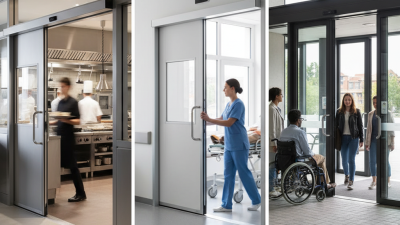
A single-leaf door suits narrow entrances and moderate pedestrian flow. Double-leaf doors provide wider clear openings for carts, wheelchairs, and emergency movement. Paired leaves can balance traffic, but they need accurate alignment and stronger coordination. Measure traffic volume, wall space, wind exposure, and clear opening width. Clear opening matters.
Configuration affects daily performance.
An inswing door protects exterior hardware from rain in some layouts. An outswing door can improve interior circulation, but it needs sufficient landing space. Arm-driven operators are practical for visible, serviceable installations. Concealed operators offer a cleaner appearance, though maintenance access becomes less convenient. Low-energy opening reduces impact risk and supports accessible entrances. Full automatic operation suits busy entrances with sensors, push plates, or controlled access.
Field inspections often reveal overlooked details.
A perfect specification rarely exists. One project may need a single door, manual override, and battery backup. Another may require synchronized double leaves and stronger closing control. In humid climates, drainage and corrosion-resistant components deserve attention. In dusty areas, sensors need regular cleaning and careful positioning. Local accessibility, fire, electrical, and safety requirements must guide the final design. I still question overly complex systems; more functions can mean more failure points. Test the door with luggage, carts, and uneven user speeds before approval. Small details decide.
Evaluate Safety, Accessibility, and Performance Standards
How to Choose Swing Automatic Doors for Global Projects?
Safety, accessibility, and performance should guide every swing automatic door decision. The World Health Organization estimates that 1.3 billion people, or 16% of the global population, experience significant disability. Therefore, door controls must support wheelchair users, older adults, and people with limited vision or strength. Evaluate low-energy operation, obstacle detection, emergency release, and safe closing speed. EN 16005 and ANSI/BHMA A156.19 provide useful safety frameworks, but local requirements still need verification.
Accessibility is more than installing a sensor above the entrance. Check the clear opening, approach space, threshold height, activation distance, and manual resistance. ISO 21542 offers international guidance for accessible building design, while regional rules may specify different dimensions. During site reviews, a door can pass a drawing check yet fail when a wheelchair approaches from an angle. That detail matters.
Performance must match the project environment. Record expected traffic, wind exposure, temperature range, power quality, and daily cycles. A hospital entrance needs different control logic from a low-traffic office lobby. Specify maintenance access and diagnostic feedback, not only opening speed. The International Energy Agency reports that buildings account for about 30% of global final energy consumption, so unnecessary door operation deserves attention. A quieter, slower setting may improve safety, but it can frustrate users during peak traffic. There is no perfect setting. Test the installed door with real users, then adjust it.
Select Materials, Controls, and Environmental Features
How to Choose Swing Automatic Doors for Global Projects?
Select Materials, Controls, and Environmental Features
Material selection should match the building’s climate, traffic, and maintenance capacity. Stainless steel suits coastal entrances because it resists corrosion better than untreated metal. Powder-coated aluminum can reduce weight and support flexible architectural designs. Laminated safety glass improves visibility and limits dangerous shattering. However, a premium finish cannot compensate for poor drainage or weak installation.
Controls should serve real users, not only satisfy a specification. Choose adjustable opening speed, hold-open time, and closing force. Motion sensors should detect children, wheelchairs, carts, and people carrying packages. Push plates can provide a dependable alternative when sensors face interference. Access control must connect safely with emergency release systems and local fire requirements. Keep manual operation possible. It matters during power loss.
Environmental features often decide long-term reliability. Specify protection against dust, rain, salt air, and temperature changes. Windy entrances may need stronger operators and revised sensor zones. Cold regions may require heated thresholds or protected vestibules. In dusty sites, simple covers and accessible filters can reduce service delays. Ask for documented cycle testing, ingress protection data, and replacement-part availability. Local technicians should understand the settings. That detail is easy to overlook.
No specification is perfect. A door selected for a mild office may fail at a busy airport entrance. Review site conditions with installers before final approval. Test the complete assembly on location, including sensors, safety edges, alarms, and backup power. Small adjustments often prevent expensive complaints later.




 Automatic Doors, Inc.