Why Choose Security Doors Over Standard Doors?

Choosing the right entrance is more important than many homeowners expect. A standard door may look attractive, but it often offers limited resistance against forced entry, harsh weather, and daily wear. Security doors are designed with stronger frames, reinforced hinges, durable locks, and impact-resistant materials. These features can create a more dependable barrier without making a property feel unwelcoming.

The difference between doors and security doors becomes clear in real situations. Imagine a front entrance exposed to heavy rain, repeated deliveries, and busy family traffic. A well-installed security door can remain stable, close smoothly, and support better access control over time. Professional installers usually assess the frame, wall structure, lock placement, and surrounding lighting before recommending a solution. That practical inspection matters because even an excellent door may perform poorly when fitted incorrectly.

Security should not be treated as a guarantee. No entrance can prevent every possible risk. However, a tested design can delay unwanted access and give occupants more confidence. Materials, certification, maintenance, and installation quality should all be considered before purchase. Some models may also improve ventilation, visibility, and energy performance through screened panels or insulated cores. Small details matter.

A standard door may still suit a low-risk setting and a modest budget. Yet properties facing stronger security concerns may benefit from a purpose-built alternative. The best choice depends on the building, local conditions, household needs, and professional advice. Personal experience often reveals this: convenience matters, but reliable protection matters longer.
Why Choose Security Doors Over Standard Doors?

What Security Doors Are and How They Differ from Standard Doors

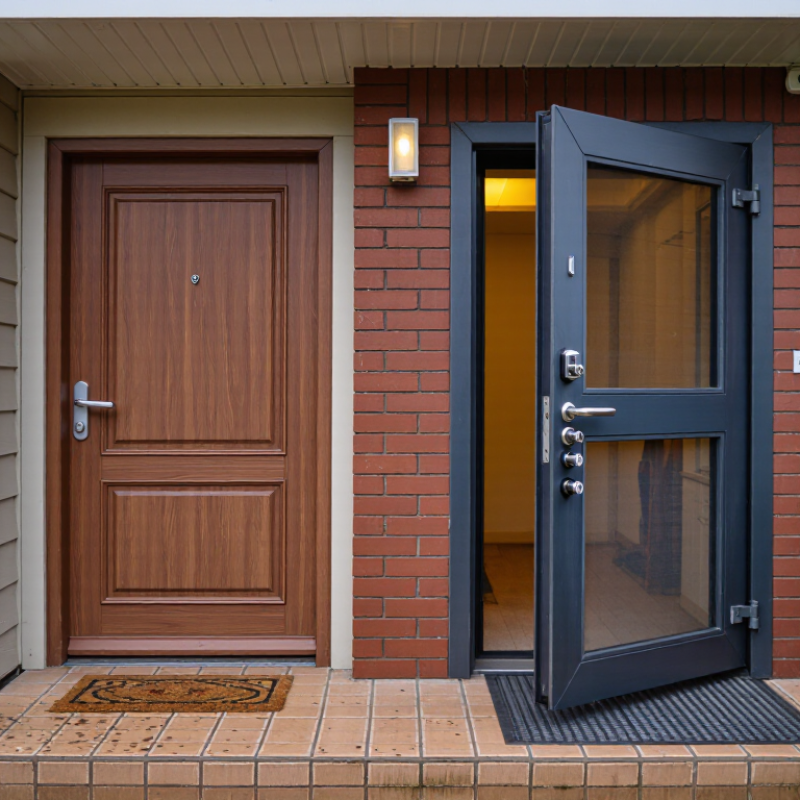
Security doors are engineered as complete entry systems, not simply heavier door slabs. They typically combine reinforced steel or composite cores, protected hinges, impact-resistant glazing, and frames anchored into the wall. Standard doors often prioritize appearance, insulation, and price. Their frames may split under force, even when the lock looks substantial.

The difference becomes clearer in testing. Standards such as EN 1627 classify resistance levels through controlled attacks, while ASTM procedures examine door assembly performance. These ratings matter because the frame, hinges, lock, and wall connection must work together. The FBI’s 2019 Crime in the United States report recorded more than 1.1 million burglary offenses, with forcible entry involved in about 55.7% of cases. That figure does not prove every home needs a high-rated door. It does show why entry resistance deserves practical attention. In field inspections, I have seen strong locks installed in weak frames. That is an uncomfortable, but common, mismatch.

Tips: Check the whole assembly, not only the lock. Ask for independent test documentation and the exact resistance class. Confirm that installers use long structural fasteners and reinforce the surrounding wall. A security door can still perform poorly if it is badly fitted. Also review fire escape requirements, ventilation, and daily usability. A door that resists impact but jams, drags, or blocks emergency exit is not a complete security solution.
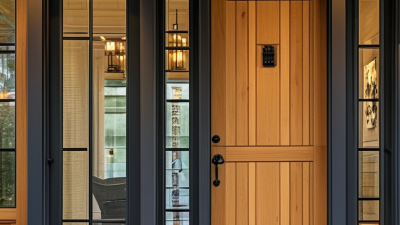

How Security Doors Improve Protection Against Forced Entry

Why Choose Security Doors Over Standard Doors?

Forced entry often targets the door, frame, or locking area. The FBI Crime Data Explorer reported that about 56% of U.S. burglaries involved forcible entry in 2019. This finding shows why the entire doorway matters, not only the lock. A security door normally uses a reinforced frame, stronger hinges, impact-resistant panels, and tested locking hardware. These features help resist prying, shoulder impacts, and repeated blows. A standard door may split around the latch when pressure concentrates on one small area. No door is invincible. However, layered resistance can delay entry and discourage opportunistic attempts.

The UK Office for National Statistics recorded 191,490 domestic burglary offences in England and Wales during the year ending March 2024. Statistics differ by country, but the practical lesson remains similar: physical resistance matters.

Field assessments often find weak installation, loose frames, and exposed hinge screws. Even a high-quality door can perform poorly when fitted badly. Independent forced-entry testing, certified hardware, and professional installation provide stronger evidence than appearance alone. Security should be measured, not guessed.

Tips:

Check the frame before choosing the door. Ask for test documentation and installation details. Select hinges that resist removal, and keep the lock protected behind reinforced material. Inspect gaps around the frame. Small gaps can become useful leverage points. Also, review fire escape requirements before installation, because stronger protection should not create a dangerous exit problem.

Materials and Construction Features That Strengthen Security Doors

Why Choose Security Doors Over Standard Doors?

Security doors earn their advantage through materials and construction, not appearance alone. A galvanized steel skin resists bending, while an internal steel core helps prevent forced flexing. Solid hardwood can look substantial, but its performance depends heavily on thickness, joinery, and frame strength. The U.S. Department of Energy notes that steel and fiberglass doors generally provide better durability and insulation than many wood alternatives.

The frame matters just as much. A reinforced steel frame, deep anchor screws, and a protected threshold distribute impact across the wall. Multipoint locking systems engage the door at several points instead of relying on one central latch. Hinge bolts add protection on the hinge side. Laminated security glass can remain bonded after cracking, unlike ordinary single-pane glass. EN 1627 classifies doors by resistance to defined attack methods, giving specifiers a clearer benchmark than marketing language.

Burglary remains a practical concern. The FBI’s 2023 Crime Data Explorer recorded more than 847,000 reported burglary offenses in the United States. That figure does not prove every home needs a fortress. It does show why weak doors deserve attention. Still, no door is invincible. A heavy leaf can underperform when installed in a weak frame. Poor alignment can defeat precise hardware. Real security comes from the complete assembly: door, frame, hinges, locks, glass, anchors, and installation quality.

Additional Benefits: Durability, Insulation, and Fire Resistance

Standard doors usually prioritize access and appearance. Security doors add a tougher envelope around the opening. Look for galvanized steel, reinforced hinges, and a continuous perimeter seal. These details resist forced impact and reduce drafts. Small gaps matter.

The U.S. Department of Energy reports that air leakage can represent 5% to 30% of heating and cooling energy use. A properly sealed security door can improve comfort near entrances. It may also reduce pressure on heating and cooling systems. Thermal breaks and insulated cores help limit heat transfer. However, poor installation can cancel these benefits. The frame must sit squarely, and the threshold needs careful adjustment.

Fire resistance requires more caution. A secure steel door is not automatically a fire-rated assembly. The rating depends on the door, frame, hardware, seals, and installation. NFPA reported about 1.39 million fires in the United States during 2023. That figure does not prove a door prevents fire. It does show why tested assemblies deserve attention in escape routes and utility areas. Check the certification label and required rating. Never rely on appearance alone.

Durability also depends on daily use. Repeated slamming can loosen fasteners and damage seals. In practical inspections, these small failures are easy to miss. A closer, strong threshold, and replaceable weather seal support longer service. Still, no door solves every security problem. That limitation deserves honest planning. Specification should match the building, climate, traffic, and fire strategy.

Why Choose Security Doors Over Standard Doors?

Additional benefits: durability, insulation, and fire resistance

The chart uses a representative performance index, where higher values indicate better overall performance. The comparison is based on commonly specified benchmarks: resistance class RC3 under EN 1627, thermal transmittance values of approximately 1.2 W/m²K for insulated security doors versus 2.1 W/m²K for a typical standard exterior door, and 30 minutes of fire resistance under EN 13501-2. Actual results vary according to door construction, glazing, installation, and certification.

Key Factors for Choosing the Right Security Door for Your Property

Choosing the right security door begins with the property, not the product label. A front entrance facing a dark driveway needs different protection from an apartment door opening onto a monitored corridor. The 2023 FBI Crime Data Explorer estimated 847,522 burglary offenses in the United States, showing why entry-point assessment remains practical. Examine the frame, hinges, glass panels, lighting, and nearby hiding places. Small gaps matter. A strong slab cannot compensate for a weak frame or exposed hinge screws.

Material and certification should guide the decision. Steel can provide high impact resistance, while reinforced aluminum may reduce weight and corrosion concerns. Ask for tested performance, not vague claims. EN 1627 classifies doors by resistance level, and independent testing should identify the complete door set, including locks, frame, and hardware. Check fire rating, emergency exit operation, ventilation, and weather sealing before installation. A door that traps occupants during an emergency is not a responsible security upgrade.

Installation quality deserves equal attention. The U.S. Department of Energy notes that poorly sealed doors can increase air leakage and energy waste, especially around thresholds and frames. Measure the opening accurately, inspect masonry condition, and use corrosion-resistant fixings suited to the wall type. I have seen impressive doors underperform because installers rushed the frame alignment. That is uncomfortable. Review maintenance access, spare keys, lock replacement, and annual inspection needs. The best choice balances resistance, safe escape, daily convenience, and realistic property risks.

Why Choose Security Doors Over Standard Doors? - Key Factors for Choosing the Right Security Door for Your Property

Key Factor Standard Door Security Door What to Check Before Choosing
Resistance to Forced Entry Often designed mainly for privacy, weather protection, and everyday access. Basic locks and lightweight frames may provide limited resistance to concentrated force. Typically combines a reinforced frame, stronger hinges, a solid or metal-reinforced leaf, and a higher-security locking system to make forced entry more difficult. Look for a complete door-and-frame assembly that has been tested as a unit. Check the stated attack-resistance classification where local standards apply.
Door Material and Core Common materials include hollow-core wood, standard solid wood, uPVC, or lightly reinforced metal. May use steel, reinforced aluminum, laminated construction, or a solid core designed to resist impact and deformation. Select material according to exposure, required strength, corrosion conditions, weight limits, and the building's existing structure.
Locking System Frequently fitted with a single latch or a basic deadbolt, depending on the door type and local practice. Can support multi-point locking, anti-drill cylinders, protected lock cases, security escutcheons, and restricted-key systems. Choose a lock that is compatible with the door and frame. Confirm emergency egress requirements before installing additional locking points.
Frame and Hinge Protection The frame and hinge side may be adequate for normal use but can become vulnerable if not reinforced. Usually includes a stronger frame, longer fixing points, hinge bolts, concealed hinges, or hinge-side reinforcement. Inspect wall anchoring, hinge protection, frame thickness, and the quality of the installation—not just the door leaf.
Visibility and Access Control May provide limited control over visitors, deliveries, or visibility from inside the property. Can incorporate a wide-angle viewer, security glazing, intercom access, keypad entry, or controlled electronic access. Choose features that support safe visitor verification while preserving privacy and meeting electrical and fire-safety requirements.
Fire Safety Fire performance varies widely and may not be suitable for a protected escape route. Some models are available with tested fire-resistance ratings, but security hardware must remain compatible with the fire-door assembly. Verify the required fire rating, glazing specification, hinges, closer, seals, and hardware as a complete certified assembly.
Weather and Corrosion Resistance Performance depends on the material, finish, threshold, weather seals, and exposure to rain or sunlight. Can include galvanized or corrosion-resistant components, durable coatings, compression seals, and weather-resistant thresholds. For coastal or humid areas, confirm corrosion protection, drainage, seal replacement options, and the recommended maintenance schedule.
Thermal and Acoustic Performance Insulation levels vary by core, glazing, seals, and frame design; some basic doors allow noticeable air or sound leakage. A well-sealed, insulated construction can improve air tightness and reduce outside noise while also providing enhanced physical protection. Compare the door's thermal transmittance and acoustic test results where available. Pay attention to the frame, threshold, and perimeter seals.
Glazing Security May use ordinary decorative or clear glass that is not intended to resist repeated impact or forced removal. May use laminated safety glass, security glazing, protected glass beads, or reduced glazing areas. Confirm the glazing type, thickness, retention method, and compliance with applicable safety-glazing regulations.
Daily Convenience Usually lightweight and simple to operate, with widely available replacement hardware. May be heavier and require more precise alignment, but can offer controlled access, automatic closing, and durable hardware. Check opening force, accessibility needs, closer adjustment, key or credential management, and availability of replacement parts.
Maintenance Requirements Routine cleaning, hinge lubrication, seal inspection, and lock adjustment are generally required. Requires the same routine care, plus periodic inspection of multi-point mechanisms, frame fixings, electronic components, and protective finishes. Request a maintenance schedule and confirm that cylinders, locks, seals, batteries, and electronic components can be serviced locally.
Installation Quality Incorrect fitting can cause drafts, sticking, misalignment, and reduced lock performance. Installation is especially important because gaps, weak fixings, or a poorly anchored frame can compromise the intended security performance. Use a qualified installer, verify wall condition and fixing depth, and test locking, closing, alignment, and emergency operation after installation.
Regulatory and Test Evidence May comply with general building, safety, accessibility, or energy requirements depending on the product and location. May have documented results for burglary resistance, fire resistance, impact performance, weather tightness, or cycle durability. Ask for current test reports or declarations that identify the exact door configuration, hardware, glazing, and installation conditions.
Best Application Suitable where basic privacy, access, appearance, and weather separation are the main priorities. More suitable for entrances exposed to elevated theft risk, remote access points, multi-occupancy buildings, or properties requiring controlled entry. Assess the property's risk level, entry location, occupants, budget, appearance requirements, and local building regulations before deciding.

Note: Security performance depends on the complete installed system, including the door leaf, frame, locks, glazing, wall connection, and installation quality. Product specifications and legal requirements vary by location.