Choosing the right commercial doors is a practical decision, not a simple product comparison. Global buyers must examine traffic levels, climate, security needs, maintenance access, and local building requirements. A busy airport terminal needs different doors than a refrigerated warehouse. Details matter, including frame strength, hinge quality, closing speed, and replacement-part availability.
Commercial-door consultant Mark McClellan puts it clearly: “The best commercial door is the one that matches the building’s daily pressure, not merely its opening size.” That view supports a more disciplined buying process. High-speed doors can reduce temperature loss in logistics facilities. Steel doors may provide dependable protection in service corridors. Glass aluminum systems can improve visibility in offices and retail entrances. Fire-rated assemblies require compatible components and qualified installation. Shortcuts can create expensive problems.
No single door fits every market. Humid coastal regions may demand corrosion-resistant finishes. Cold climates can expose weak seals and poor insulation. Remote sites may need simpler hardware and accessible service support. Buyers should also question supplier claims, especially when performance data lacks test standards or installation conditions. That reflection is important. A premium door can still fail when specified poorly or maintained irregularly. This guide compares leading commercial doors by application, durability, safety, energy performance, and lifecycle value. It focuses on evidence buyers can verify, while recognizing that product availability and technical requirements vary across countries.
What Are the Top Commercial Doors for Global Buyers?
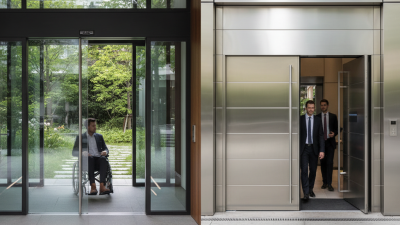
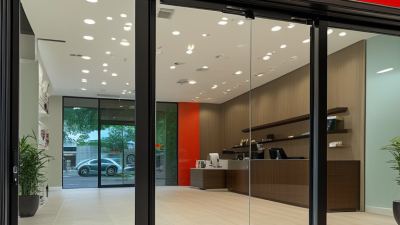
Commercial doors serve different purposes, so application should guide the buying decision. Glass entrance doors suit offices, hotels, and retail spaces. They create visibility and welcome visitors. Automatic sliding doors work well at busy entrances, hospitals, and shopping centers. Swing doors remain practical for smaller traffic areas and service rooms.
Roll-up doors support warehouses, loading bays, and workshops. Their compact opening design saves valuable wall space. High-speed doors help control dust, temperature changes, and frequent movement between production zones. Fire-rated doors protect corridors, stairwells, and equipment rooms when tested performance is required. Security doors suit utility areas, storage rooms, and restricted access points. Local climate, traffic volume, cleaning routines, and available maintenance skills can change the best choice.
Tips: Measure the opening twice. Check daily traffic and trolley sizes. Confirm material performance, hardware quality, and installation support. Ask for test documents that match the intended application and destination. A door may look suitable on paper but perform poorly in humid air or heavy traffic. This detail is often underestimated. Buyers should also review spare parts access and service response before ordering. The cheapest option can create higher operating costs later. Even experienced teams sometimes focus on appearance first, then regret ignoring drainage, insulation, or threshold design.
International commercial door buyers should judge performance before appearance. High-speed doors suit busy warehouses because they reduce opening time, dust movement, and temperature loss. Sectional overhead doors offer practical insulation and reliable vehicle access. Fire-rated doors remain essential where compartmentation and evacuation safety matter. Automatic sliding doors can improve traffic flow in hospitals, offices, and retail facilities.
Energy performance deserves closer attention. The International Energy Agency’s 2023 Global Status Report for Buildings and Construction states that buildings consume about 30% of global final energy and create roughly 26% of energy-related emissions. A poorly sealed loading door can leak conditioned air repeatedly each hour. Look for tested U-values, air-leakage results, thermal breaks, and durable bottom seals. These details are easy to overlook.
Safety data also supports careful specification. The International Labour Organization reports that nearly three million workers die annually from work-related causes, with unsafe equipment and environments contributing to many incidents. Door buyers should verify impact protection, emergency release, sensors, wind-load ratings, and maintenance access. Standards such as EN 16005, EN 13241, and NFPA 80 can guide product evaluation, but local approval remains important.
A perfect specification rarely exists. A faster door may require more maintenance. A heavier insulated panel may slow manual operation. Buyers should compare verified test results, not only catalog claims. Site climate, traffic frequency, corrosion exposure, and installer experience can change the real outcome. This is where many projects need a second review.
Commercial doors are judged by more than appearance. Material choice affects weight, corrosion resistance, insulation, and repair costs. Steel doors offer strong impact resistance and stable dimensions. Aluminum reduces weight and resists many forms of corrosion. Fiberglass suits wet or chemically exposed areas, although surface damage can be difficult to repair. Wood remains attractive, but it demands careful sealing around edges and hardware.
Construction quality matters just as much. A reinforced core, welded corners, reliable hinges, and replaceable seals can extend service life. Thermal breaks are valuable where indoor temperatures must remain stable.
According to the 2023 Global Status Report for Buildings and Construction, buildings consume about 30% of global energy and produce roughly 26% of energy-related emissions. Poorly sealed openings can quietly increase heating and cooling demand. Small gaps matter.
Durability also depends on the operating environment. A warehouse door may face frequent impacts, while a hospital door needs smooth operation and cleanable surfaces. NFPA’s Fire Loss in the United States During 2023 reported approximately 1.39 million fires and 22.2 billion dollars in direct property damage. Fire-rated assemblies, tested hardware, and correct installation are therefore essential, not decorative upgrades. Weight is not everything. I have seen heavy doors fail early because water entered the frame. Buyers should compare tested cycle ratings, air leakage, corrosion performance, and local compliance documents. The cheapest specification can become expensive when seals, hinges, and frames require repeated replacement.
Commercial doors must protect people before they protect property. In busy warehouses, a damaged hinge or weak closing force can create a serious hazard. Choose doors with tested safety edges, clear vision panels, controlled closing, and emergency release features. Operators should also inspect tracks, sensors, locks, and seals regularly. Small faults often become expensive failures.
Security depends on the building’s risk profile. A service entrance may need reinforced leaves, tamper-resistant hardware, and access control integration. A loading bay needs impact resistance and fast, reliable operation. However, stronger is not always better. Excessive weight can increase maintenance demands and slow evacuation. Site experience shows that door selection works best when traffic frequency, vehicle size, exposure, and user behavior are measured together.
Energy efficiency deserves equal attention. Poor seals can allow cold air, dust, and rain around a closed door. Insulated panels, tight thresholds, and suitable opening speeds can reduce heat loss in temperature-controlled spaces. Ask suppliers for tested thermal performance, air leakage data, and maintenance instructions. Compliance is not a single global label. Fire resistance, wind-load testing, accessibility, electrical safety, and emergency-exit rules vary by jurisdiction. Keep certificates, installation records, and inspection logs available. One overlooked document can delay approval. A practical review with the local authority is often wiser than relying on assumptions.
| Commercial Door Type | Typical Applications | Safety and Security Profile | Energy-Efficiency Characteristics | Typical Operating Speed | Relevant International Standards and Compliance Areas | Best-Suited Buyer Priorities |
|---|---|---|---|---|---|---|
| Insulated Steel Personnel Door | Factories, warehouses, plant rooms, service corridors, schools, and utility areas | Strong resistance to impact, forced entry, and frequent use; can be fitted with panic exit hardware, closers, vision panels, and access-control locks | Insulated cores reduce heat transfer; typical door-panel U-values commonly fall approximately between 1.5 and 2.5 W/m²·K, depending on construction and glazing | Manual opening; generally suitable for normal pedestrian traffic | EN 14351-1 for external pedestrian doorsets where applicable; EN 179 or EN 1125 for emergency-exit hardware; local fire and accessibility requirements | Durability, controlled access, moderate thermal performance, and low maintenance |
| Fire-Rated Steel Door and Doorset | Stairwells, fire compartments, electrical rooms, commercial kitchens, hospitals, hotels, and industrial buildings | Designed to resist fire and smoke spread for a tested period; self-closing and positive-latching hardware is commonly required | Insulated mineral or composite cores can provide better thermal performance than non-insulated metal doors, but fire performance remains the primary design objective | Manual or automatic closing, depending on the opening and fire strategy | NFPA 80; UL 10C or equivalent fire-resistance testing; EN 16034 and EN 1634-1 in applicable European projects; local building and life-safety codes | Life safety, compartmentation, insurance requirements, and code compliance |
| Aluminum-Framed Storefront Door | Retail entrances, offices, shopping centers, banks, institutional buildings, and reception areas | Good visibility and controlled access; laminated or tempered safety glass improves impact performance, while multi-point locks improve security | Thermally improved frames, insulated glass, low-emissivity coatings, and weather seals can reduce air leakage and solar heat gain | Manual or automatic; suitable for moderate to high pedestrian traffic | EN 14351-1 where applicable; EN 12150 for thermally toughened glass; EN 14449 for laminated glass; local accessibility and safety-glazing rules | Appearance, daylight, customer access, and balanced energy performance |
| Automatic Sliding Entrance Door | Airports, hospitals, retail stores, offices, hotels, and public buildings with high pedestrian flow | Presence sensors, safety zones, obstruction detection, emergency release, and monitored controls help reduce collision and trapping risks | Fast closing cycles and vestibule configurations can limit uncontrolled air exchange; low-leakage seals and insulated glazing improve performance | Typically about 0.5–0.8 m/s, subject to configuration, safety settings, and local regulations | EN 16005 for power-operated pedestrian doors; ANSI/BHMA A156.10 for automatic pedestrian doors; accessibility and emergency-egress requirements | Accessibility, hands-free entry, hygiene, traffic flow, and operational convenience |
| High-Speed Roll-Up Door | Cold storage, food processing, logistics centers, clean areas, manufacturing, and internal warehouse zones | Soft-bottom edges, breakaway features, safety photocells, emergency stop controls, and automatic reopening can improve operational safety | Rapid opening and closing reduce infiltration; insulated curtains or panels can improve temperature control, especially in conditioned spaces | Opening speeds commonly range from approximately 0.8 to 2.5 m/s, depending on door design and application | EN 13241 for industrial, commercial, and garage doors where applicable; EN 12453 for power-operated door safety; ASTM F2200 for industrial machinery guarding considerations in relevant applications | Temperature control, process efficiency, hygiene, and high cycle frequency |
| Insulated Sectional Overhead Door | Loading docks, distribution centers, workshops, fire stations, and vehicle service facilities | Robust panel construction, bottom-edge protection, cable and spring safety devices, and optional vision panels support safe vehicle and personnel operations | Typical insulated panel U-values may be approximately 0.5–1.2 W/m²·K, depending on panel thickness, joints, glazing, and perimeter seals | Motorized opening commonly takes several seconds; cycle speed depends on panel size and operator type | EN 13241; EN 12453 and EN 12604 for powered-door safety and mechanical requirements where applicable; local wind-load and fire rules | Thermal separation, weather resistance, loading-dock reliability, and lifecycle value |
| Rolling Steel Security Shutter | Retail storefronts, parking facilities, warehouses, kiosks, service counters, and high-security openings | Provides a physical barrier against unauthorized access and vandalism; locking systems, guides, bottom rails, and fire-rated configurations vary by design | Standard curtains generally offer limited insulation; insulated slats, tighter guides, and sealed assemblies improve thermal and air-leakage performance | Manual or motorized; usually slower than high-speed industrial doors | EN 13241 where applicable; ASTM F588 or equivalent testing may be relevant for forced-entry resistance; fire-rated assemblies require separate certified testing | After-hours security, compact storage, vandalism resistance, and space efficiency |
| Impact-Resistant Traffic Door | Food plants, supermarkets, hospitals, warehouses, kitchens, and internal production areas | Flexible leaves or reinforced panels tolerate repeated trolley, pallet-truck, and personnel movement; transparent sections can improve visibility | Not normally selected as the primary thermal barrier; overlapping leaves and optional insulated construction can reduce drafts between internal zones | Designed for rapid manual passage and frequent cycling | Material hygiene, food-contact, accessibility, workplace-safety, and local fire requirements; specific certification depends on construction and use | High traffic, hygiene, impact resistance, workflow efficiency, and easy replacement |
| Blast- and Forced-Entry-Resistant Doorset | Critical infrastructure, data centers, government facilities, energy sites, laboratories, and high-security rooms | Heavy-duty leaves, reinforced frames, multi-point locking, and tested resistance to forced entry or blast effects can be specified for the threat level | Thermal performance is project-specific; insulated cores and compression seals can be incorporated without reducing the required security rating | Usually manual and intentionally controlled; powered operation may be added where risk assessment permits | EN 1627–EN 1630 for burglar-resistance classification; EN 13123 and EN 13124 for blast-resistance testing where applicable; project-specific security criteria | High security, asset protection, restricted access, and risk-based specification |
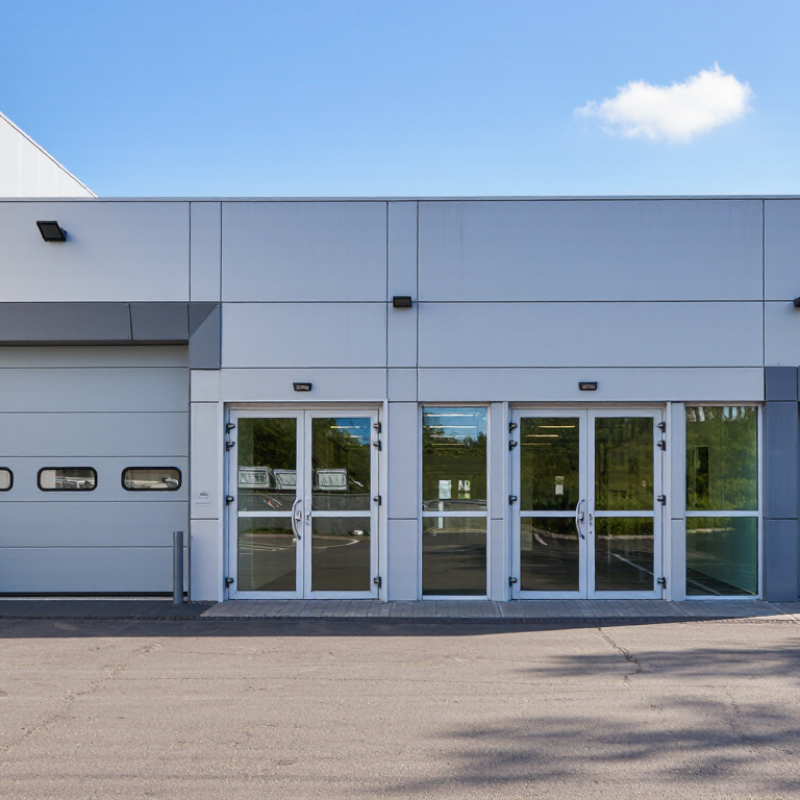
Choosing commercial doors starts with use, not appearance. A loading bay needs impact resistance, while a hotel corridor demands quiet movement and controlled access. Ask suppliers for tested performance data, material specifications, warranty terms, and completed project references. I compare cycle ratings, wind resistance, insulation, fire classification, and spare-part availability. Photos alone prove little. Request samples or inspect an installed door when possible. A supplier that explains limitations earns more trust than one promising everything.
Purchase price is only one line in the budget. Add shipping, customs handling, local taxes, equipment rental, electrical work, and commissioning. Installation costs vary with wall conditions, opening dimensions, and local labor rates. Confirm who measures the opening and who accepts responsibility for errors. Clear drawings should show fixing points, drainage, safety sensors, and power requirements. On international projects, translate technical terms carefully. A cheap quotation can become expensive after site changes. That mistake is common.
Maintenance planning should begin before purchase. Request service intervals, cleaning methods, lubricant requirements, fault codes, and replacement-part lead times. Choose designs that allow safe access to springs, tracks, motors, and control panels. Ask whether trained technicians are available near the project site. Record baseline measurements after installation, including closing speed and safety-device response. Real sites are rarely perfect. Dust, humidity, uneven floors, and rushed handovers expose weak assumptions. I would leave a contingency in both budget and schedule, even when the supplier appears highly reliable.