In 2026, buyers may find the strongest business doors where essential demand meets measurable operational improvement. Opportunity is no longer limited to fast-growing technology brands. It also appears in energy efficiency, cybersecurity, healthcare support, logistics, and specialized business services.
The International Energy Agency’s World Energy Investment 2025 report estimates global energy investment will reach $3.3 trillion. Clean energy is expected to attract roughly twice the capital directed toward fossil fuels. This points toward businesses offering solar maintenance, grid software, battery services, and industrial efficiency. The market is attractive, but capital intensity can surprise inexperienced buyers.
Cybersecurity is another serious entry point. IBM’s Cost of a Data Breach Report 2025 reported an average global breach cost of $4.44 million. Small and mid-sized companies increasingly need affordable monitoring, employee training, and incident response. Recurring contracts may strengthen cash flow. They do not remove delivery risk.
Healthcare and aging-related services deserve attention. The United Nations projects that people aged 65 and above will represent a growing share of the global population through 2050. Home care coordination, medical administration, and accessible transportation could support durable demand. Local licensing and staffing requirements remain critical.
The World Bank’s Global Economic Prospects, January 2025, expects global growth to remain moderate in 2025 and 2026. Buyers should therefore value resilient revenue, verified customer retention, and realistic margins. AI-enabled operations may improve productivity, yet technology alone is not a business model. That lesson is easy to overlook.
The best 2026 business doors may look ordinary: a profitable service company, strong local relationships, and neglected processes. Careful diligence matters more than fashionable language. Forecasts can guide a search, but they cannot replace customer interviews, financial verification, and honest reflection.
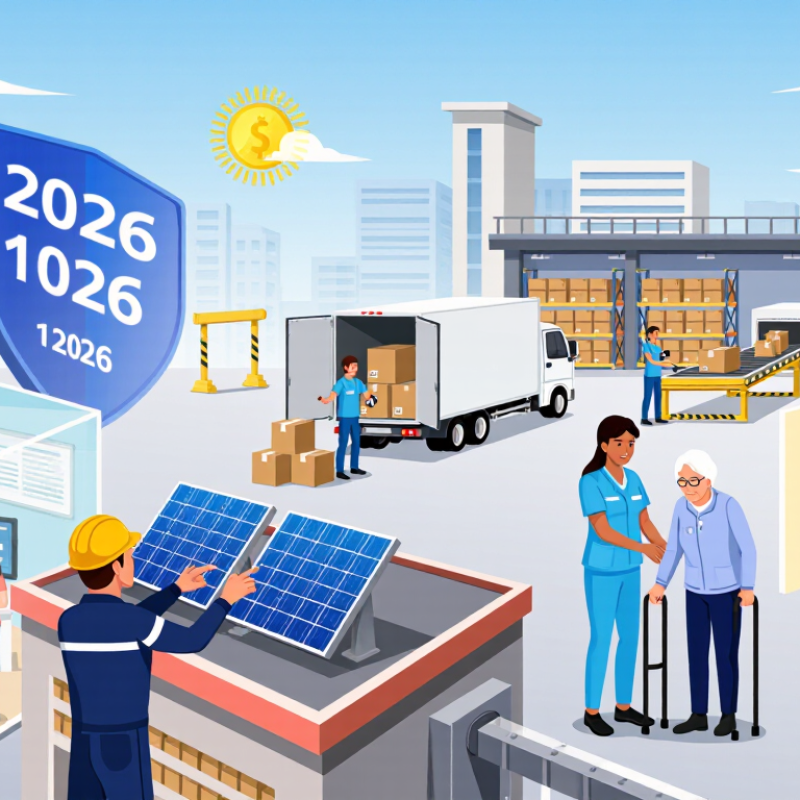
What Are the 2026 Top Business Doors for Buyers?
Defining the 2026 Business Opportunities Most Relevant to Buyers
In 2026, buyers should examine businesses solving measurable labor, energy, and compliance pressures. The opportunity is not simply “technology.” It is dependable cash flow supported by urgent customer needs.
The World Economic Forum’s Future of Jobs Report 2025 estimates 170 million new roles may emerge by 2030, while 92 million could disappear. This gap supports businesses offering workforce training, process automation, and specialized recruitment. Buyers should inspect renewal rates, customer concentration, and the time required to deliver each service. Small details matter. A promising platform may still depend on one engineer.
Energy-efficiency services also deserve attention. The International Energy Agency’s Energy Efficiency 2024 report identifies efficiency as a major route for reducing operating costs and energy demand. Businesses that install monitoring systems, improve building performance, or manage industrial consumption may benefit from persistent buyer interest. The International Energy Agency’s Renewables 2024 analysis projects substantial renewable capacity growth through 2030, creating supporting demand for maintenance, storage management, and technical installation services. However, projections are not guarantees. Buyers need local permitting checks, supplier interviews, and evidence from completed projects.
Cybersecurity and data governance remain practical acquisition themes. The World Economic Forum’s Global Cybersecurity Outlook 2025 reports that cyber complexity is increasing, especially for smaller organizations. This favors firms providing affordable assessments, staff training, and incident preparation. Yet recurring revenue can be overstated. Review contracts, churn, margins, and actual response records before treating any “high-growth” claim as reliable.
A buyer-oriented comparison of scalable opportunities supported by structural demand, measurable market signals, and identifiable acquisition or investment pathways.
| Rank | Business Opportunity | Core Buyer Problem | Validated Market Signal | 2026 Revenue Model | Why It Fits Buyers | Key Diligence Priorities |
|---|---|---|---|---|---|---|
| 1 | Grid Flexibility, Energy Storage and Demand Management | Power systems need more flexibility as variable renewable generation, electrification and peak-load pressure increase. |
585 GW Global renewable power capacity added in 2024; renewables represented approximately 92.5% of total new capacity additions. |
Battery storage projects, energy-management software, flexibility contracts, installation services and recurring monitoring fees. | High strategic fit Combines infrastructure demand with recurring software, maintenance and optimization revenue. |
Interconnection queues, permitting, equipment warranties, power-price volatility, project financing and revenue-stack durability. |
| 2 | Data-Center Power, Cooling and Efficiency Services | Rapid digital workloads are increasing demand for reliable electricity, high-density cooling and energy-efficient facilities. |
415 TWh Estimated global data-center electricity consumption in 2024, projected by the IEA to approach 945 TWh by 2030. |
Specialized cooling, power-quality services, retrofit engineering, facility operations, water-efficiency systems and performance-based contracts. | High buyer relevance Mission-critical operations support premium pricing and long-term service relationships. |
Customer concentration, local grid constraints, water availability, construction delays, technical talent and utilization assumptions. |
| 3 | Cybersecurity Compliance and Managed Resilience | Organizations must protect increasingly connected operations while meeting stricter reporting, supplier-risk and incident-response requirements. |
Regulatory expansion New and strengthened cyber rules in major markets require risk management, incident reporting and third-party oversight across more sectors. |
Managed detection, compliance assessments, identity protection, employee training, incident-response retainers and subscription-based monitoring. | Strong recurring revenue Essential spending, high retention potential and clear cross-selling opportunities for buyers with an existing customer base. |
Service quality, data protection, staff certifications, liability exposure, customer churn and dependence on specialist personnel. |
| 4 | Electrified Commercial Fleets and Charging Operations | Fleet owners need lower operating costs, reliable charging access and better route, energy and maintenance management. |
More than 17 million Electric cars were sold globally in 2024, with electric vehicles exceeding one-fifth of new-car sales worldwide. |
Fleet charging-as-a-service, depot design, energy optimization, charging maintenance, utilization software and fleet-transition consulting. | Platform potential Combines physical assets, software and contracted fleet relationships, creating multiple acquisition synergies. |
Vehicle residual values, charger uptime, utility tariffs, depot permitting, hardware interoperability and fleet adoption speed. |
| 5 | Healthy Aging, Home Care and Care-Coordination Services | Families, providers and public systems need affordable support for longer lives, chronic conditions and workforce shortages in care delivery. |
1.1 billion to 1.4 billion The global population aged 60 or older is expected to rise from approximately 1.1 billion in 2023 to 1.4 billion by 2030. |
Home-care services, care coordination, remote monitoring, caregiver training, accessible-home modifications and subscription support plans. | Defensive demand Demographic growth supports long-term need and enables local consolidation in fragmented service markets. |
Licensing, caregiver retention, reimbursement rules, safeguarding standards, clinical governance and local labor economics. |
| 6 | Water Efficiency, Treatment and Reuse | Businesses and communities face supply stress, stricter discharge rules and rising costs for reliable water access. |
2.2 billion people Lacked safely managed drinking water in 2022, while water stress and treatment requirements continue to affect industrial and urban users. |
Industrial water treatment, leak detection, decentralized reuse, monitoring systems, maintenance contracts and performance-based savings. | Essential-service profile Creates recurring demand, measurable cost savings and opportunities for regional service consolidation. |
Permitting, public-sector procurement, asset intensity, water-quality liability, energy consumption and site-specific engineering needs. |
| 7 | Industrial Automation and Workforce-Productivity Tools | Manufacturers and logistics operators need higher output, better quality control and resilience against labor shortages and supply disruption. |
Structural productivity gap Industrial operators are increasing investment in sensors, robotics, machine vision, predictive maintenance and connected production systems. |
Automation integration, software subscriptions, equipment maintenance, process analytics, training and outcome-based productivity contracts. | Synergy-rich Buyers can combine customer relationships, engineering talent, installed equipment and recurring service revenue. |
Long sales cycles, integration complexity, project overruns, customer-specific customization and dependence on capital expenditure budgets. |
| 8 | Building Energy Retrofits and Electrification | Property owners need to reduce energy costs, meet efficiency standards and improve resilience without replacing entire buildings. |
Around 30% Buildings account for roughly 30% of global final energy consumption, creating a large addressable base for efficiency and electrification upgrades. |
Heat-pump installation, insulation, building controls, energy audits, lighting upgrades, financing programs and guaranteed-savings contracts. | Fragmented-market opportunity Local installers and service providers can be consolidated while adding software, financing and maintenance layers. |
Skilled-labor availability, building-owner decision cycles, subsidy changes, project execution quality and uncertain energy-price savings. |





 Automatic Doors, Inc.