10 Tips for Choosing Doors and Security Doors

Choosing the right doors and security doors is not merely a matter of color, price, or curb appeal. A door controls daily access, limits drafts, manages noise, and can influence how occupants feel inside a property. The details matter: a warped frame, weak hinge screws, or a poorly sealed threshold may create problems long before the door looks damaged.

Industry data supports careful selection. Fortune Business Insights’ 2024 Doors Market report identifies steady global growth, driven by construction, renovation, energy efficiency, and improved building protection. Its findings suggest that buyers increasingly compare performance, not appearance alone. The U.S. Department of Energy also emphasizes that air leakage around building openings can increase heating and cooling demands. A small gap beneath a back door can be felt on a cold morning.

Security deserves equal attention. The FBI’s 2023 Crime Data Explorer recorded more than 800,000 reported burglary offenses in the United States, although reporting methods and local conditions vary. This figure does not prove that one product prevents crime. It does show why entry-point planning deserves practical attention. No checklist can predict every failure.

This guide presents 10 Tips for Choosing Doors and Security Doors, using principles from building performance, hardware specification, and responsible risk assessment. It considers materials, lock compatibility, fire ratings, installation quality, maintenance, and emergency egress. Some recommendations may seem obvious. They are often overlooked. A strong door installed into a weak frame remains a weak entry system. Careful measurement and qualified installation may matter more than an impressive product label.
10 Tips for Choosing Doors and Security Doors

Define Your Security, Privacy, and Access Requirements

10 Tips for Choosing Doors and Security Doors

Define security, privacy, and access before comparing door materials. A practical site assessment should record who enters, when they enter, and what happens during an emergency. NIST SP 800-116 Rev. 1 supports layered facility access controls, combining identity checks, authorization, and physical barriers. A strong door alone cannot manage every risk. Consider staff movement, visitor flow, delivery points, and accessible escape routes. Privacy needs also vary. A glass panel may improve visibility but expose conversations, screens, or stored equipment.

Tip: Write three access levels: public, staff, and restricted. Then match each level with locks, vision panels, and monitoring. The FBI’s 2023 Crime Data Explorer shows property crime remains a practical concern for building owners, although risks differ by location and building type. Local incident patterns should guide decisions more than generic sales claims. Choose tested assemblies, not impressive-looking hardware. Check the frame, hinges, closer, threshold, and wall connection together. The weakest part matters.

Tip: Test the door during busy periods. Observe noise, tailgating, slow closing, and blocked exits. NIST’s Cybersecurity Framework 2.0 also emphasizes identifying and managing risk, a useful principle for physical access planning. I would not treat one certification as final proof. Installation quality, maintenance, and user behavior can quietly reduce protection. Real buildings are messier. Review access permissions regularly, especially after staff changes, renovations, or changes in room use. Record who can enter, what privacy is required, and how quickly authorized people must pass.

10 Tips for Choosing Doors and Security Doors: Security, Privacy, and Access Requirements

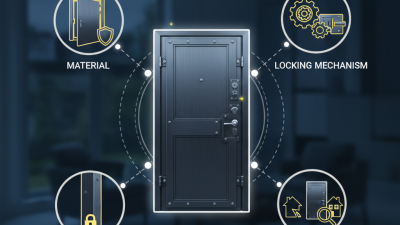
The chart presents an example planning score from 1 to 5 for key door-selection requirements. Higher scores indicate that the requirement deserves greater attention when choosing a residential or commercial entrance door. Final specifications should be confirmed against local building, fire, accessibility, and security regulations.

Compare Door Materials, Construction, and Durability

10 Tips for Choosing Doors and Security Doors

When comparing doors, start with the material rather than the finish. Steel resists forced impact well, but exposed edges can rust in damp conditions. Aluminum is lighter and naturally corrosion-resistant, though it may dent more easily. Solid timber offers warmth and strong insulation, but it needs regular sealing to limit swelling. Fiberglass can imitate wood while requiring less maintenance. Each material has a weakness.

Construction often matters more than appearance. Check the door’s thickness, internal core, frame depth, hinge design, and fastener quality. A reinforced frame can improve security more than a heavy door alone. Multi-point locking systems distribute pressure across several areas. Ask for independent test results, installation guidance, and maintenance instructions. Reliable documentation is a practical sign of professional manufacturing.

Durability also depends on climate and daily use. In a coastal area, inspect corrosion protection carefully. In a cold region, examine weather seals and thermal breaks. Measure the opening twice; poor alignment can damage hinges and reduce sealing. I once chose a visually impressive door without checking drainage details, and water collected near the threshold. That mistake changed my checklist. Consider repair access, replacement parts, warranty terms, and the installer’s experience. A stronger door is not always the better choice if its frame is weak or its maintenance is unrealistic. Test the handle, hinge movement, and closing pressure before deciding. Small details matter.

Evaluate Locks, Hinges, Frames, and Security Features

10 Tips for Choosing Doors and Security Doors

A secure door begins with the lock, not its decoration. Choose a deadbolt with a solid internal mechanism and a cylinder resistant to forced manipulation. Multi-point locking systems can distribute pressure along the door edge. However, more locking points do not help if installation is poor.

Check the hinges closely. Exposed hinges may need security pins or bolts to prevent easy removal. The frame deserves equal attention. A strong door fitted into a weak frame offers limited protection. Look for reinforced strike plates, long structural screws, and tight connections around the jamb. I once focused mainly on door thickness. That judgment was incomplete. The frame and wall connection mattered more than expected.

Glass panels require careful evaluation. Laminated glass, narrow openings, and protective films can reduce breakage risks. A wide-angle viewer, internal chain, or properly installed entry camera improves awareness before opening. Electronic locks may offer convenience, but they still need protected power access and a reliable manual override. Test every component several times. It should operate smoothly, even with wet hands or poor lighting. Ask an experienced installer to check alignment, hinge movement, and latch engagement. Review local building and fire requirements before replacing the door. Small gaps can weaken performance. So can rushed fitting.

Check Energy Efficiency, Weather Resistance, and Maintenance

10 Tips for Choosing Doors and Security Doors

A secure door should also control heat, drafts, rain, and daily wear. Check its U-value, insulation core, and glazing performance before admiring its appearance. Lower heat transfer can improve indoor comfort and reduce heating or cooling demand. Look for documented air-leakage results, not vague claims. A tight seal matters. Examine weatherstripping around every edge, especially the threshold, where dust and cold air often enter. For glazed sections, consider low-emissivity glass and a properly insulated frame.

Weather resistance needs practical evidence. Ask whether the door has been tested for water penetration, wind pressure, and repeated opening cycles. Inspect the sill for drainage paths, because trapped water can damage floors and frames. Coastal or wet locations may require corrosion-resistant hardware and protective coatings. A strong security door can still fail early if moisture reaches its hinges, locks, or internal core. Installation is equally important; even a well-tested door performs poorly when the frame is uneven or gaps remain.

Maintenance should be realistic, not idealistic. Choose surfaces that can be cleaned with mild soap and inspected without special tools. Check whether seals, hinges, closers, and lock components can be replaced separately. Review the maintenance instructions and local building requirements before buying. Security ratings are useful, but they do not replace correct installation. One detail is easy to overlook: dark finishes may absorb more heat and expand in direct sun. I would recheck that choice after observing the entrance at midday.

Measure Installation Needs, Safety Standards, and Total Cost

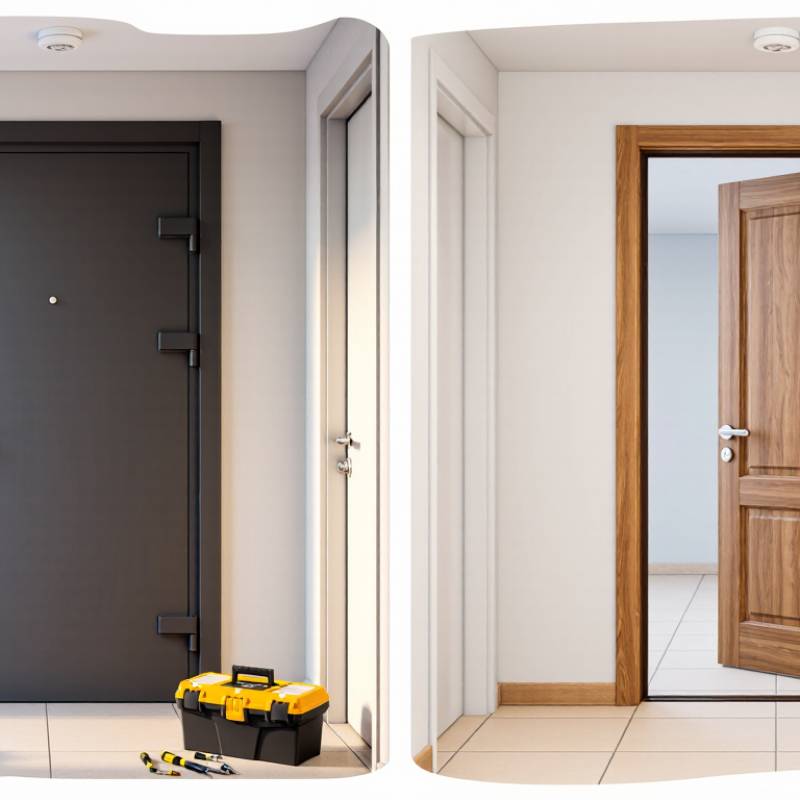
Choosing doors and security doors starts with the opening, not the catalog photograph. Measure width at the top, middle, and bottom. Check height, wall thickness, swing direction, and threshold level. I once trusted a single measurement and underestimated an uneven masonry opening. The frame needed extra adjustment, and installation took longer than planned. Measure twice.

Security performance needs evidence, not impressive wording. Ask for tested resistance ratings and documentation that matches local building rules. Check hinges, locks, glazing, frame anchors, and emergency exit requirements together. A strong door can still fail if the surrounding wall is weak. Consult a qualified installer when the opening is structural or unusually narrow. Shortcuts become expensive.

Calculate the total cost before ordering. Include delivery, old-door removal, structural repairs, hardware, finishing, and future maintenance. A low purchase price may hide difficult installation or costly replacement parts. Compare warranties carefully, especially labor coverage and corrosion exclusions. Consider weather exposure too; a coastal entrance may need more frequent inspections. I should admit that aesthetics can influence my judgment too much. A beautiful finish cannot compensate for poor alignment, unsafe locking behavior, or blocked evacuation. Leave clearance for mats, seasonal expansion, and daily traffic. Test the door at different temperatures if possible.

10 Tips for Choosing Doors and Security Doors - Measure Installation Needs, Safety Standards, and Total Cost

No. Selection Area What to Check Practical Recommendation Indicative Data Cost Impact
1 Measure the Opening Record the rough opening width, height, wall thickness, sill condition, and available swing clearance. Measure at least three points for width and height. Use the smallest measurement and confirm whether the door is an in-swing or out-swing configuration. Allow a typical fitting tolerance of about 10–20 mm, subject to the installer’s requirements. Low if planned early
2 Choose the Door Type Compare interior, exterior, fire-rated, acoustic, storm-resistant, and security-door requirements. Match the door construction to its location. Exterior openings generally need weather-resistant materials, sealed edges, and corrosion-resistant hardware. Common residential door widths are approximately 760–915 mm, but the existing opening should control the final size. Medium to high
3 Verify Safety Standards Check applicable building, fire, accessibility, emergency-exit, and security requirements for the property. Request documented test reports or certification where a fire, smoke, forced-entry, or accessibility rating is required. Fire-rated door assemblies are tested as complete systems, including the frame, hardware, seals, and closer. Medium
4 Assess Security Level Consider the threat level, door location, visibility, nearby lighting, and whether the frame is as strong as the door leaf. Prioritize a reinforced frame, protected hinges, a multi-point or high-quality deadlocking system, and a strike plate securely fixed to the structure. Security performance depends on the complete door set; a strong lock cannot compensate for a weak frame or poor installation. Medium to high
5 Select Suitable Materials Compare steel, aluminum, solid wood, engineered wood, and composite constructions for strength, weight, moisture, and maintenance. Use moisture-resistant construction in exposed areas and confirm that dissimilar metals are protected against galvanic corrosion. Steel generally offers high impact resistance; aluminum reduces weight; wood and composite doors can provide strong thermal performance when properly sealed. Medium
6 Check Lock and Hardware Review lock type, cylinder protection, hinge capacity, door closer, viewer, lever handle, and emergency egress operation. Choose hardware rated for the door weight and traffic level. Ensure occupants can exit quickly without unsafe or complicated steps. A door closer should be adjusted so the latch engages reliably without excessive opening force. Medium
7 Improve Weather and Energy Performance Inspect the threshold, perimeter seals, glazing, thermal breaks, and exposure to rain, wind, and direct sunlight. Use continuous weatherstripping and a properly sealed threshold. Select low-conductivity or insulated construction where heating and cooling loads matter. Air leakage often occurs around the frame and threshold rather than through the door panel itself. Low to medium
8 Plan the Installation Determine whether the wall is masonry, timber, or framed construction, and identify plumbing, wiring, uneven floors, or structural movement. Use qualified installation for security or fire-rated assemblies. Confirm that the frame is plumb, level, square, and securely anchored. Installation commonly takes several hours for a straightforward replacement, but structural repairs can extend the schedule. Medium to high
9 Calculate Total Cost Include the door, frame, lockset, closer, threshold, delivery, removal, disposal, labor, finishing, permits, and future maintenance. Compare at least three itemized quotations and verify what is excluded, especially wall repairs, electrical work, painting, and disposal. Installation and associated work can represent a substantial share of the project total, particularly for custom openings. High importance
10 Review Maintenance and Warranty Check cleaning instructions, lubrication points, seal replacement, finish durability, adjustment needs, and warranty coverage. Schedule periodic inspection of hinges, locks, fasteners, seals, drainage paths, and frame alignment. Keep keys and access credentials controlled. Routine inspection at least annually is sensible for residential doors and more frequently for high-traffic entrances. Low ongoing cost

Note: Dimensions, ratings, installation methods, and compliance requirements vary by building type and local regulations. Confirm final specifications with the applicable authority and a qualified installer.