Why Choose Security Doors for Your Home?
A home’s main entrance faces daily use, changing weather, and occasional unwanted attention. Choosing security doors can add a stronger barrier, but a door works only as well as its frame, lock, and installation. Small details matter: a loose hinge, a poorly fitted frame, or a weak strike plate can undermine an otherwise solid product. That matters.
A practical choice starts with the home itself. Consider the entrance’s exposure, household routines, ventilation needs, and the condition of the existing frame. Look for clear product specifications, tested performance information, and hardware suited to the door’s design. Ask a qualified installer how the door will be anchored, and what maintenance it may need over time. These checks provide more useful evidence than appearance alone.
A substantial door is not automatically a safer one. Nor does any door make a home completely secure. Some features add cost, weight, or upkeep, and those trade-offs deserve honest attention. A mesh panel may improve airflow, for example, while its construction and lock still need careful evaluation. The right option balances protection, durability, access, and everyday comfort. Even after careful research, a choice can feel imperfect; homes differ, and no single design suits every entrance. Understanding those limits helps homeowners make a more informed decision.
What Defines a Security Door for the Home?
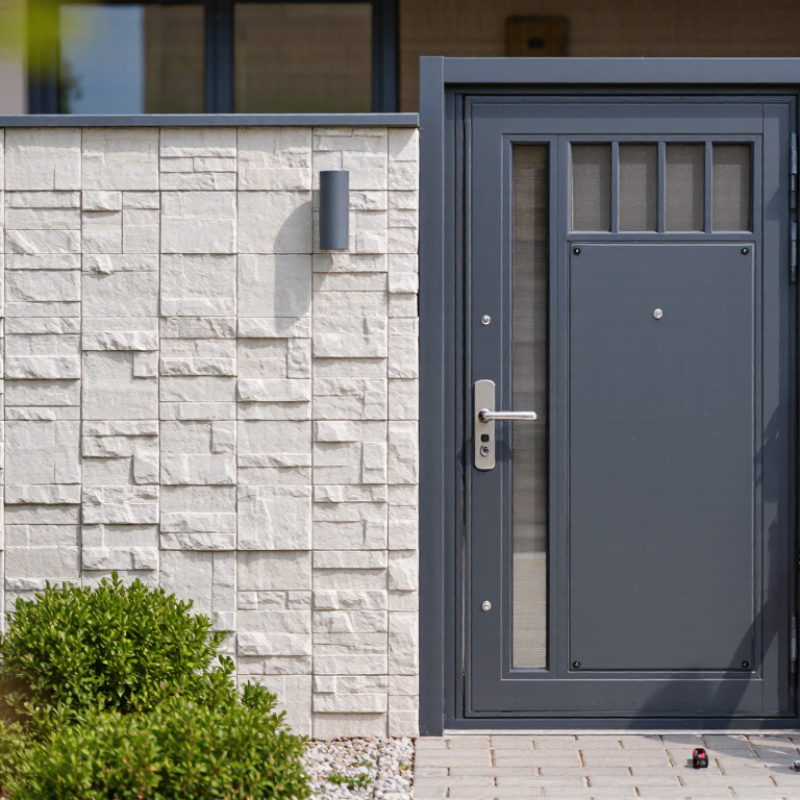
A security door is a complete assembly, not merely a heavy slab or a decorative grille.
Its strength depends on the door leaf, frame, hinges, locking points, and how well each part is fitted. Look for durable construction, reinforced hinge areas, and a frame secured firmly to sound wall structure. The lock matters, but it cannot compensate for a weak frame or poor installation.
Details count.
A door may include laminated or impact-resistant glazing; the glass still needs suitable framing and secure retention. Ask for test documentation that identifies the tested configuration, since hardware changes can affect performance.
Specifications can sound reassuring. Check what they actually cover.
A well-defined security door also balances resistance with daily use. It should close without force, latch consistently, and allow safe exit in an emergency. Inspect gaps, hinge movement, and locking action after installation, then repeat checks as the door settles.
No door makes a home invulnerable. Its purpose is to delay forced entry and make access harder, while fitting the building’s conditions. A practical choice considers exposure, weather, household needs, and professional installation—not appearance alone. There may be compromises: a stronger assembly can cost more, and poorly chosen seals may affect ventilation. Ask for clear maintenance guidance, and question any claim that promises complete protection.
How Security Doors Help Deter Break-Ins
A security door can make an entry point less inviting to an opportunistic intruder. Its visible, solid construction signals that getting inside may take more time and effort. That hesitation can matter. A reinforced frame, secure hinges, and a well-fitted lock work together; a heavy door alone is not enough. If the frame flexes or the latch barely catches, the weakest part may undermine the whole setup.
Look closely at how the door meets the frame. Gaps near the latch, loose hinge screws, or a door that rubs against the threshold can point to poor fit or wear. Glass panels also deserve attention: laminated or impact-resistant glazing may be harder to breach than ordinary glass, though it is not unbreakable. Installation quality matters, too. Even a well-made door can perform poorly if it is anchored incorrectly.
A practical check is simple: close the door, engage the lock, and see whether the door shifts when gently pushed.
No door guarantees that a home cannot be entered, and that is worth saying plainly.
Security doors work best as one layer, alongside good lighting and consistent locking habits. People sometimes focus on the product and overlook everyday use. That can be the weak spot.
Materials and Features That Affect Door Security
A security door is only as strong as its complete assembly, not its surface alone. The FBI’s 2019 Uniform Crime Reporting data recorded 1,117,696 burglary offenses; 62.8% involved residences. That figure does not mean every burglary targets a front door, but it highlights the value of protecting home entry points. Security starts with a rigid door leaf, a well-anchored frame, and hardware that resists prying.
Steel resists impact, but its gauge, weld quality, and corrosion protection matter. A solid-core timber door can also be robust, provided its frame and lock areas are reinforced. Details matter. Look for long hinge screws that reach structural framing, a reinforced strike plate, and a deadbolt with a deep throw. ASTM F476 provides test methods for evaluating the security of swinging door assemblies under simulated forced-entry conditions. A tested assembly offers more useful evidence than a strong-looking door alone.
Glass inserts can be a weak point; laminated glazing tends to hold together when cracked. Still, no design removes every risk. A poorly aligned latch may undermine otherwise sound materials, and heavy doors can be awkward for some household members. Check that the door closes smoothly, the latch seats fully, and the frame shows no movement when firmly pushed.
Additional Benefits for Home Safety and Comfort
A well-fitted security door can make a home feel safer without making everyday routines harder. Its reinforced frame, sturdy hinges, and quality locking hardware add another barrier at the main entrance. It can also let you see who is outside before opening the inner door. Fresh air, less worry. A visible screen may discourage casual tampering, but no door can guarantee protection. The frame and installation matter as much as the door itself.
For comfort, a mesh panel can allow a breeze through while keeping the main door closed. On a warm afternoon, that can help ventilate an entryway without leaving it fully exposed. Some designs also reduce drafts when shut, especially when fitted with suitable seals. The result depends on the doorway and local weather. A heavier door may feel reassuring, yet it can be awkward for children or anyone with limited mobility. That trade-off deserves a little thought.
Tips: Check that the door sits squarely in its frame and opens smoothly. Inspect hinges, locks, and seals from time to time. Check the frame, too. If fitting changes how the main door closes, ask a qualified installer to assess it. Small gaps can undo the comfort benefits. Not perfect, though. A security door is one useful layer, alongside sensible lighting and careful everyday habits.
Why Choose Security Doors for Your Home? — Additional Benefits for Home Safety and Comfort
| Feature |
Home Safety Benefit |
Comfort and Everyday Value |
Practical Consideration |
| Reinforced door construction |
A robust door leaf and frame can make forced entry more difficult than with a lightweight, poorly secured door. |
Provides a more substantial entry door for everyday use. |
Overall performance depends on the complete door set, including its frame, locks, hinges, and installation. |
| Multi-point locking |
Locking at more than one point can help secure the door along its edge when properly engaged. |
Some systems operate from a single handle or key action. |
Follow the manufacturer’s instructions and check that all locking points engage correctly. |
| Secure ventilation |
A purpose-designed security screen can allow airflow while adding a barrier across an open doorway. |
Can help ventilate the home without leaving the main entrance completely open. |
Screen mesh and frame designs vary; a screen should not be treated as a substitute for a locked, solid door. |
| Clear or screened visibility |
Being able to see visitors before opening the main door can support safer entry decisions. |
Some designs let occupants maintain a view outside while the door remains closed. |
Visibility and privacy depend on the glazing, mesh, lighting, and viewing angle. |
| Weather-resistant materials and finishes |
A suitable exterior finish can help protect door components from everyday weather exposure. |
Can reduce the need for frequent refinishing compared with some untreated materials. |
Choose materials suited to the local climate and follow the recommended cleaning and maintenance schedule. |
| Door closer or self-closing hardware |
When correctly adjusted, a closer can help the door return to its closed position after use. |
Useful for households where the entrance is opened frequently. |
A closer does not replace locking the door; it should be checked periodically to ensure smooth operation. |
| Professional fitting and maintenance |
Correct installation helps the door, frame, and locking hardware work together as intended. |
Proper alignment can make opening, closing, and locking easier. |
Inspect hinges, locks, seals, and fixings regularly, and address sticking or loose hardware promptly. |
How to Select and Maintain a Security Door
Choosing a security door starts with the whole assembly, not a heavy-looking slab. Check that the door, frame, hinges, and lock have been tested together for forced-entry resistance. Ask for the test standard and documentation; ASTM F476, for example, covers security testing of swinging door assemblies. The FBI’s 2023 Crime in the United States estimated 847,522 burglary offenses nationwide. That figure gives context, not a prediction of risk at your home. A stronger door can help, but it cannot guarantee safety.
Measure the opening carefully and consider how the door will be used each day. A well-fitted frame, protected hinge pins, and a deadbolt that extends fully into the frame all matter. Inspect the threshold too; gaps can invite drafts and make closing less reliable. For upkeep, check screws, hinges, seals, and lock operation every few months. Look for rust near the bottom edge, especially after wet weather. A door that sticks may need adjustment, not force. I once overlooked a loose hinge; small faults are easy to dismiss.
Tips: Close and lock the door, then test the handle and deadbolt from inside. Tighten loose hardware with the correct tools. Clean debris from the threshold, and replace cracked weather seals. Keep the manufacturer’s care instructions; finishes and lubricants vary. If the frame shifts or the lock binds repeatedly, have a qualified installer inspect it.

 Automatic Doors, Inc.