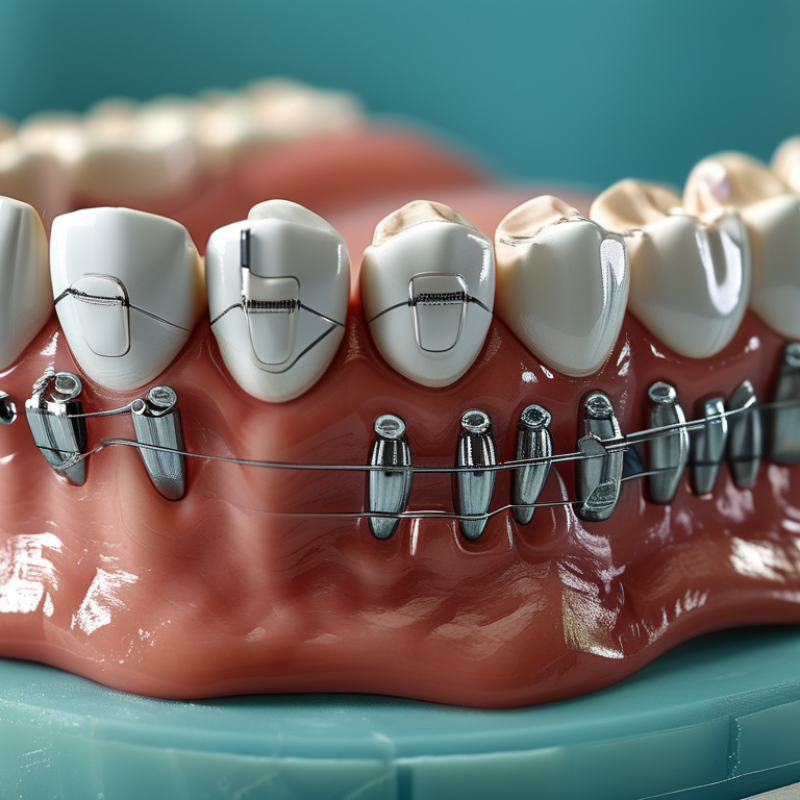
Choosing the right orthodontic system affects more than appearance. It influences chairside efficiency, patient comfort, treatment planning, and clinical communication. Clear Self Ligating Braces attract attention because their transparent brackets offer a less noticeable option than traditional metal appliances. For many adult patients, this difference matters during meetings, photographs, and daily conversations.
The design may also support a smoother clinical workflow. A self-ligating clip holds the archwire without conventional elastic ties, which can simplify wire changes in selected cases. However, convenience should not replace professional judgment. Treatment speed is not guaranteed. Tooth movement still depends on diagnosis, biology, compliance, and careful adjustment. Every case behaves differently.
Small details matter. A clinician must assess enamel condition, bite relationships, crowding, hygiene habits, and aesthetic expectations. Clear brackets can still show discoloration, especially when surrounding materials stain. They are not invisible. Patients may also need clear instructions about brushing around the bracket edges and attending scheduled reviews. These practical conversations build trust before treatment begins.
For dental clinics, the decision should combine clinical evidence, practitioner experience, product quality, and patient needs. Manufacturers’ instructions and current orthodontic literature deserve careful review. Feedback from trained clinicians can reveal workflow benefits that product brochures may overlook. Still, some claims require reflection. Aesthetic design alone cannot define treatment quality. The strongest choice is the system a qualified orthodontic team can apply consistently, monitor closely, and explain honestly.
Why Choose Clear Self-Ligating Braces for Dental Clinics?
Clear self-ligating braces use ceramic brackets with built-in clips instead of elastomeric ties. The clip holds the archwire in place without colored or clear rubber modules. This design gives the appliance a cleaner appearance and may reduce areas where plaque collects. Patients often appreciate the smoother, less noticeable look. Ceramic brackets resist discoloration, but surrounding adhesives and tooth surfaces can still stain. Clear does not mean invisible.
From a clinical perspective, these brackets can make archwire changes more efficient during appointments. However, they do not automatically shorten every treatment plan. Treatment time depends on diagnosis, tooth movement, bone response, and patient cooperation. Careful records, photographs, radiographs, and bite assessment remain essential. Some complex cases may need different mechanics. The design helps, but planning matters more. Evidence is useful, yet no appliance removes clinical judgment.
Tips: Check the clip before each adjustment. Give patients a soft-bristle brush and interdental cleaning advice. Ask them to limit hard, sticky foods. Review gum health regularly. Small habits matter. Explain that ceramic brackets can chip under heavy force, and that maintenance is part of the treatment. A clinic should discuss comfort, hygiene, expected visits, and possible limitations honestly before bonding.
Why Choose Clear Self Ligating Braces for Dental Clinics?
Clear self-ligating braces use a built-in passive clip to secure the archwire. The clip opens and closes without separate elastic or metal ligatures. This design can make archwire placement more direct during routine appointments. The wire rests inside the bracket slot rather than being tightly pressed by the clip. Less friction may help the wire express its shape more consistently, although treatment results still depend on case planning and wire selection.
The workflow can feel simpler. A clinician seats the archwire, closes each clip, and checks engagement across the arch. Fewer ligature-related steps may shorten chairside handling and reduce small materials that collect plaque. Patients may also find the smooth, clear appearance more acceptable in social settings. Still, clear components require careful cleaning and inspection. Staining, clip damage, or incomplete closure can affect performance.
Details matter.
From a clinical perspective, passive clips are useful tools, not automatic solutions. Crowding, bite relationships, enamel condition, and patient cooperation remain central factors. Some cases may need auxiliaries, different wire sequences, or additional appointments. In practice, I would verify every clip with an explorer and confirm that the wire is fully seated. The process is efficient, but it is not foolproof. Evidence should guide expectations, while each patient’s response should guide adjustments.
Passive self-ligating brackets use an integrated clip to hold the archwire, while conventional brackets require a separate elastic or metal ligature. The standard engagement sequence is therefore three core actions for a passive clip—open, insert, and close—compared with four for a conventional ligature system—remove, insert, replace, and secure the ligature. This workflow comparison describes procedural steps rather than treatment-time or clinical-outcome results.
Why Choose Clear Self Ligating Braces for Dental Clinics?
Clinical Evidence: Cochrane Reviews Find No Clear Treatment-Time Reduction
Clear self-ligating braces can support efficient clinical workflows and easier archwire changes. Their clip-based design may reduce some chairside steps. However, design convenience should not be confused with faster treatment.
Cochrane reviews found no clear, clinically meaningful reduction in total treatment time compared with conventional fixed appliances. The evidence included randomized clinical trials, but researchers also described the evidence quality as limited. A review in the Cochrane Database of Systematic Reviews reported inconsistent findings for appointment numbers, discomfort, and treatment duration. Professional guidance from the American Association of Orthodontists commonly places comprehensive fixed-appliance treatment near 18–24 months. Patient biology, crowding, compliance, and treatment complexity still matter more than bracket style.
The honest answer is less exciting. Clear appearance may improve patient acceptance, but it does not guarantee shorter treatment. In a busy clinic, a smoother five-minute adjustment can still have practical value. It just should not be marketed as proof of faster results. I would document actual appointment time and treatment length, then compare outcomes carefully. The data may challenge expectations.
Tips: Explain the evidence before treatment begins. Track missed appointments, wire changes, emergency visits, and finishing time. Use plain photographs and progress records. Avoid promising a shorter course without patient-specific evidence.
Clear self-ligating braces can support a discreet fixed-appliance option for selected orthodontic patients. However, case selection matters more than the bracket design. The American Association of Orthodontists reports that comprehensive orthodontic treatment commonly lasts 18–24 months. The British Orthodontic Society also notes that duration varies with complexity, growth, appliance type, and patient cooperation.
For clinics, suitable cases often include mild-to-moderate crowding, spacing, and dental alignment problems with healthy periodontal tissues. Patients should understand the routine: regular adjustments, careful brushing around brackets, and reliable elastic wear when prescribed. Missed appointments can extend treatment. So can broken brackets.
Evidence does not support promising dramatically shorter treatment solely because a system is self-ligating. A Cochrane review of fixed orthodontic appliances found no clinically important reduction in overall treatment time for self-ligating brackets compared with conventional brackets. That finding should shape consultations. A realistic 18–24-month estimate is more credible than a fast-treatment claim. Severe skeletal discrepancies, complex impactions, active gum disease, or poor cooperation may require different planning or specialist referral. Ceramic components can improve appearance, but they may be more prone to fracture or staining around the edges. Clinics should document photographs, radiographs, periodontal findings, and expected milestones before treatment begins. The attractive option is not always the simplest one.
Why Choose Clear Self Ligating Braces for Dental Clinics?
Clinic Value: Aesthetics, Maintenance, and Evidence-Based Trade-Offs
Clear self-ligating braces offer clinics a practical balance between discreet appearance and controlled orthodontic mechanics. Their ceramic brackets blend with natural tooth color, which can improve confidence during photographs, meetings, and daily conversations. Patients often notice this difference within the first appointment. However, clear materials may be more prone to staining, chipping, or visible discoloration around the edges. Small details matter.
In routine appointments, a sliding clip replaces elastic ligatures and may simplify wire changes. This can reduce some chairside steps, especially when several teeth need adjustment. It does not automatically shorten total treatment time. Current clinical evidence suggests modest efficiency benefits, while treatment outcomes still depend on diagnosis, biomechanics, hygiene, and patient cooperation. Results vary. Appointment efficiency is not the same as clinical superiority.
Maintenance requires clear instructions and careful inspection. Clinicians should explain brushing around bracket edges, avoiding hard foods, and reporting loose clips promptly. A broken ceramic bracket can create extra visits and unexpected costs. In practice, patients who value appearance may accept these trade-offs more readily. Yet the choice should remain individualized, not driven by marketing language. A careful consultation should compare aesthetics, enamel condition, bite complexity, expected duration, and the clinic’s repair workflow before treatment begins.
A practical comparison of clear self-ligating brackets, clear conventional brackets, and metal conventional brackets. Clinical outcomes vary with case complexity, appliance design, operator technique, patient cooperation, and local treatment protocols.
| Clinic Decision Dimension | Clear Self-Ligating Braces | Clear Conventional Braces | Metal Conventional Braces |
|---|---|---|---|
| Aesthetic appearance | High Tooth-coloured or translucent brackets provide a less noticeable appearance than metal brackets. The absence of elastic ligatures can reduce visible colour contrast. | High Tooth-coloured or translucent brackets are discreet, although elastic ligatures may become visibly stained or discoloured between visits. | Low to moderate Stainless-steel brackets and archwires are clearly visible, but they generally offer strong mechanical durability. |
| Ligature-related maintenance | Lower component handling A built-in clip or door eliminates routine replacement of elastic or wire ligatures. The clip still requires inspection for opening, closing, and secure engagement. | Routine ligature replacement Elastic or wire ligatures are changed or adjusted during appointments and may contribute to additional chairside steps. | Routine ligature replacement Elastic or wire ligatures require regular inspection and replacement, but the components are usually robust and familiar to clinicians. |
| Plaque and oral-hygiene considerations | Potentially easier access around the clip Fewer external ligature surfaces may simplify brushing in some areas; however, the bracket, clip, archwire, and gingival margin still create plaque-retentive sites. | Moderate challenge Bracket geometry and elastic ligatures can retain plaque. Effective brushing, interdental cleaning, fluoride use, and dietary guidance remain essential. | Moderate challenge Metal brackets and ligatures can retain plaque. Oral-hygiene performance depends more on patient behaviour and preventive support than on bracket material alone. |
| Friction and sliding mechanics | Potential laboratory advantage Lower measured resistance may occur under specific laboratory conditions, especially with passive clip designs. Clinical friction is also affected by tipping, binding, saliva, wire size, angulation, and force level. | Variable Elastic ligatures can increase resistance in some laboratory tests, but the clinical importance of these differences is inconsistent across treatment situations. | Variable Conventional ligation can produce measurable resistance, while careful ligation technique and appropriate wire selection may reduce unwanted binding. |
| Treatment duration | No reliable automatic reduction Systematic reviews have not consistently demonstrated a clinically meaningful reduction in overall treatment time solely from using a self-ligating mechanism. | Case-dependent Treatment duration is primarily influenced by diagnosis, biomechanics, extractions, growth, appointment adherence, breakages, and finishing requirements. | Case-dependent Conventional metal brackets remain capable of efficient treatment when diagnosis, wire progression, force control, and patient cooperation are appropriate. |
| Number or length of appointments | Possible chairside efficiency Opening and closing a clip may reduce some ligation steps. Evidence does not establish a universal reduction in total appointments or treatment time. | Standard workflow Ligature changes can add chairside work, but experienced teams may complete these steps efficiently within routine adjustment visits. | Standard workflow Familiar ligation procedures support predictable appointment protocols, with efficiency dependent on staffing, case mix, and practice systems. |
| Patient comfort | Not consistently superior Initial placement and adjustment discomfort are expected. Evidence does not consistently show clinically important pain reduction compared with conventional brackets. | Comparable overall discomfort Pressure, tenderness, and soft-tissue irritation can occur after placement and adjustments. Comfort varies substantially between patients. | Comparable overall discomfort Discomfort is usually related to orthodontic force, wire changes, bracket profile, and mucosal contact rather than metal material alone. |
| Bracket durability and repair risk | Material- and design-sensitive Ceramic or clear materials may be more brittle than stainless steel, and the clip introduces a moving component. Handling, debonding technique, occlusion, and patient habits matter. | Material-sensitive Clear or ceramic brackets may be more susceptible to fracture or enamel-related removal concerns than metal brackets, depending on design and clinical technique. | Generally robust Stainless steel is typically resistant to fracture and provides a well-established option for routine and complex mechanics. |
| Staining and colour stability | Lower ligature staining exposure The clear bracket itself may remain relatively stable, while the absence of elastic ligatures reduces one common source of visible staining. Food, plaque, and composite around the bracket can still affect appearance. | Ligature staining possible Elastic ligatures may stain with strongly coloured foods and drinks; the degree varies by material, diet, oral hygiene, and time between appointments. | Not a major concern Metal brackets do not rely on a translucent bracket appearance, although plaque and dietary pigments may affect surrounding surfaces. |
| Clinical control and finishing | Broadly usable, technique-dependent Self-ligation does not replace precise bracket positioning, torque control, wire selection, elastics, auxiliaries, or finishing adjustments. | Broadly established Conventional ligation provides familiar control for alignment, space closure, rotations, torque expression, and finishing. | Broadly established Metal conventional brackets offer extensive clinical familiarity and predictable handling across a wide range of orthodontic cases. |
| Training and inventory implications | Additional system familiarity Teams need training for clip management, opening and closing instruments, debonding, repairs, and inventory of clear components and compatible wires. | Familiar workflow Most orthodontic teams are familiar with elastic or wire ligation, although clear bracket handling and debonding protocols require appropriate training. | Familiar workflow Common instruments, ligation methods, and repair procedures are widely understood, which can simplify staff onboarding and stock management. |
| Patient communication and perceived value | Strong aesthetic proposition Suitable for patients who value a discreet fixed appliance and may appreciate fewer visible ligature changes. Expectations should be set clearly regarding treatment time and maintenance. | Strong aesthetic proposition Provides a discreet appearance, with routine ligature changes offering optional colour choices but also possible staining. | Value focused on predictability Often attractive when durability, familiarity, mechanical versatility, and cost efficiency are prioritised over discreet appearance. |
| Evidence-based bottom line | Best justified by aesthetics and workflow preference The clearest benefits are cosmetic appeal and reduced ligature handling. Claims of faster treatment, fewer visits, or substantially less discomfort should not be presented as automatic outcomes. | Reliable aesthetic option Appropriate when discreet appearance is important and the clinic accepts routine ligature replacement and the material-related maintenance considerations. | Reliable general-purpose option Strong choice when durability, established protocols, mechanical versatility, and efficient inventory management are central clinic priorities. |