Top 10 Solar Garden Lights Suppliers for Global Buyers?
Solar Lights Garden products are moving from decorative accents to practical, low-energy outdoor solutions. Buyers now expect brighter output, longer runtimes, safer batteries, and reliable weather resistance.
The International Energy Agency’s Renewables 2024 report projects that solar power will provide nearly 80% of global renewable capacity growth through 2030. IRENA reported that solar photovoltaic capacity increased by approximately 452 gigawatts in 2024. These figures do not measure garden-light sales directly. They still show the expanding solar ecosystem behind this category.
Quality matters more than appearance.
Francesco La Camera, Director-General of the International Renewable Energy Agency, stated, “Renewables are the backbone of the global energy transition.” His observation supports a wider shift toward efficient, decentralized lighting, including residential gardens, pathways, patios, and commercial landscapes.
However, supplier comparison requires caution. A strong specification sheet can hide weak battery cells, unclear lumen testing, or limited after-sales support. Real buyers should inspect solar-panel efficiency, battery chemistry, IP ratings, operating temperature, replacement policies, and independent product testing. A light that shines brightly for two summer evenings is not a dependable solution.
This guide introduces ten Solar Lights Garden suppliers for global buyers. The selection considers manufacturing experience, export capability, product breadth, customization, certification transparency, and customer support. Some suppliers may appear less impressive online. That deserves a closer look, not an automatic rejection. Product quality can vary between models, factories, and production batches. Reliable purchasing still requires samples, written specifications, and careful verification before larger orders.
What Are Solar Garden Lights and How Do They Work?
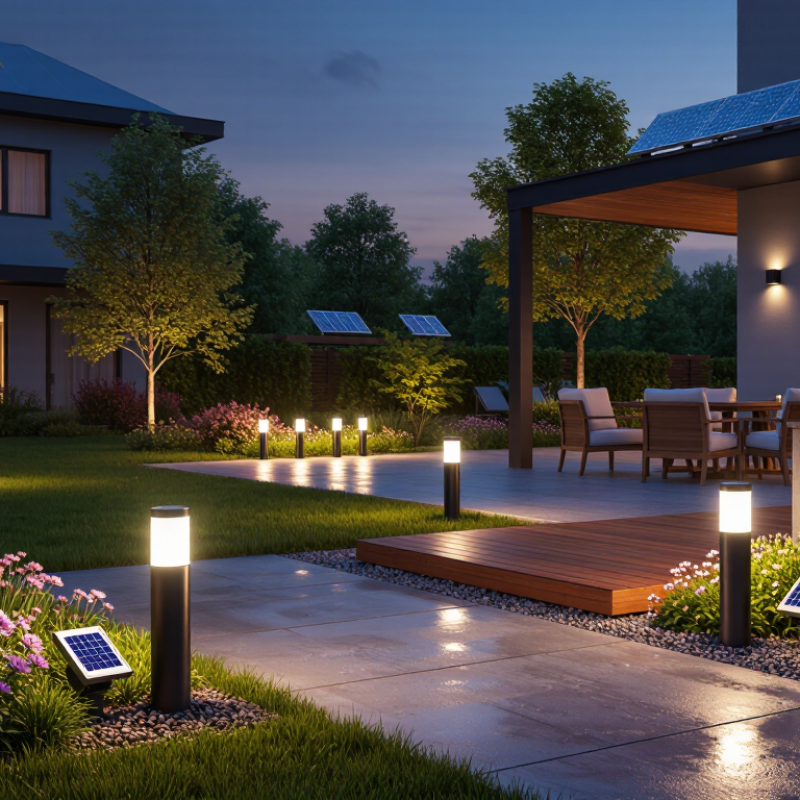
Solar garden lights are compact outdoor fixtures that convert sunlight into stored electrical energy. A small photovoltaic panel captures daylight, even on cloudy afternoons. The panel charges a rechargeable battery through a control circuit. After dusk, a light sensor activates the LED. No mains cable is required.
In practical use, performance depends on more than advertised brightness. Panel angle, shade, battery capacity, LED efficiency, and weather all matter. A path light under a tree may glow for only four hours. One in open sun may last eight or more. Warm and cool LEDs create different garden atmospheres. IP-rated housing helps resist rain, dust, and splashing, but it cannot correct poor installation. Keep the panel clean. Avoid standing water.
For global buyers, reliable evaluation begins with specifications and sample testing. Ask for battery chemistry, charging time, lumen output, working temperature, and water-resistance test data. Check whether replacement batteries and spare parts are available. Packaging should protect panels and stakes during transport. I have found that stated runtime often assumes strong summer sunlight. That is not a fair year-round promise. Seasonal testing exposes this weakness. A useful light should remain safe, stable, and easy to maintain across different climates.
Key Criteria for Evaluating Global Solar Garden Light Suppliers
Choosing among the top 10 solar garden light suppliers requires more than comparing catalog prices. Global buyers should inspect product experience, technical evidence, and supplier reliability. Ask for samples before placing a large order. Test brightness after cloudy days, not only under laboratory lighting. A dependable light should provide stable illumination, secure wiring, and clear charging behavior.
Check the solar panel type, battery capacity, LED lifespan, and expected operating hours. Specifications should use measurable values, such as lumens, color temperature, and battery cycle performance. For garden paths, warm light near 2700–3000K often feels comfortable. Verify the weather-resistance rating, especially around drainage holes and cable joints. An impressive IP rating means little when assembly quality is poor.
Supplier evaluation also includes communication and production controls. Request recent inspection records, packaging details, spare-part options, and realistic lead times. Confirm whether the supplier can maintain identical performance across repeated batches. Sample approval should include a written specification sheet. Keep records.
A low price may hide short battery life or fragile stakes. I have seen attractive samples fail after several weeks of rain. That experience makes factory audits and independent testing worthwhile. Still, audits are not perfect. Human error remains possible. Select suppliers that answer technical questions directly, disclose limitations, and correct defects without vague promises. Reliable documentation supports safer purchasing decisions and smoother global distribution.
Top 10 Solar Garden Light Suppliers for International Buyers
For international buyers, the top ten solar garden light suppliers should be judged by evidence, not catalog size. A dependable supplier shares factory details, production capacity, battery specifications, photometric data, and current test reports. Check LED efficiency, charging time, operating hours, and temperature performance. IP65 protection helps, but sealing quality still needs inspection. Ask for samples before placing a large order. Small tests reveal loose lenses, weak stakes, and uneven illumination.
Supplier candidates may include factory-direct manufacturers, OEM specialists, landscape-lighting producers, and regional exporters. Compare their control over cells, batteries, housings, and final assembly. A supplier that buys every component may offer a lower quote, yet quality can vary between batches. Request a pre-shipment inspection, carton dimensions, HS classification, warranty terms, and replacement procedures. International buyers should also confirm labeling, battery transport documents, payment security, and delivery schedules. Requirements differ by destination.
My practical preference is a supplier that answers technical questions clearly and records corrective actions. One attractive sample proves little. We once overlooked connector corrosion during a dry-season test, and outdoor performance later suffered. That mistake changed our checklist. Test through rain, shade, cold nights, and repeated charging cycles. Review audit reports, customer references, and factory videos with caution. Images can be outdated. A realistic supplier admits limits, reports defects, and agrees on measurable acceptance standards before production.
Top 10 Solar Garden Light Suppliers for Global Buyers
This chart summarizes the number of supplier profiles, out of a 10-supplier comparison set, that publicly specify each buyer-relevant criterion. IP rating, warranty information, customization support, MOQ disclosure, and compliance documentation are key screening factors for international buyers.
Product, Certification, and Customization Comparison
Top 10 Solar Garden Lights Suppliers for Global Buyers: Product, Certification, and Customization Comparison
Global demand is expanding with solar deployment. The IEA’s Renewables 2024 report recorded almost 510 GW of new renewable capacity in 2023. Solar PV supplied about three-quarters of that growth. For buyers comparing ten suppliers, product performance matters more than catalogue variety. Check panel wattage, battery chemistry, lumen output, lighting duration, and winter performance. A light rated for 12 hours may deliver less under cloudy skies. Ask for measured test results, not only marketing claims.
Certification separates reliable suppliers from risky purchases. Request reports aligned with IEC 60598-1 for luminaire safety and IEC 60529 for IP protection. IP65 may suit exposed garden paths, but seals still need inspection. Destination rules can also require CE, UKCA, or other market-specific documentation. The IEA data supports strong market momentum, but it does not prove every product is durable. That distinction is often missed.
Tips: Compare samples before bulk orders. Test charging time, battery capacity, corrosion resistance, and motion sensors for at least two weeks. For customization, confirm logo methods, housing colors, packaging language, firmware settings, MOQ, tooling fees, and replacement parts. A practical supplier should provide a traceable test report and clear warranty terms. My own caution is simple: customization can improve fit, yet it may reduce spare-part availability. Leave that weakness visible in the purchasing review.
How to Select the Right Supplier for Your Market
Choosing among the top solar garden light suppliers requires more than comparing prices. A supplier should understand your market’s climate, purchasing habits, and installation conditions. In humid coastal areas, corrosion-resistant materials and sealed battery compartments matter greatly. For cold regions, ask for performance data at low temperatures. Request product samples before placing a large order. Test brightness, charging time, battery endurance, and automatic sensors outdoors.
Tips: Check the supplier’s factory experience, production capacity, and quality-control process. Ask for current test reports, material details, packaging photos, and clear warranty terms. Confirm the IP rating, LED lifespan, battery type, and replacement availability. A supplier offering only attractive catalog images may still lack stable quality. That risk is easy to underestimate.
Market fit also depends on practical business terms. Review minimum order quantities, sample charges, lead times, payment conditions, and shipping options. Reliable suppliers usually answer technical questions directly and provide consistent documents. They should explain how defective units are handled, not hide behind vague promises. Small trial orders can reveal packaging weakness, uneven lighting, or delayed communication. These problems may appear minor, but they can increase returns and damage customer trust. No supplier is perfect. Even careful buyers may miss a weak component or an unrealistic sales forecast. Keep written records and reassess performance after each shipment.
 Automatic Doors, Inc.