Top 10 Sliding Door Manufacturers in China
Choosing a sliding door manufacturer in China involves more than comparing catalog prices. Buyers must consider frame materials, glass options, track design, hardware, and finishing quality. A door may look impressive in a showroom but perform differently after months of daily use. Small details matter: roller smoothness, sealing around the frame, and how easily the panels align.
This guide introduces ten manufacturers for buyers exploring residential and commercial projects. It highlights practical points to investigate, including product range, customization, production capabilities, and support after delivery. These details can help narrow a shortlist, but they cannot replace direct verification. Request current specifications, inspect samples where possible, and confirm that the proposed design suits the project’s measurements and climate. A supplier’s stated capabilities should be checked against the actual order.
No ranking can fit every buyer. Project size, budget, location, and installation requirements all change what “best” means. A polished catalog is useful, but it is not proof of consistent quality. Ask clear questions about lead times, packaging, replacement parts, and quality checks. Then compare the answers, not just the photos. Some information may still be incomplete; that is a reason to ask for clarification, not to assume. The manufacturers featured here offer a starting point for informed research into China’s sliding door market.
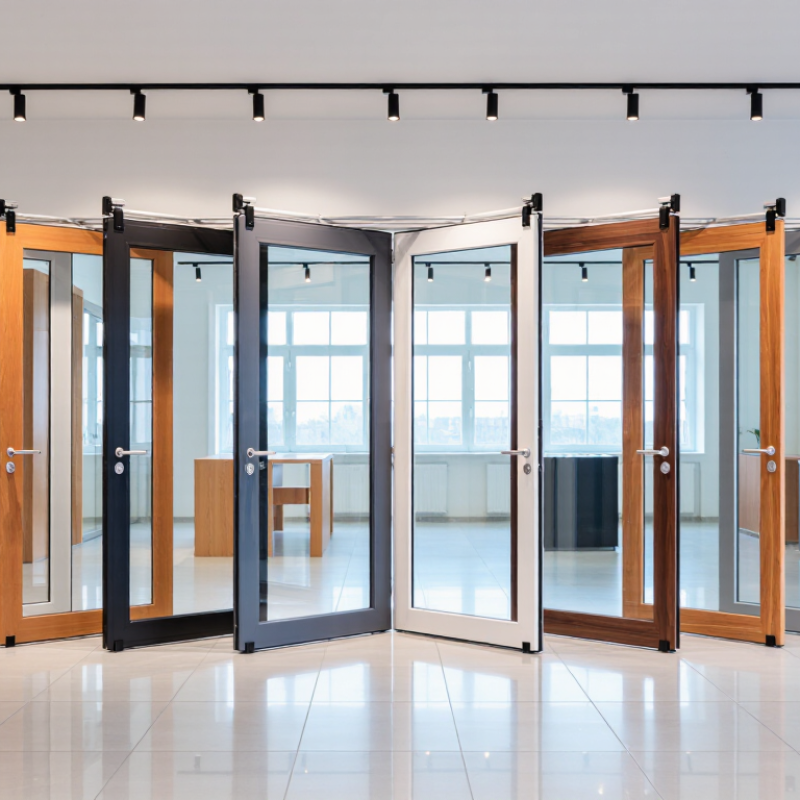
The Development of China’s Sliding Door Manufacturing Industry
China’s sliding door manufacturing industry has grown from basic assembly toward more specialized production. Many factories now use CNC cutting, automated drilling, and controlled powder coating. These processes help keep frame dimensions consistent and finishes more even. Yet equipment alone cannot guarantee a quiet, smooth door.
Manufacturers increasingly work with aluminum profiles, tempered glass, multi-track systems, and improved sealing components. Export demand has also encouraged more size and finish options. In practical terms, buyers may compare roller capacity, track alignment, glass thickness, and replacement-part availability. Small details matter. Industry progress is uneven, though; product testing and after-sales support can vary between suppliers. Better materials do not always mean better installation.
Tips: Ask for load ratings and test details. Check whether rollers and seals are replaceable, and request a sample before approving a large order. A short operating test can reveal drag, wobble, or excess noise.
How to Identify a Leading Sliding Door Manufacturer
A leading sliding door manufacturer should make its quality easy to verify, not just describe it in a brochure. Ask for clear specifications covering frame material, profile thickness, glass options, rollers, locks, and finish. Request a sample corner or working panel. Check whether the frame feels rigid, the coating looks even under side lighting, and the panel moves without scraping. Ask how products are inspected before packing and how transit damage is handled. A polished showroom can hide issues that appear after repeated daily use.
Tips: Compare the same door size and configuration across suppliers. Ask for written test results, production lead times, installation guidance, and warranty terms. Look for recent project references with similar opening sizes and climate conditions. A vague answer is worth noting.
Good communication matters too. Notice whether the manufacturer asks about your wall structure, opening measurements, drainage, and expected use before recommending a system. Ask how replacement rollers or seals can be obtained later. No checklist catches every mismatch, and a sample may not show the full production range. Keep specifications and approvals in writing, and confirm that delivered units match them before installation.
Profiles of 10 Notable Sliding Door Manufacturers in China
China’s sliding-door sector spans residential interiors, balconies, offices, and large commercial openings. The National Bureau of Statistics reported 41.59 million tonnes of primary aluminum production in 2023, indicating substantial material supply, not guaranteed product quality. That distinction matters. The ten profiles here are capability-led, not a verified ranking; without company names, factory-specific claims cannot be checked.
One manufacturer type integrates aluminum extrusion and door assembly, while another specializes in thermal-break frames for exposed balconies. A third focuses on slim sightlines and large glass panels. Heavy-duty systems target wide openings; acoustic-focused makers emphasize brush seals and tighter track tolerances. Wood-aluminum producers combine timber finishes with metal structure. Stainless-steel specialists serve humid or high-traffic spaces. Each approach solves different constraints.
Interior-focused manufacturers often supply wardrobe and room-divider systems, where smooth rollers and compact tracks matter more than weather seals. Commercial partition makers prioritize repeated operation and replaceable components. Export-oriented custom fabricators may offer varied finishes and hardware, but buyers should verify testing documents and spare-parts availability. A useful comparison checks frame thickness, glass compatibility, drainage details, and installation support. Even a polished sample can hide weak rollers. A short factory visit can reveal more than a catalogue.
Products, Materials, and Technologies Across the Top 10
Top 10 Sliding Door Manufacturers in China: Products, Materials, and Technologies Across the Top 10
Across China’s sliding-door sector, product ranges commonly include two-panel patio doors, multi-track systems, pocket doors, and large glass openings. The right option depends on opening size, weather exposure, and how often the door will be used. A broad catalog alone tells little about performance.
Frame materials shape weight, upkeep, and insulation. Aluminum supports slim sightlines, while thermal breaks can limit heat transfer through the frame. uPVC offers low-maintenance surfaces, though color and size choices may vary. Wood brings a warmer appearance but needs suitable finishing and care. Glass also matters: insulated units can improve thermal comfort, while laminated glass may help hold fragments together if broken. Small parts matter.
Hardware deserves close attention. Rollers should move smoothly under the expected panel weight, and adjustable fittings can help correct minor alignment issues. Brush seals, interlocking stiles, and drainage paths affect drafts and rainwater handling. Some systems use soft-close devices or motorized operation, but extra features add maintenance points. I would not treat a wider frame as automatically stronger; design, hardware, and installation work together. Catalog figures can be useful, but they may not reflect the conditions of a real opening. There is no perfect specification.
How to Compare and Select a Chinese Sliding Door Manufacturer
How to Compare and Select a Chinese Sliding Door Manufacturer
When comparing Chinese sliding door manufacturers, start with the project conditions, not the catalog photos. Record the opening size, exposure to wind and rain, indoor temperature, and expected daily use. Ask each supplier to quote the same configuration. Otherwise, a lower price may simply reflect thinner profiles, different glass, or fewer hardware options. Small details matter.
Request profile cross-sections, glass specifications, and hardware details. Check how the frame drains water and how the rollers can be adjusted or replaced. Ask for a sample corner or a complete sample unit, then inspect its finish, seals, and movement yourself. Smooth operation matters. For larger orders, clarify how dimensions are checked, how defects are recorded, and who approves changes before production. A factory visit or live video walkthrough can help, though neither guarantees consistent quality.
Compare more than price and promised lead time. Ask for a written production schedule, packaging method, replacement-part policy, and clear warranty terms. Confirm whether drawings include installation tolerances and whether the supplier can answer technical questions in plain language. Vague replies deserve follow-up. One detail is easy to overlook: a well-made door can still perform poorly if measurements or installation are wrong. Leave time to review shop drawings, and do not assume every supplier interprets “standard” the same way.




 Automatic Doors, Inc.