Top 10 Lithium Battery Pack Manufacturers in 2026
A lithium battery pack is more than a bundle of cells. Its performance also depends on thermal management, battery controls, enclosure design, safety testing, and manufacturing quality. These details matter. For automakers, energy-storage developers, and equipment manufacturers, choosing a supplier can affect reliability, costs, and product life.
Demand is growing quickly. The International Energy Agency’s Global EV Outlook 2024 reported that electric-car battery demand reached about 750 GWh in 2023, roughly 40% above the previous year. BloombergNEF’s 2024 Battery Price Survey put the average lithium-ion pack price at $115 per kilowatt-hour, a 20% year-on-year decline. These figures describe broad market trends, not the performance of any single manufacturer. Price alone is a poor compass.
This Top 10 Lithium Battery Pack Manufacturers in 2026 guide compares companies on practical factors: product range, production capability, technology, quality systems, and experience serving different applications. Some suppliers specialize in vehicle packs; others focus on energy storage or industrial equipment. Their strengths are not interchangeable. Public claims can also be difficult to compare, since companies may report capacity and performance differently. That limitation deserves attention.
The rankings should therefore be read as a starting point, not a substitute for technical due diligence. Buyers should verify specifications, certifications, warranty terms, and service coverage for their intended use. Even a leading name may not fit every project.
How Lithium Battery Packs Are Designed and Used
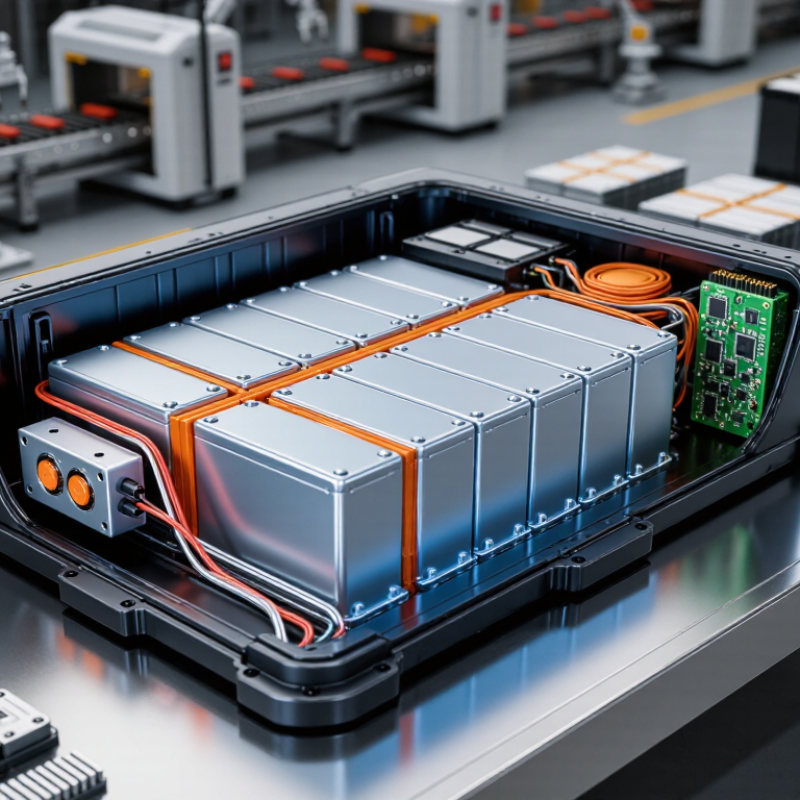
Lithium battery packs begin with the job they must perform. A vehicle needs strong acceleration and dependable range; a storage system may prioritize daily cycling and steady output. Designers select cell chemistry, voltage, capacity, and series-parallel layout around those demands. Then they add a battery management system to monitor cell voltage, temperature, and current. Cooling paths, insulation, fuses, and a rigid enclosure help control heat and vibration. Small details matter.
The International Energy Agency reported that electric-car battery demand reached about 750 GWh in 2023, roughly 40% higher than in 2022. That growth makes pack design more than a cell-selection exercise. It also requires attention to serviceability, manufacturing consistency, and end-of-life handling. Packs power cars, grid storage, material-handling equipment, and portable industrial tools. Yet calculations do not capture every real-world condition. Dust, uneven temperatures, and aging connections can still surprise operators.
Tips: Match the pack’s continuous and peak power ratings to the equipment, not just its advertised capacity. Check operating-temperature limits and charging guidance. Record unusual heat or rapid capacity loss; these clues deserve investigation, not guesswork.
Key Criteria for Evaluating Manufacturers in 2026
Top 10 Lithium Battery Pack Manufacturers in 2026
Key Criteria for Evaluating Manufacturers in 2026
Choosing a lithium battery pack manufacturer requires evidence beyond a polished datasheet. The IEA’s Global EV Outlook 2025 reports that electric-car battery demand exceeded 1 TWh in 2024, about 25% higher than in 2023. At this scale, consistent production, cell traceability, and quality control matter. Ask for batch-level capacity, resistance, and cycle-life results—not just headline figures. Small variations matter.
Assess safety through documented testing, thermal-management design, and traceable quality records. Request test conditions, sample sizes, and failure criteria; cycle-life figures without temperature or depth-of-discharge details reveal little. Review warranty terms, field-return handling, spare-part access, and engineering response times. Check that the supplier can meet your chemistry, voltage, and enclosure requirements. Factory audits help, but cannot predict every field failure. A clean report is not proof of dependable field performance.
Tips: Compare two production lots using the same test protocol. Inspect sample-pack labels, connectors, welds, and enclosure finish. Record assumptions; supplier quotations may use different test conditions.
Top 10 Lithium Battery Pack Manufacturers in 2026 — Key Evaluation Criteria
Specific energy is one useful comparison point when evaluating a battery pack manufacturer, alongside safety, cycle life, quality controls, certifications, and application suitability. Bars show the midpoint of typical published cell-level ranges; actual values vary by cell design and are not pack-level ratings. Typical ranges: LTO 70–80, LFP 90–120, LCO 150–200, NMC 150–220, and NCA 200–260 Wh/kg. Source: Battery University, “BU-205: Types of Lithium-ion.”
Top 10 Lithium Battery Pack Manufacturers in 2026
Ranking the top 10 lithium battery pack manufacturers in 2026 depends on more than shipment volume. The International Energy Agency’s Global EV Outlook 2024 reported that electric vehicle battery demand reached about 750 GWh in 2023, up 40% from 2022. That rapid growth makes production capacity important, but it does not prove pack quality. Buyers should compare cell sourcing, battery management systems, thermal controls, warranty terms, and documented testing. Small details matter: a temperature sensor placed poorly can miss a hot spot inside a tightly packed module.
A useful comparison checks pack-level energy density, cycle life under stated conditions, charging limits, and protection against dust and water. Ask for test results at a defined temperature and discharge rate; figures without test conditions are hard to compare. Also check whether the supplier can trace cells by batch and support field repairs. No ranking is perfectly clean. Some lists measure cell output, while others count assembled packs, so the “top 10” can shift with the method. One imperfect point: published specifications do not always reflect performance after years of vibration, heat, and repeated charging. Independent validation helps close that gap.
How Leading Manufacturers Differ in Technology and Markets
Manufacturers differ less by headline capacity than by how they balance cell chemistry, pack design, and control software. LFP packs often suit fleet vehicles and stationary storage, where cycle life and thermal stability can outweigh compact size. Nickel-rich chemistries can offer more energy in a smaller footprint, but demand tighter temperature and charging control. That trade-off is real.
A useful comparison looks inside the enclosure. Busbar layout, cell compression, cooling paths, and sensor placement influence heat spread and service access. In a warehouse, technicians may need replaceable modules and clear fault logs; in a passenger car, weight and range may dominate. Check performance claims against test conditions, including ambient temperature, discharge rate, and end-of-life capacity. Numbers need context.
Markets shape manufacturing choices, too. High-volume mobility programs reward automated assembly and consistent traceability, while smaller industrial systems may value configurable voltage and local maintenance support. Supply resilience matters, but adding suppliers takes time and can introduce variation. Even experienced teams can underestimate connector wear or software integration work. Those details deserve scrutiny.
Choosing a Manufacturer for a Specific Application
A manufacturer should be evaluated against the job the battery must perform, not a broad capacity figure. Start with the device’s voltage, peak current, daily energy use, and available space. A pack that fits on paper may still run hot inside a sealed enclosure. Small details matter.
Ask how the supplier validates the battery management system, cell matching, and thermal behavior under your actual load profile. Request test data for charge cycles, temperature limits, vibration, and expected service life. For equipment used outdoors, check performance at the coldest and hottest operating temperatures. For a medical or industrial device, traceability and consistent production controls may matter as much as energy density. A useful technical discussion should include concrete limits, not just a polished data sheet.
Consider the full operating routine. Will the pack be charged overnight, swapped between shifts, or stored for weeks? These patterns change the right balance between capacity, charging speed, and cycle life. Ask about sample units, integration support, warranty terms, and replacement lead times before committing to volume. One thing buyers can overlook: prototype performance does not guarantee identical results across production batches. I would leave room for a pilot run and a few inconvenient questions. That may slow selection slightly. It can reveal whether the proposed design truly fits the application.
 Automatic Doors, Inc.