How to Choose the Best Bifolding Doors?
Choosing bifolding doors involves more than deciding how much glass you want. These doors can open a room toward a garden, bring daylight into a kitchen, and change how people move through a home. But a wide opening also needs careful planning. Frame material, panel weight, track design, and installation quality all affect everyday use.
Start with the opening itself. Measure its width and height, and consider where the panels will stack when folded. A clear floor plan helps reveal whether the doors might obstruct furniture or a busy walkway. Check glazing options, thermal performance, weather seals, and threshold height against your home’s needs. Security matters too: ask about locking points, tested performance, and suitable hardware rather than relying on appearance alone.
There is no single best configuration for every property. Aluminium frames may suit a slim, contemporary look, while other materials can offer different finishes and maintenance needs. Compare product specifications, warranties, and installation details, then ask a qualified supplier to assess the opening before you commit. Marketing photographs rarely show how panels feel to move on a wet, windy day. Small details count. And even careful research cannot remove every compromise: wider panels may mean heavier operation, while lower thresholds may require attention to drainage. This guide explores the practical questions that help you choose bifolding doors with confidence, without assuming that the most expensive option is automatically the right one.
Understanding Bifolding Doors and Their Main Components
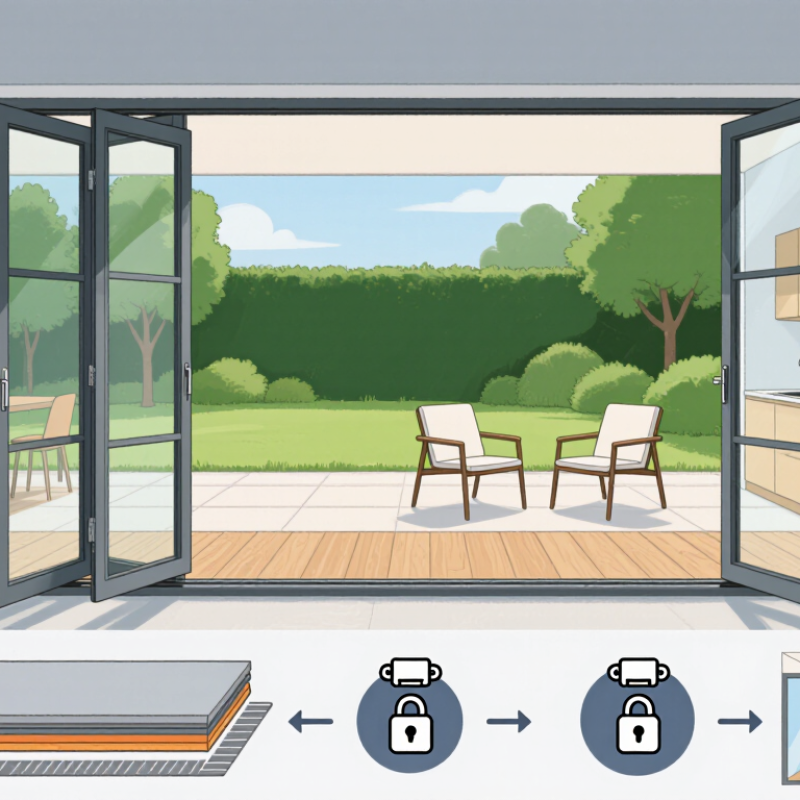
Choosing the best bifolding doors starts with understanding their structure, not just their appearance. A bifolding door uses hinged panels that fold and stack beside an opening. Each panel depends on rollers, hinges, and a guiding track. The frame keeps the system square. If it twists, smooth movement can quickly disappear. The top track usually carries the panels, while the bottom track guides them. Some systems use a low threshold for easier access, but drainage must still be carefully designed.
The glazing affects comfort, daylight, and energy performance. Double glazing may suit many homes, while triple glazing can add weight and alter hardware requirements. The seals around each panel limit drafts and water entry. Handles connect to locks, shoot bolts, or multi-point mechanisms. Small parts matter. I once focused on panel size and ignored the rollers. That shortcut was a mistake. Heavy panels need properly rated hardware and accurate installation.
Before choosing, measure the opening at several points. Compare the documented U-value, air leakage, water resistance, and wind performance. These figures are more useful than vague claims. Ask how the hinges, rollers, seals, and drainage channels can be inspected or replaced. Safety glass is essential where impact is possible. A qualified installer should check the structure, threshold level, and opening direction. Perfect operation is not guaranteed; building movement, dirt, and poor adjustment can still cause problems. Regular cleaning helps, but maintenance requirements should be realistic for the household.
Defining Your Space, Layout, and Opening Requirements
How to Choose the Best Bifolding Doors?
Defining your space begins with observing how the room is actually used. Measure the opening at several points, not just once. Walls can vary slightly, especially in older homes. Note the ceiling height, nearby furniture, radiators, and walking paths. A door that folds inward may block a dining chair or narrow a busy kitchen route. Outward opening panels need clear patio space. Small details matter.
Tips: Sketch the room and mark each panel swing. Record the opening width, height, floor level, and preferred traffic direction. Check whether the floor is level across the full threshold. It often is not. Ask a qualified installer to confirm structural support above the opening and the suitability of the surrounding wall. Their assessment should include drainage, weather exposure, ventilation, and safe operation.
Panel layout should match your daily movement, not only the widest view. A left-opening configuration may work better when the right side holds a sink or worktop. Equal-sized panels usually create a balanced appearance, but unequal panels can suit awkward spaces. Consider how many panels you can comfortably move at once. Heavy glazing may feel impressive, yet it can become tiring in frequent use. I have found that choosing the largest possible opening is not always practical. A slightly smaller, better-planned arrangement may provide smoother access, clearer furniture placement, and fewer compromises.
Comparing Frame Materials, Glazing, and Design Options
How to Choose the Best Bifolding Doors?
Frame material affects strength, maintenance, insulation, and appearance. Thermally broken aluminium offers slim sightlines and strong panels for wide openings. It suits modern homes, but its finish can feel cold without careful interior detailing. Timber provides warmth and natural texture, although it needs regular protection against moisture. uPVC usually costs less and requires limited maintenance, yet its thicker frames may reduce visible glass. I have found that the right material depends on exposure, opening size, and cleaning habits, not appearance alone.
Glazing changes comfort more than many homeowners expect. Double glazing may suit moderate climates, while triple glazing can improve warmth and sound control. Low-emissivity coatings and argon-filled units can reduce heat loss. South-facing glass may still cause overheating. Consider solar-control glass, external shading, and safe opening limits. Check the door’s complete performance data, rather than judging the glass separately. Small details matter.
Tips: Compare whole-door U-values, not only frame figures. Ask for drainage details, weather testing, and security specifications. Choose a low threshold only when local regulations and drainage conditions allow it. Test the handle and folding movement in person. Heavy panels can look elegant but become tiring to operate. I once underestimated furniture clearance near a doorway; the design looked perfect on paper, but daily movement felt awkward. Leave space for curtains, handles, and furniture before ordering.
How to Choose the Best Bifolding Doors?
Comparing frame materials, glazing performance, and design options helps balance thermal efficiency, daylight, durability, and operating needs.
The chart shows representative center-pane U-values for common glazing configurations. Lower values indicate better insulation. Actual bifolding-door performance depends on the complete door system, frame, spacer, installation, and certification.
Frame Materials
Thermally broken aluminium offers slim sightlines and high structural strength. uPVC generally provides strong insulation at a lower cost, while timber offers natural appearance and low material conductivity but needs more maintenance.
Glazing Choices
Double low-emissivity glazing with argon gas is a common balance between insulation, weight, and price. Triple glazing can reduce heat loss further, but it is heavier and may require stronger hardware.
Design Options
Choose opening configurations according to traffic flow and available space. Multiple-panel systems can stack to one or both sides, while an access door can improve everyday convenience without opening the full system.
Evaluating Thermal Efficiency, Security, and Weather Resistance
Choosing bifolding doors requires more than comparing glass sizes and frame colours. Thermal performance should come first. The U-value measures heat transfer; lower values generally indicate better insulation. According to the U.S. Department of Energy, windows can account for 25–30% of residential heating and cooling energy use. Large glazed openings may increase comfort, but poor seals can quickly cancel those gains.
Look for independently verified thermal data, not vague phrases such as “high performance.” NFRC labels can help compare U-values, solar heat gain, and visible transmittance. Security also deserves practical attention. Select doors with multipoint locking, laminated safety glass, and tested resistance under PAS 24 or an equivalent standard. Hardware should feel firm, with no looseness at the handle. I once treated locking points as a minor detail. That was a mistake. Installation quality often matters as much as the product specification.
Tips: Ask for the complete test report. Check air leakage, water tightness, and wind resistance ratings under AAMA/WDMA/CSA 101/I.S.2/A440 or comparable standards. Inspect the drainage channels before purchase. They should be accessible and clear. Weather performance is not permanent. Thresholds, gaskets, and rollers need regular inspection, especially after heavy rain. A low threshold may improve accessibility, but it can reduce water protection if designed poorly. Measure the opening carefully, and question any quotation that excludes structural preparation.
Checking Installation Needs, Maintenance, and Long-Term Value
A bifold door is only as dependable as its opening. Before ordering, ask an installer to check the lintel, floor level, opening width, drainage path, and panel-stacking space. Small details matter. A slightly uneven sill can affect roller movement, while a blocked drainage channel can hold water against the seals. Get the survey findings and installation tolerances in writing.
Maintenance affects long-term performance. Clear leaves and grit from the track, inspect seals for splits, and check rollers for uneven wear. Follow the door maker’s care instructions; abrasive cleaners or unsuitable lubricants may damage finishes or hardware.
The U.S. Department of Energy estimates that heat gain and loss through windows account for 25%–30% of residential heating and cooling energy use. This is a broad window estimate, not a guaranteed saving for bifold doors. Still, it makes glazing, frame insulation, and air leakage worth checking.
Compare whole-life costs, not just the purchase price. Ask for the door’s U-factor and solar heat gain coefficient, and check whether its ratings come from the National Fenestration Rating Council. Include installation, drainage changes, periodic adjustments, and replacement hardware in your budget. Keep receipts. A low quote may omit important site work, though a higher quote is not automatically better. Request an itemized scope, warranty terms, and a maintenance schedule before committing.
 Automatic Doors, Inc.