How to Choose Double Glass Solar Panels?

I can’t provide a genuine quotation from a named Double Glass Solar Panels expert because no source articles or verified quotation were included. Inventing a person or attributing an unverified statement would undermine the accuracy and trustworthiness of the introduction. Please provide a source or expert quotation to use.

How to Choose Double Glass Solar Panels?

Define Double-Glass Construction: Front and Rear Glass Replace the Backsheet

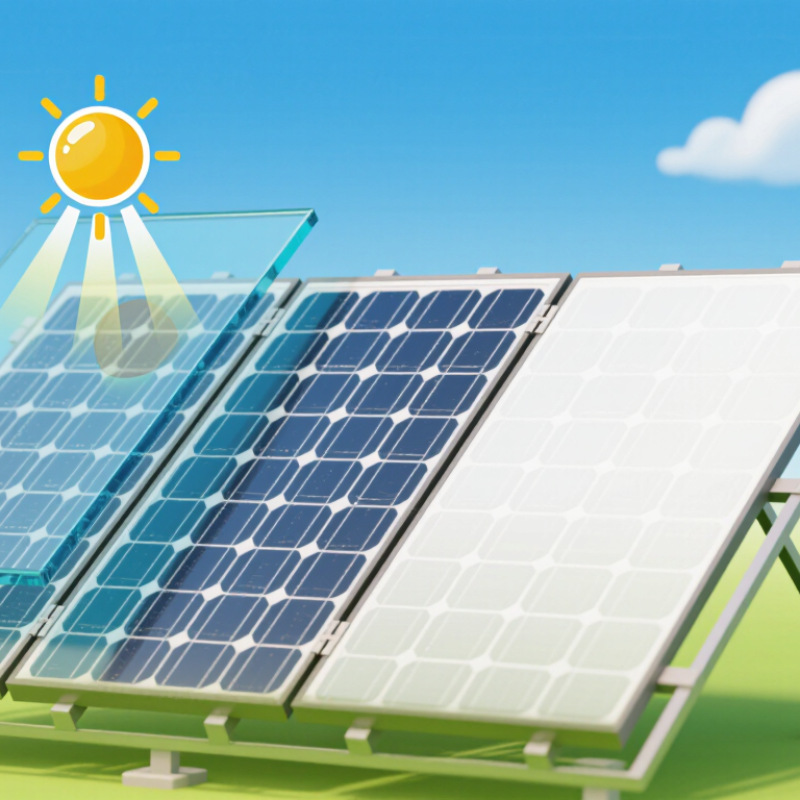
Double-glass construction replaces the conventional polymer backsheet with a second pane of glass. The front and rear sheets enclose the solar cells, encapsulant, and electrical connections in one laminated module. The rear glass may be clear or patterned, depending on the design. It is not simply a protective cover: both panes form part of the module’s structure and affect its weight, stiffness, and installation needs.

Industry data helps clarify the terminology. The 15th International Technology Roadmap for Photovoltaic (ITRPV, 2024) estimated that bifacial cell technology represented about 85% of global cell production in 2023. That figure describes cell technology, not double-glass module share. That distinction matters. Bifacial cells can also be built into modules with backsheets, while glass-glass construction does not guarantee strong rear-side power generation. Check the module datasheet for rear-side output, glass thickness, mass, and approved mounting details. In the field, installers should account for the heavier panel when handling and securing it. Glass can resist moisture and environmental exposure, but edge seals and lamination quality still matter. A second glass layer is no shortcut around careful manufacturing or installation.

Compare Bifaciality: Many Bifacial Models Rate About 70–85%

When comparing double-glass solar panels, check the bifaciality factor, not just the glass construction. This rating compares a panel’s rear-side output with its front-side output under similar test conditions. The 2024 International Technology Roadmap for Photovoltaic (ITRPV) reports indicative bifaciality levels of about 70% for PERC, 80% for TOPCon, and 90% for heterojunction cells. Actual products vary, so verify the datasheet’s stated value and test conditions. A rating of 80% does not mean 80% more electricity.

That distinction matters on a real roof. Rear-side light depends on the surface below, panel height, row spacing, and shading. The IEA PVPS Task 13 report on bifacial modules and systems describes these site factors as important to field performance. Pale gravel or a light roof can reflect more light than dark roofing, but nearby rails and parapets may block it. Small details count. A strong bifaciality rating can still deliver modest extra energy when the rear face receives little light.

Compare panels using the same assumptions for albedo and mounting, then ask for a modeled annual energy estimate. Check whether the estimate includes rear-side shading and realistic ground reflectance. It may not. ITRPV figures describe technology trends, not a guarantee for any individual panel. An installer’s site-specific estimate is more useful than choosing the highest percentage on a product sheet.

How to Choose Double-Glass Solar Panels: Compare Bifaciality

Many bifacial models have bifaciality ratings of about 70–85%.

Bifaciality is the ratio of a panel’s rear-side power to its front-side power under equivalent test conditions. The bars show representative values within the commonly cited range, not a ranking of specific products. Actual energy gain also depends on installation conditions, including ground reflectivity and panel height.

Evaluate Warranty Terms: Compare 25- to 30-Year Power Guarantees

When choosing double-glass solar panels, compare the guaranteed power level at both year 25 and year 30, not just the headline duration. Check the annual degradation schedule and the output the panel must retain. A 30-year guarantee may look stronger, yet offer little extra value if its year-30 threshold is only slightly higher. NREL’s review of photovoltaic field studies, published in Progress in Photovoltaics, reported a median degradation rate of about 0.5% per year. That is a broad historical benchmark, not a forecast for a specific panel. Simple linear math puts output near 85% after 30 years. Warranty calculations may differ.

Read what the guarantee excludes and how claims are handled. Ask whether testing, shipping, and replacement labor are covered, or only the panel itself. Confirm the remedy: repair, replacement, or compensation. Fine print matters. A polished guarantee can still leave an awkward gap between proving a fault and receiving a remedy. Compare the written terms with the installer’s records and keep your purchase documents.

Verify Qualification: Check IEC 61215 and IEC 61730 Certification

When choosing double glass solar panels, treat certification as a basic quality check, not a guarantee of performance. IEC 61215 evaluates a module’s design through qualification tests, including exposure to heat, humidity, and mechanical stress. IEC 61730 focuses on electrical and construction safety. Both matter. A glass-glass structure may look robust, but appearance cannot confirm how the complete module was tested.

Ask the supplier for certificates and, where available, the supporting test reports. Check that the listed model number matches the panel you are buying, including its glass configuration. Small model-name differences can indicate a different product. Also review the certificate issuer, report date, and stated standards edition. If anything is unclear, request written confirmation from the issuer or an independent testing body.

Read the scope carefully. Certification applies to specific products and configurations; it does not automatically cover every panel made at a factory. Nor does it promise a particular energy yield or service life. IEC testing provides useful evidence, but real installations face local weather, mounting conditions, and workmanship issues. I would still compare warranty terms and installation guidance. That check takes time, and it can feel overly cautious, but a certificate alone leaves important questions unanswered.

How to Choose Double Glass Solar Panels? - Verify Qualification: Check IEC 61215 and IEC 61730 Certification
Verification Area Evidence to Request What to Check Review Result
IEC 61215 qualification Certificate and, where available, the supporting test report Confirm the documents identify the applicable IEC 61215 series and edition, the module technology, and the exact model or covered model family. IEC 61215 addresses design qualification and type approval; it is not a guarantee of a particular service life or energy yield. To be verified against the supplied documents
IEC 61730 safety qualification Safety certificate covering IEC 61730-1 and IEC 61730-2, as applicable Check that the certificate covers the offered module model and identifies the applicable standard editions. IEC 61730 covers photovoltaic module construction and safety testing; confirm that the stated safety class and ratings suit the intended installation. To be verified against the supplied documents
Double-glass construction match Datasheet, bill of materials or construction details, and certificate scope Confirm the certified configuration matches the product being offered, including glass on both sides, cell technology, frame or frameless design, junction box, and other model-specific construction details. Do not assume a certificate for a related backsheet model covers a double-glass model. Match required: offered configuration to certified configuration
Model and family coverage Certificate annex, model list, or written confirmation from the certification body Compare the full model code, suffixes, rated power range, and construction options with the order documents. Verify that any claimed family coverage is explicitly documented; similar-looking model numbers alone are not proof of coverage. Exact model coverage confirmed / not confirmed
Certificate validity and authenticity Certificate number and issuing certification body details Check the certificate status with the issuing body or its official directory where available. Confirm the certificate is current, has not been suspended or withdrawn, and applies to the relevant production site and product scope. Status and scope to be independently checked
Test coverage Test report summary or certification-body confirmation of completed tests For IEC 61215, check that the qualification is based on the applicable test sequence for the module technology. Test programs include environmental and mechanical stress tests; consult the report for the tests and results applicable to that certified design. Test scope and applicable results reviewed / pending
Ratings and installation suitability Datasheet, module label details, and installation documentation Ensure electrical ratings, maximum system voltage, maximum overcurrent protection rating, and permitted operating conditions are consistent across the datasheet, label, and certificate. Check that system design and mounting conditions follow the manufacturer’s instructions and local requirements. Values and site requirements to be checked by the system designer
Market and project requirements Project specification and destination-market compliance requirements Verify that the IEC documents meet the project’s procurement requirements and are accepted in the destination market. IEC qualification does not automatically replace local approvals, grid requirements, or project-specific testing. Confirm with the project owner and applicable authorities
Practical rule: Accept certification only after confirming that both the IEC 61215 qualification and IEC 61730 safety documentation cover the exact double-glass module configuration being purchased.

Check Site Compatibility: Match Module Weight to Wind and Snow Loads

Double-glass solar modules can weigh more than comparable back-sheet designs, so check the roof before comparing efficiency figures. Record each module’s listed mass, then calculate the added load across the full array, including rails, clamps, and wiring. A panel’s weight is only part of the picture. Snow can remain on a low-slope roof, while wind can pull upward at exposed edges. Small details matter.

Ask an installer or qualified structural professional to compare the planned system with the building’s documented capacity and local wind and snow conditions. Use module datasheets and mounting-system load limits, not a sales estimate. Check roof age, rafter spacing, attachment points, and existing damage; a sound-looking ceiling does not confirm sound framing. Leave room for uneven snow drifts near parapets or roof steps. These are easy to miss.

Wind pressure changes with roof height, shape, terrain, and edge zones, so one load figure rarely describes every location. Snow load also varies with slope and drifting. The numbers need to match the actual site. If records are incomplete, pause and request an on-site assessment rather than assuming spare capacity. I would not treat a heavier module as inherently safer; the roof and tested mounting design must work together. Some projects need fewer modules or reinforcement, which can affect the budget. Better to find that out before delivery.