Best Anti Flammable Cabinet 2026 for Safe Storage

Choosing the Best Anti Flammable Cabinet for 2026 means looking beyond color and price. These cabinets help keep flammable liquids organized and reduce exposure to fire risks when selected and used appropriately. A dependable model should have clear capacity information, sturdy construction, secure doors, and storage features suited to the chemicals on hand. Check the product documentation, too. A cabinet that looks robust may still be a poor fit for your workspace.

Laboratory safety educator James A. Kaufman has said, “Safety is not an intellectual exercise to keep us in work; it is a matter of life and death.” That perspective matters when comparing cabinets. Consider where the unit will stand, how staff will access containers, and whether labels remain visible under everyday use. Think about the small details: a door that closes smoothly, shelves that support the expected load, and enough room to avoid cramming bottles together. The right choice depends on your materials and work routine, not just a feature list.

This guide examines practical selection points, including capacity, construction, access, and maintenance. It also encourages careful review of manufacturer instructions and applicable workplace requirements. No cabinet makes careless storage safe. That part is easy to forget. A thoughtful choice can support safer routines, though it cannot replace staff training or regular checks. Before buying, compare models against real storage needs—and be honest about what your team may overlook.
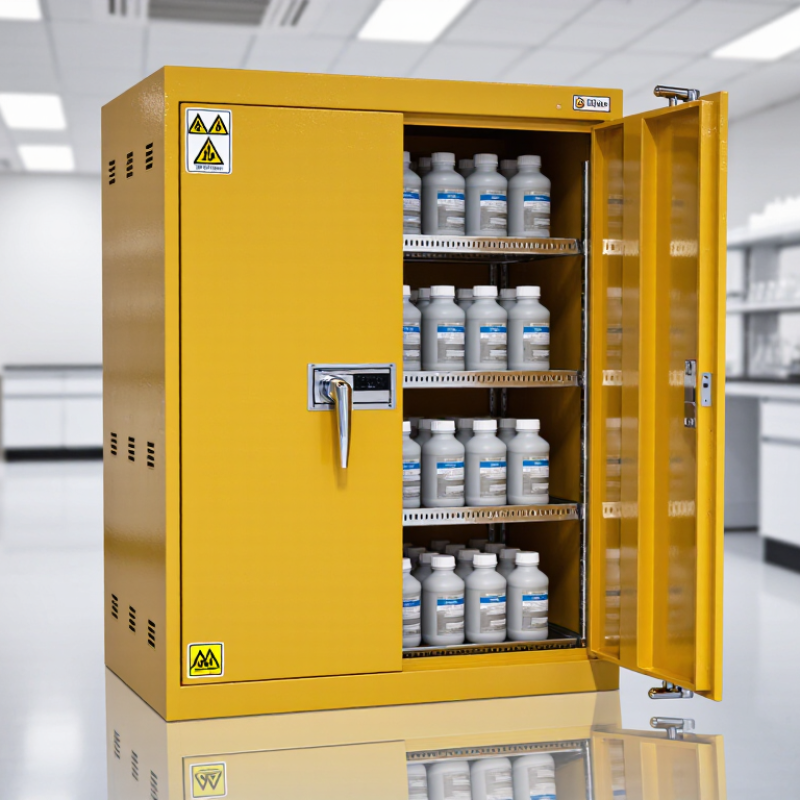
Best Anti Flammable Cabinet 2026 for Safe Storage

What Defines the Best Flammable-Liquid Cabinet for Safe Storage in 2026?

The best flammable-liquid cabinet in 2026 is not simply the largest or most heavily built. It should match the liquid’s classification, the quantity stored, and the way staff use it. OSHA’s 29 CFR 1910.106 sets cabinet limits of 60 gallons for Category 1, 2, or 3 flammable liquids, and 120 gallons for Category 4 liquids. NFPA 30 also provides guidance for storing flammable and combustible liquids. Check the current standards and local requirements before choosing a cabinet.

Look for durable construction, secure doors, and shelves that contain small spills. Confirm that the cabinet materials suit the liquids inside; a label alone cannot establish chemical compatibility. Think about daily access, too: a cabinet placed beside a busy doorway may be compliant on paper but awkward in practice. I would not assume one cabinet design fits every workspace. Storage volumes, transfer routines, and ventilation needs can differ.

Tips: Keep an up-to-date inventory, follow the cabinet’s stated capacity, and keep containers closed when not in use. Train staff to check for leaks and damaged doors. Small details matter. Revisit the setup after processes change.

How OSHA 29 CFR 1910.106 Sets Cabinet Limits at 60 or 120 Gallons

Best Anti Flammable Cabinet 2026 for Safe Storage

OSHA 29 CFR 1910.106 sets different storage limits based on liquid category. A cabinet may hold up to 60 gallons of Category 1, 2, or 3 flammable liquids. The limit is 120 gallons for Category 4 flammable liquids. These are not interchangeable allowances.

That distinction matters. A container label or safety data sheet can help identify a liquid’s category. Check each product before placing it inside the cabinet. Do not estimate from the container size or assume every flammable liquid qualifies for the higher limit. I would also avoid treating mixed liquids as a simple arithmetic exercise; confirm the applicable rule for the specific workplace.

Cabinet limits are only one part of safe storage. Keep containers closed, arrange them to prevent tipping, and leave labels visible. Inspect shelves and the cabinet floor for leaks or residue. Keep the cabinet away from heat sources, and follow its installation instructions. Local fire codes or site rules may set stricter requirements. A careful count takes a few minutes. It is easy to overlook a partly used container, so record stored quantities and review them when stock changes.

How 18-Gauge Steel, Double Walls, and a 2-Inch Sump Protect Stored Liquids

An 18-gauge steel cabinet gives stored liquids a sturdy outer shell that resists dents from routine bumps and handling. Its thickness matters, but it is only one part of safe storage. Double-wall construction leaves an insulating air space between the inner and outer steel walls. In a fire, that space can slow heat transfer and help delay the contents from reaching dangerous temperatures. It does not make the cabinet fireproof. That distinction matters.

A 2-inch sump at the base can catch leaks and spills before they spread across the floor. Picture a loose cap dripping onto the cabinet floor: the raised lip helps contain the liquid for cleanup. The sump needs enough clear capacity, so containers should not block it or sit in pooled residue. Keep doors shut when the cabinet is not in use, and store compatible liquids according to their safety data sheets. Check hinges, latches, and seals for wear. Steel is not magic. Even a well-built cabinet can be misused, and actual protection depends on installation, maintenance, and the specific product’s tested specifications.

How NFPA 30 Guides Cabinet Placement, Liquid Segregation, and Fire Safety

Best Anti Flammable Cabinet 2026 for Safe Storage

NFPA 30 offers a practical framework for storing flammable and combustible liquids, but a cabinet alone cannot control every fire risk. Place it where staff can reach it without blocking exits, aisles, or firefighting equipment. Keep it away from heat, sparks, and routine impact from carts. Check the adopted code and local fire authority requirements; site conditions matter. A clear label helps, but it can still be overlooked during a busy shift.

Segregate liquids by hazard and chemical compatibility, not just by container size. Keep incompatible materials apart, and never assume one cabinet makes mixed storage safe. NFPA’s report Fires in Industrial and Manufacturing Properties estimates that U.S. fire departments responded to an average of 37,910 such fires annually from 2017 to 2021. The fires caused an average of 18 deaths, 274 injuries, and $1.5 billion in direct property damage each year. That is sobering. A cabinet is only one part of a storage plan.

Tips: Keep cabinet doors clear. Post readable contents and hazard labels. Inspect containers for leaks, and document checks. Small routines matter. They are easy to skip.

Best Anti Flammable Cabinet 2026 for Safe Storage - How NFPA 30 Guides Cabinet Placement, Liquid Segregation, and Fire Safety

Use this reference table for planning and routine checks. Confirm the adopted NFPA 30 edition, applicable workplace regulations, local fire code, and requirements of the authority having jurisdiction (AHJ) before selecting or locating a cabinet.

Planning Dimension Practical Criteria and Data Code and Safety Note
Cabinet purpose Choose a listed or otherwise code-acceptable safety cabinet intended for the liquid hazards and workplace conditions involved. Check the cabinet label, instructions, compatibility, and permitted storage capacity. NFPA 30 addresses flammable and combustible liquid storage. A safety cabinet helps limit exposure to a fire; it should not be described as fireproof.
Maximum quantity per cabinet For U.S. workplaces covered by OSHA 29 CFR 1910.106(d)(3)(i), the limit is 60 U.S. gallons (227 L) of Category 1, 2, or 3 liquids, or 120 U.S. gallons (454 L) of Category 4 liquids, per cabinet. These are OSHA limits; verify the applicable NFPA 30 edition, adopted fire code, and local rules. Do not treat the cabinet’s physical volume as its permitted liquid capacity.
Cabinet construction For metal cabinets under the OSHA provision, construction includes double walls with a 1½-inch (about 38 mm) air space, doors with a three-point latch, and a liquid-tight bottom, top, and sides with a raised bottom of at least 2 inches (about 51 mm). Check the exact regulatory text and any locally adopted alternatives before purchasing. Follow the cabinet manufacturer’s installation and use instructions.
Cabinet placement Place cabinets where they do not obstruct exits, aisles, fire equipment, or access routes. Keep them away from avoidable heat and ignition sources, and select a location appropriate to the room’s fire protection and ventilation arrangements. Confirm required separation distances and allowable locations with the adopted code and AHJ; placement rules can depend on the occupancy, quantity, and building conditions.
Liquid segregation Store only compatible materials together. Separate flammable liquids from oxidizers and other incompatible chemicals; use the safety data sheet (SDS) and a chemical compatibility review to determine segregation needs. A flammable-liquid cabinet is not automatically suitable for every hazardous chemical. Keep incompatible materials in separate, appropriately designed storage.
Containers and spill control Keep containers closed when not in use, upright, clearly identified, and in sound condition. Arrange them to prevent tipping and make sure leaks or spills can be safely contained and addressed. Use suitable secondary containment and spill-response procedures where required by the hazard assessment, applicable regulations, or site rules.
Ventilation Do not modify cabinet vents or connect a cabinet to an exhaust system without confirming that the arrangement is permitted and properly designed. OSHA does not generally require safety cabinets to be vented. If ventilation is used, follow applicable code, manufacturer instructions, and AHJ direction.
Fire safety and housekeeping Keep cabinet doors closed, maintain clear access to exits and firefighting equipment, control ignition sources, and ensure workers know the site’s spill and fire-response procedures. A cabinet does not replace workplace fire protection, safe handling practices, or an emergency plan.
Routine inspection Set a documented inspection schedule. Check labels, doors and latches, visible damage or corrosion, container condition, leaks, housekeeping, and stored quantities. Remove damaged containers and address defects promptly under the site’s procedures. Inspection frequency should reflect applicable rules and workplace risk.
Useful references NFPA 30, Flammable and Combustible Liquids Code; OSHA 29 CFR 1910.106, Flammable Liquids; the current SDS for each stored product; and local fire and building codes. Requirements may vary by edition, jurisdiction, and workplace. Verify the current adopted requirements before implementation.

How to Compare Cabinets by Capacity, Construction, Compliance, and Daily Use

When comparing a flammable-liquid safety cabinet, start with the actual containers and daily workflow. Measure the tallest bottle and check how many must remain accessible during a shift. A cabinet that technically fits may still leave awkward gaps or block easy access.

Capacity limits matter: OSHA’s 29 CFR 1910.106 allows up to 60 gallons of Class I or II liquids, or 120 gallons of Class III liquids, in a cabinet. These are maximums, not recommended fill targets.

Construction and compliance deserve close inspection.

For U.S. workplaces, OSHA specifies double-wall steel construction with a 1.5-inch air space, a raised sill, and a three-point latching door for qualifying metal cabinets. Verify the product’s documentation and required markings against applicable local rules; a painted exterior alone proves little.

Daily use is easy to underestimate. Check that shelves adjust to your containers, the door closes without obstruction, and staff can identify contents quickly.

NFPA’s 2018 analysis estimated an average of 37,910 fires annually at industrial and manufacturing properties during 2011–2015. Those fires were not all linked to stored liquids, but the figure makes routine storage decisions worth reviewing.

Small details count. A poorly placed cabinet can turn a compliant setup into an inconvenient one.