Choosing the right access doors is becoming a specification issue, not a minor purchasing decision. Global buyers now compare fire resistance, insulation, security, corrosion protection, and installation speed. The Global Construction 2030 study by Oxford Economics and Global Construction Perspectives forecasts worldwide construction output could reach $15.5 trillion by 2030. More projects mean more concealed services, inspection points, and maintenance openings.
Demand will not be identical everywhere. A coastal hospital may need stainless steel access doors with strong corrosion resistance. A commercial tower may require insulated, fire-rated panels near shafts and mechanical rooms. The IEA’s Buildings Global Status Report states that building operations consume about 30% of global final energy. That figure makes airtight, insulated access doors more relevant during energy reviews. It also shows why a low purchase price can become an expensive mistake.
There is no universal “best” model.
Professional buyers should verify tested performance, not rely on attractive photographs or vague catalog language. Look for documented ratings, compatible hardware, accurate opening dimensions, and clear installation instructions. Standards such as UL, ASTM, EN, and local building codes may apply differently by market. Certification should be checked for the exact product configuration.
Manufacturers also need to explain lead times, packaging, replacement parts, and quality-control procedures. ISO 9001 certification can support confidence, but it does not replace product testing. That distinction is often missed.
This guide compares leading access doors by application, material, performance, and lifecycle value. The final choice may still depend on climate, wall construction, service frequency, and approval requirements. A cheaper door can fail quietly. That deserves closer thought.

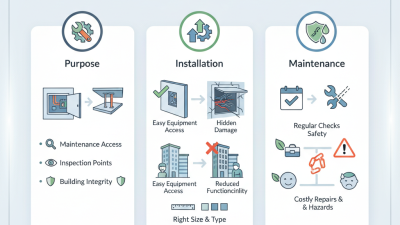
Access doors are hinged or removable panels that provide controlled entry into concealed building services. They are installed in walls, ceilings, floors, shafts, and equipment enclosures. Plumbers use them to reach valves and traps. Electricians use them near junction boxes and distribution routes. HVAC technicians need them around dampers, filters, and inspection points.
Small details matter. A ceiling panel may sit beside a ventilation grille, while a floor hatch can expose a drain valve in a service corridor. Common types include drywall panels, metal panels, insulated doors, fire-rated units, and weather-resistant exterior models. The right choice depends on location, access frequency, moisture, load, and required fire performance. A neat panel is not automatically a safe panel. Its frame must fit the wall system, and its latch should allow maintenance without damaging finishes.
Energy performance makes access design more important. The International Energy Agency’s Buildings 2023 report states that buildings used about 30% of global final energy and produced roughly 26% of energy-related emissions in 2022. The 2024 Global Status Report for Buildings and Construction reports an even broader sector share, at 32% of global energy use. Poorly sealed panels can weaken insulation and allow air leakage. Fire-rated access doors must match the tested wall or ceiling assembly and local codes. Global buyers should request test evidence, corrosion data, opening dimensions, and installation instructions. Specifications are often overlooked. That can become an expensive maintenance problem.

Choosing the best access door depends on the building application, not only the purchase price. Ceiling access doors suit maintenance above suspended ceilings, where electricians inspect cables and ventilation equipment. Drywall access panels create a nearly flush finish in offices, hotels, and residential corridors. Floor hatches need stronger frames and slip-resistant surfaces for service areas or plant rooms.
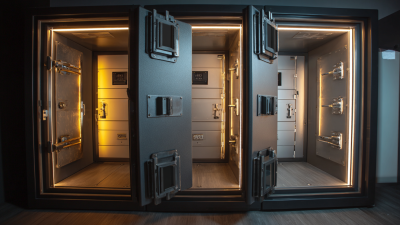
Fire-rated access doors require careful specification. They should match the surrounding fire-resistance assembly and carry tested performance documentation. In wet rooms, kitchens, and exterior walls, gasketed or weather-resistant models help limit moisture entry. Security-sensitive spaces may require concealed hinges, restricted locks, or reinforced construction.
Small details matter.
They often fail quietly.
The International Energy Agency reported that buildings and construction represented about 30% of global final energy demand and 26% of energy-related emissions in 2022. Poorly sealed access points can weaken insulation continuity, especially around mechanical rooms and roof spaces. Insulated panels can support thermal control, but their value depends on correct installation. A professional assessment should check panel size, load, humidity, fire rating, and maintenance frequency. Global buyers also need installation instructions that fit local wall systems and codes. One specification cannot serve every market. That assumption deserves reconsideration.
Top Access Doors: Which Type Is Best for Global Buyers?
Material choice should match the installation environment, not only the purchase price. Galvanized steel suits dry indoor service areas and offers strong impact resistance. Aluminum is lighter and performs well where handling or moisture matters. Stainless steel is a better option for humid rooms, food facilities, and coastal locations. No material wins every project. I have seen low-cost steel doors corrode quickly when ventilation was poor.
Design affects daily access and visual quality. Hinged doors work well where regular inspection is expected, while lift-out panels save space in narrow ceilings. Recessed frames can accept tile, plasterboard, or other finishes for a cleaner appearance. Check hinge clearance, latch operation, and frame depth before ordering. Fit comes first. A beautiful door becomes inconvenient when nearby pipes block its opening.
Performance testing deserves equal attention. Compare load capacity, corrosion resistance, air leakage, moisture protection, insulation, and fire performance where applicable. A ceiling panel near an air-conditioning system may need a tighter seal than one in a dry corridor. Ask for test methods, tolerances, installation instructions, and material specifications. Test it twice. Product data can look precise, yet site conditions often differ from laboratory settings. Global buyers should also review packaging, replacement parts, and installation support, because transport damage and local workmanship can change final performance.
| Access Door Type | Typical Material | Common Applications | Design Features | Performance Characteristics | Main Advantages | Important Limitations | Best Choice For |
|---|---|---|---|---|---|---|---|
| General-Purpose Metal Access Door | Galvanized steel, usually powder-coated or painted | Interior walls, ceilings, utility rooms, plumbing and electrical access | Flanged frame, concealed or exposed hinges, latch or key-operated lock | Good rigidity and impact resistance; performance depends on panel thickness, frame design and seal quality | Cost-effective, durable and widely available in standard sizes | Ordinary steel can corrode in humid, coastal or chemical environments | Commercial and residential projects with normal indoor conditions |
| Stainless Steel Access Door | Stainless steel, commonly grades 304 or 316 depending on exposure | Food processing, healthcare, commercial kitchens, marine and coastal facilities | Welded or folded frame, brushed or polished surface, corrosion-resistant hardware | High corrosion resistance and good cleanability; grade 316 generally provides better resistance to chlorides than grade 304 | Long service life, hygienic surface and strong resistance to moisture | Higher material and fabrication cost; surface can show scratches and fingerprints | Wet, hygienic, coastal or chemically exposed environments |
| Aluminum Access Door | Extruded or formed aluminum with anodized, painted or powder-coated finish | Exterior soffits, façades, ceilings and applications where low weight is important | Lightweight frame, removable or hinged panel, optional gasket and concealed fasteners | Good atmospheric corrosion resistance and easy handling; generally less impact-resistant than heavier steel designs | Lightweight, easy to install and suitable for many exterior applications | Can deform under heavy impact; contact with dissimilar metals requires suitable detailing to reduce galvanic corrosion | Projects prioritizing low weight, appearance and moderate outdoor exposure |
| Plasterboard or Drywall Concealed Door | Metal frame with a panel designed to receive plasterboard, skim coat or paint | Finished walls and ceilings where the access panel should blend with the surrounding surface | Minimal-gap frame, push-latch or concealed opening mechanism, paintable face | Excellent visual integration; acoustic, smoke or fire performance requires a tested complete assembly | Architecturally discreet and suitable for high-quality interior finishes | Installation and alignment require care; exposed edges may be damaged by impact or moisture | Hotels, offices, residences and other appearance-sensitive interiors |
| Fire-Rated Access Door | Insulated steel or other materials used within a tested fire-resisting assembly | Fire-rated walls, ceilings, shafts and service enclosures | Intumescent seals, insulated leaf, positive latching and self-closing hardware where specified | May provide a certified fire-resistance period, such as 30, 60 or 90 minutes, only when tested and installed as specified | Supports compartmentation and helps protect concealed services during a fire | Higher cost; certification can be invalidated by incorrect size, hardware or installation | Projects governed by fire codes or requiring certified fire compartments |
| Smoke- and Airtight Access Door | Coated steel, aluminum or stainless steel with compression gaskets | Mechanical rooms, clean areas, HVAC enclosures and pressure-controlled spaces | Continuous gasket, compression latch, close-fitting frame and controlled panel tolerances | Reduces uncontrolled air and smoke leakage when the complete assembly is properly sealed and tested | Improves energy control, cleanliness and pressure management | Gaskets need inspection and eventual replacement; not automatically fire-rated | HVAC, cleanroom-support and energy-conscious building applications |
| Floor Access Hatch | Load-rated steel, aluminum or stainless steel; optional infill panel | Basements, crawl spaces, plant rooms, cable trenches and service pits | Recessed or surface frame, lift assistance, safety stays and anti-slip or infill cover | Load capacity must be selected for pedestrian, light-duty or vehicular traffic; drainage and slip resistance may also be required | Provides safe access to below-floor services and can integrate with finished flooring | Requires accurate structural opening and adequate lifting clearance | Floors exposed to foot traffic, equipment loads or occasional maintenance access |
| Plastic or Composite Access Panel | ABS, PVC or fiber-reinforced polymer | Residential plumbing, baths, light-duty interior service access and humid areas | Snap-fit, screw-fixed or hinged panel with molded frame | Resists ordinary moisture and will not rust; load, temperature and UV resistance vary by polymer and design | Low weight, simple installation and economical production | Lower impact and heat resistance than metal; generally unsuitable for fire-rated or heavy-load applications | Low-cost, non-structural indoor access points |
Choosing the best access door depends less on appearance and more on the building’s environment. Global buyers often face different humidity, temperatures, maintenance habits, and construction methods. A simple steel door may suit a dry commercial corridor, while an insulated model performs better near cold exterior walls. In coastal regions, corrosion-resistant finishes deserve closer attention.
For tiled bathrooms and kitchens, a recessed access door can keep the wall surface visually consistent. However, tile weight can stress a weak frame. Drywall projects usually need a lightweight door with a clean, paint-ready flange. Floor access panels require stronger hinges, sealed edges, and a surface that reduces slipping. They also need careful load assessment, especially in warehouses and public buildings.
Fire-rated doors may be necessary around protected service spaces, but the required rating depends on local building rules and the surrounding wall assembly. Buyers should request test documentation, installation details, and material specifications before ordering. This is where many projects become less certain. A door that fits the opening may still fail because of poor anchoring or incorrect clearance. In humid markets, stainless steel can be practical, though it may increase cost. In dusty regions, gasketed designs help protect valves and cables. Local installers should confirm measurements on site, since drawings are not always accurate.
Global buyers should evaluate access doors against project conditions, not appearance alone. A reliable door must match the wall, ceiling, floor, or service shaft where it will be installed. Check the required opening size, frame depth, panel strength, and hinge clearance before ordering. A small mismatch can delay installation and create expensive site modifications.
Standards require careful interpretation. Buyers should request current test reports for fire resistance, smoke control, insulation, air leakage, water resistance, and load capacity. Relevant requirements may come from local building codes, EN standards, ASTM methods, or other recognized systems. Certification must match the exact door assembly, not merely a similar product. Ask whether testing covers the lock, frame, gasket, and installation method. Verify these details with an independent inspector or local authority.
Material selection also affects service life. Stainless steel suits damp rooms, while coated steel may work well in dry interior spaces. Aluminum reduces weight, but it may not suit every load requirement. Review corrosion exposure, cleaning chemicals, temperature changes, and expected maintenance. On real projects, installers often discover that a concealed latch is difficult to operate with gloves. That detail matters. A perfect checklist is unrealistic. Buyers should compare drawings, samples, test documents, lead times, spare parts, and installation guidance. Packaging quality deserves attention too, especially when doors travel through humid ports and crowded warehouses.