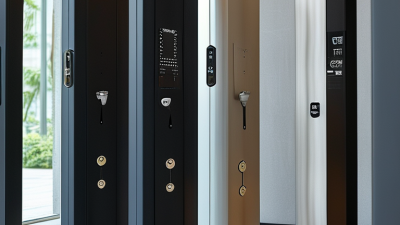
2026 Top Swing Doors What Should Global Buyers Know?

In 2026, swing doors remain practical choices for offices, hotels, healthcare facilities, retail spaces, and controlled industrial areas. Global buyers now expect more than attractive finishes. They need reliable operation, measurable durability, accessibility, and suitable energy performance.

The 2024 Global Status Report for Buildings and Construction, published by UNEP and the Global Alliance for Buildings and Construction, reported that buildings used about 32% of global energy in 2022. They also produced approximately 34% of global energy-related carbon emissions. These figures make door selection more important than it may appear. A well-fitted swing door can support better room separation, reduce unwanted airflow, and simplify daily movement. Small gains matter.

They accumulate.

Industry research from Grand View Research and MarketsandMarkets also points toward continued demand for commercial and industrial door systems, driven by renovation, automation, hygiene control, and logistics growth. However, market forecasts are not purchasing instructions. Local climate, traffic frequency, wall construction, hardware quality, and maintenance skills can change the result completely.

Buyers should compare opening cycles, hinge performance, frame tolerances, closing force, fire-rating documentation, and replacement-part availability. Healthcare and food environments may require smooth, cleanable surfaces and specialized seals. High-traffic entrances may need impact-resistant leaves or automatic operators. Standards such as EN 16005, ANSI/BHMA A156.10, and relevant local accessibility requirements can guide evaluation, but compliance must be verified for each project.

One specification rarely fits every country. A lower purchase price may create higher service costs later. That uncomfortable detail deserves attention. The best swing doors are not simply the most advanced. They are the ones matched carefully to traffic, users, climate, and long-term maintenance realities.
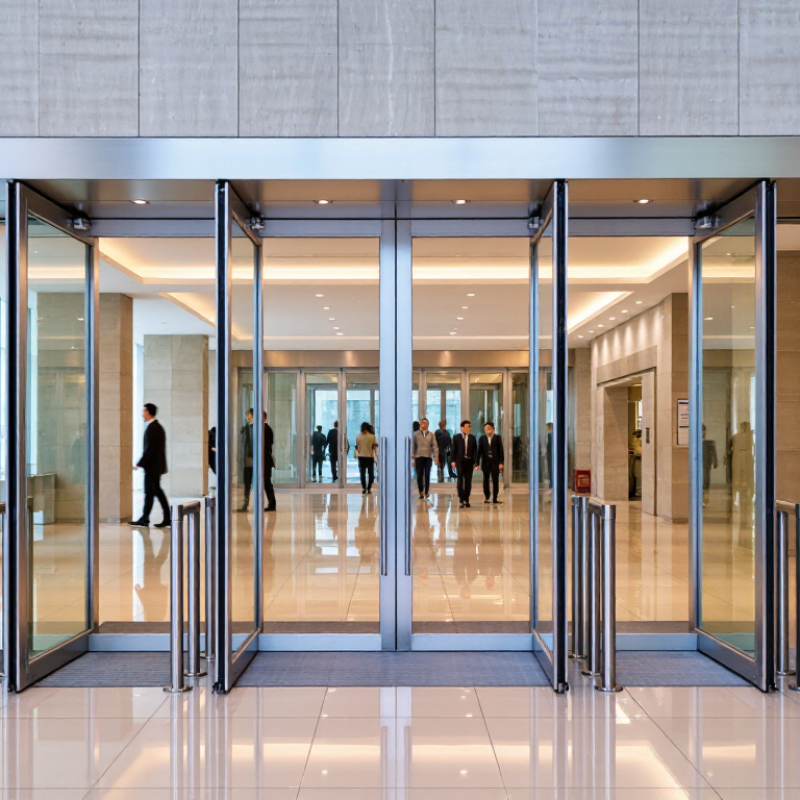
2026 Top Swing Doors What Should Global Buyers Know?

What Swing Doors Are and How They Work

Swing doors are hinged or pivoted panels that open through an arc. They may move in one direction or both directions. A single-action door returns to its frame after opening. A double-action model can swing inward and outward, which suits busy corridors and service areas.

The operating principle is simple. Hinges carry the panel, while a closer controls its return speed. Some doors use a floor spring instead, hidden beneath the threshold. When a person pushes the panel, stored mechanical force brings it back. The frame, seals, handles, and clear opening all affect performance. In site inspections, I check whether a loaded cart can pass without touching the door. Small errors matter. A narrow clearance can become a daily obstruction.

Tips: Confirm the swing direction before ordering. Measure the finished opening, not only the rough wall space. Check door weight, traffic frequency, nearby walls, and threshold height. For public or commercial projects, review applicable accessibility and fire-safety requirements with a qualified local professional. Do not assume one standard design fits every market.

A useful detail is the closing speed. If it shuts too quickly, users may avoid it or damage the frame. If it closes too slowly, air movement and security can suffer. Buyers should also request installation instructions and maintenance intervals. Hardware may look strong, but poor alignment can shorten its service life. That part is often underestimated.

Which Swing Door Types Will Lead the 2026 Market

Which Swing Door Types Will Lead the 2026 Market?

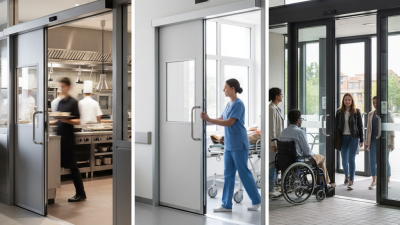
The 2026 swing door market will favor automatic, fire-rated, and hygienic models. Automatic swing doors should lead high-traffic healthcare, retail, and public facilities. Fortune Business Insights projects the automatic door market to grow from about USD 2.75 billion in 2023 to nearly USD 4.95 billion by 2032. Its reported annual growth rate is approximately 6.5%. That expansion reflects accessibility needs, touch-free entry, and labor-saving operation. However, market forecasts differ. Buyers should verify regional data before setting budgets.

Fire-rated swing doors will remain essential in offices, hotels, warehouses, and apartment buildings. Their value depends on tested resistance, reliable closers, and correct frame installation. A damaged seal can undermine an otherwise certified assembly. Hygienic stainless-steel swing doors will also gain attention in food processing, laboratories, and medical spaces. Smooth surfaces, rounded edges, and washable hardware reduce cleaning difficulties. Small details matter.

Energy performance will influence insulated swing doors for cold storage and controlled environments. Buyers should compare U-values, cycle-test results, corrosion resistance, and spare-part access. Automatic systems may reduce contact points, but sensors require careful adjustment. Poor commissioning creates delays and safety complaints. The practical winner may be a simple, durable door rather than the most connected model. That assumption deserves more testing.

How to Compare Materials, Sizes, and Operating Features

When comparing swing doors for global projects, start with material and traffic conditions. Steel offers impact resistance for warehouses and service corridors. Stainless steel handles moisture, cleaning chemicals, and hygiene-sensitive rooms. Aluminum reduces weight, but dents more easily under harsh trolley use. Timber provides warmth in hospitality spaces, yet humidity can cause movement and finish failure.

Size must match people, equipment, and clear opening needs. The U.S. Energy Information Administration’s 2018 Commercial Buildings Energy Consumption Survey recorded about 5.9 million commercial buildings and 97 billion square feet of floor space. That scale shows why small specification errors can multiply across projects. Check the actual clear width, not only the door leaf width. Also review wall thickness, frame depth, threshold height, and delivery routes. A 900-millimeter opening may suit pedestrians, but not a loaded cart. I learned this the hard way.

Tips: Choose operating features after observing real traffic. A hold-open device may improve convenience, while a closer protects fire separation and indoor comfort. For frequent use, compare cycle ratings, hinge strength, closing speed, and replacement access. The World Health Organization’s 2022 Global Status Report on Physical Activity links built environments with daily movement patterns; busy entrances need intuitive, low-effort operation. Automatic operators can help accessibility, but sensors require careful positioning and maintenance. Do not assume the most advanced option is the best one. It may become a maintenance burden. Check regional accessibility and fire-safety requirements before approval.

2026 Top Swing Doors: What Should Global Buyers Know?
How to Compare Materials, Sizes, and Operating Features
Door Type / Material Typical Construction Common Standard Sizes Typical Weight Range* Recommended Environments Operating Features to Compare Key Advantages Important Limitations
Hollow-Core Wood Timber or engineered-wood stiles and rails with a lightweight honeycomb or fiberboard core; usually covered with veneer, laminate, or paint. Single leaf: 610–915 mm wide × 1,980–2,135 mm high
Approx.: 24–36 in × 78–84 in
Approximately 18–35 kg
40–77 lb per leaf
Interior offices, residential rooms, hotels, and low-impact commercial areas. Single-action Butt hinges Optional closer Lever handle Low cost, light operation, easy machining, and a wide range of surface finishes. Lower impact resistance, limited moisture tolerance, and generally unsuitable for demanding hygienic or exterior applications.
Solid-Core Wood Engineered timber or particleboard core with veneer, laminate, paint, or high-pressure laminate facing. Single leaf: 610–1,015 mm wide × 1,980–2,235 mm high
Approx.: 24–40 in × 78–88 in
Approximately 30–65 kg
66–143 lb per leaf
Hotels, offices, apartments, education buildings, and higher-use interior spaces. Single-action Heavy-duty hinges Door closer Acoustic seals Better sound reduction, durability, and perceived quality than hollow-core construction. Heavier than hollow-core doors; edges and faces require protection from prolonged water exposure.
Aluminum-Framed Glazed Door Extruded aluminum frame with tempered, laminated, or insulated safety glass; may include a bottom rail. Single leaf: 750–1,000 mm wide × 2,000–2,400 mm high
Approx.: 30–39 in × 79–94 in
Approximately 25–55 kg
55–121 lb per leaf, depending on glazing
Retail, offices, public buildings, entrances, corridors, and interior partitions. Single or double action Floor spring Overhead closer Automatic operator Good daylight transmission, corrosion resistance, modern appearance, and relatively low maintenance. Glass selection affects safety, thermal performance, sound control, and total weight; aluminum can dent under severe impact.
Steel Door Cold-rolled or galvanized steel skins over a honeycomb, polystyrene, polyurethane, or mineral-fiber core. Single leaf: 750–1,220 mm wide × 2,000–2,400 mm high
Approx.: 30–48 in × 79–94 in
Approximately 45–100 kg
99–220 lb per leaf
Industrial buildings, schools, utility rooms, warehouses, service areas, and high-traffic openings. Heavy-duty hinges Adjustable closer Kick plate Vision panel High impact resistance, strong security performance, and compatibility with tested fire-door assemblies. Can corrode if coatings or edges are damaged; heavier operation may require reinforced frames and stronger hardware.
Stainless-Steel Door Stainless-steel skins or hygienic stainless construction, commonly using grades such as 304 or 316 depending on exposure. Single leaf: 700–1,200 mm wide × 2,000–2,400 mm high
Approx.: 28–47 in × 79–94 in
Approximately 50–110 kg
110–243 lb per leaf
Food processing, healthcare, laboratories, commercial kitchens, clean areas, and coastal locations. Sealed edges Flush hardware Double-action Low-energy operator Excellent cleanability, corrosion resistance, and durability in demanding environments. Higher purchase cost; surface finish can show fingerprints, scratches, and contamination if not maintained.
FRP / Fiberglass-Reinforced Plastic Fiberglass-reinforced polymer skins over a foam, honeycomb, or composite core; commonly supplied with molded or laminated surfaces. Single leaf: 750–1,200 mm wide × 2,000–2,400 mm high
Approx.: 30–47 in × 79–94 in
Approximately 35–85 kg
77–187 lb per leaf
Wet rooms, wash-down areas, food facilities, swimming pools, laboratories, and corrosive environments. Single or double action Impact plates Self-closing Washable seals Moisture resistance, good chemical resistance, low maintenance, and strong performance in wet environments. Color and surface quality vary by manufacturing process; compatibility with fire or smoke requirements must be verified for the complete assembly.
Polyethylene / Polyurethane Impact Door Flexible or rigid polymer panels, often reinforced with impact-resistant cores, bumpers, or protective plates. Single leaf: 800–1,500 mm wide × 2,000–2,500 mm high
Approx.: 31–59 in × 79–98 in
Approximately 20–70 kg
44–154 lb per leaf
Cold storage, logistics facilities, food distribution, supermarkets, and high-frequency service passages. Double action Swing return Vision panel Replaceable seals Fast passage, impact tolerance, easy cleaning, and reduced damage from carts or forklifts when correctly specified. Usually provides less acoustic insulation and security than solid doors; low-temperature flexibility must be checked for cold-room use.
Buyer’s verification checklist: Confirm the required clear opening, wall thickness, handing, single- or double-leaf configuration, traffic frequency, humidity and temperature range, corrosion exposure, glazing safety classification, fire and smoke certification, accessibility requirements, replacement-part availability, and local installation standards. Stated weights and dimensions are typical market ranges; the final values depend on the complete door leaf, frame, glazing, hardware, and finish.

What Global Buyers Should Check for Safety and Compliance

Global buyers choosing top swing doors should treat safety as a documented process, not a sales promise. Check the hinge design, closing speed, edge protection, and visible pinch points. A door that closes too quickly can injure children, older users, or people carrying packages. Test the door on site, with the floor slightly uneven and the closer fully adjusted.

Compliance requirements vary by destination, building type, and installation location. Ask for current test reports covering fire resistance, smoke control, impact strength, and accessibility where applicable. Confirm the clear opening width, opening force, vision panels, and emergency-use performance. Glazing should have suitable safety treatment and clear identification. Do not accept a general certificate without checking its product model, test date, and scope.

Documentation matters.

Reliable suppliers should provide installation instructions, maintenance intervals, material specifications, and traceable batch information. Inspectors may also request records for hinges, closers, seals, and fasteners. A common mistake is checking the door leaf but ignoring the frame and surrounding wall. The complete assembly must perform as tested. In practical site reviews, small gaps often reveal poor alignment or rushed installation. That detail is easy to miss. Buyers should also verify local approval procedures with qualified professionals, because imported compliance claims may not match regional rules. Some requirements remain unclear until the authority reviews the actual building.

2026 Top Swing Doors: Safety and Compliance Reference Thresholds

Global buyers should verify that the selected swing-door system is evaluated against the requirements applicable to its installation country, door type, traffic level, and power-operated configuration. The chart shows selected published reference thresholds; the values use different units and are not intended for direct performance ranking.

Reference points: ADA Standards limit the opening force for interior hinged doors to 5 lbf (approximately 22.2 N). ANSI/BHMA A156.19 specifies minimum opening and closing times for low-energy power-operated doors. Buyers should also request risk assessments, sensor test records, emergency-release information, installation certificates, and local conformity documentation.

Sources: 2010 ADA Standards for Accessible Design, Section 309.4.1; ANSI/BHMA A156.19, Power Assist and Low Energy Power Operated Doors; EN 16005, Power Operated Pedestrian Doorsets—Safety in Use.

How to Evaluate Suppliers, Costs, and Installation Worldwide

2026 Top Swing Doors: What Should Global Buyers Know?

Choosing swing doors worldwide requires more than comparing catalog prices. Ask suppliers for verified load ratings, cycle-test results, corrosion resistance, and clear warranty terms. The International Energy Agency reports that buildings consume about 30% of global final energy. Poorly fitted doors can increase air leakage, especially in hospitals, hotels, and temperature-controlled facilities. Small gaps matter.

Supplier evaluation should include factory experience, quality-control records, spare-parts availability, and installation training. Request a complete landed-cost quotation. It should cover the door leaf, frame, hinges, closer, packaging, freight, taxes, and commissioning.

Arcadis’s 2024 International Construction Costs report compares construction expenses across 100 cities, showing why local labor and logistics can strongly affect budgets. Hardware may be inexpensive. Installation may not be.

Measure wall thickness, opening direction, floor level, traffic volume, and surrounding clearance before ordering. A supplier should provide drawings and an installation method statement. Accessibility also deserves attention. The World Health Organization estimates that 1.3 billion people experience significant disability worldwide, so opening force and clear width should be checked carefully.

My practical mistake was trusting standard dimensions too early. Site conditions often disagree. Ask for a sample installation or video inspection when local supervision is limited. A low quote without testing evidence is not necessarily a saving.